

Iran Protests Surge Under an Internet Blackout as Khamenei Blames Trump
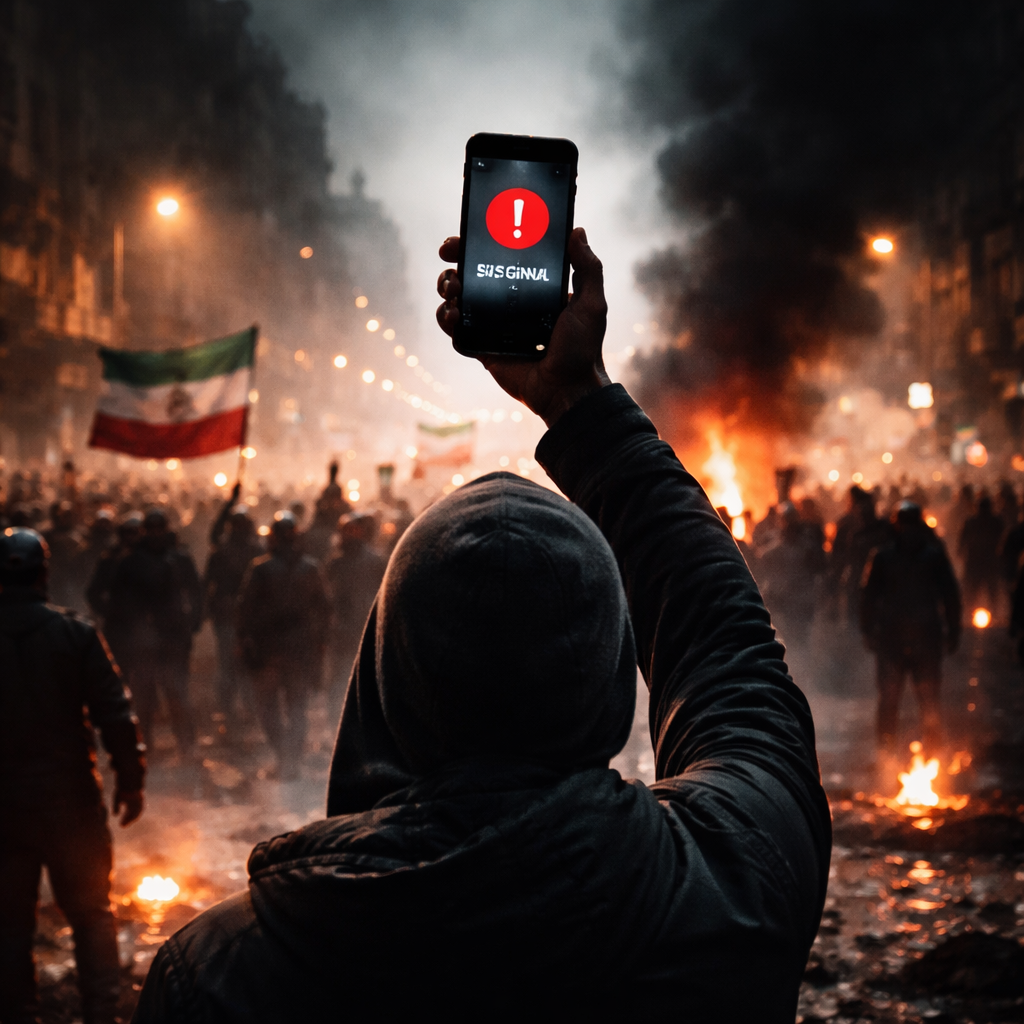
Iran Goes Dark as Protests Intensify — Khamenei Accuses Crowds of Serving Trump
Iran’s Protests Are Escalating Under an Internet Blackout — and the State Is Running Out of Time
As of January 9, 2026, protests across Iran have intensified after nights of street clashes, fires, and large crowds in Tehran and other cities, even as the state imposed a sweeping internet and phone shutdown.
Iran’s supreme leader, Ayatollah Ali Khamenei, has framed the unrest as sabotage meant to “please” U.S. President Donald Trump, and senior judicial officials have signaled punishments that point toward a harder crackdown.
One hinge matters more than the slogans: the blackout is meant to break coordination, but it also strangles commerce and daily life, widening the coalition of people with something to lose.
“The story turns on whether Tehran can cut the country off from the world without cutting the legs out from under its own economy and security machine.”
Key Points
Protest activity has escalated in multiple Iranian cities, with online videos and state broadcasts showing fires, damage, and heavy security presence as of January 9, 2026.
Iran’s leadership is publicly preparing the public for harsher measures, with the judiciary and prosecutors threatening severe penalties for arson, sabotage, and clashes with security forces.
The government has imposed a broad communications shutdown, limiting independent verification and raising the risk of violence occurring out of view.
The unrest began with economic triggers tied to currency collapse and inflation, but chants and symbols in the streets now point to deeper anger at the political system itself.
Trump’s rhetoric has become part of the domestic Iranian narrative, giving Tehran a foreign “villain” while increasing the risk of miscalculation between states.
The immediate question is whether protests keep spreading despite the blackout, and whether the state can sustain suppression without worsening the economic spiral.
Background
Iran has seen repeated waves of nationwide unrest over the past two decades, often triggered by economic pain, contested politics, or perceived injustice, and frequently met with force. This new wave has built quickly from an economic shock into a broader political confrontation.
The current protests intensified after the national currency plunged to fresh lows on the open market and inflation remained punishing. Demonstrations began in late December 2025 and spread across provinces, with initial grievances focused on prices, purchasing power, and livelihoods.
Iran’s political structure concentrates ultimate authority in the supreme leader, with elected institutions operating inside red lines set by the security state and senior clerical leadership. When protests broaden into direct challenges to that system, the core playbook tends to be familiar: delegitimize, isolate, disrupt communications, then punish.
What is new is the pace and the information environment. A nationwide blackout is not only a policing tool. It is an economic tourniquet that can stop coordination, but also stops payment flows, travel planning, and basic services that now depend on connectivity.
Analysis
Political and Geopolitical Dimensions
Khamenei’s decision to tie the protests to Trump is more than insult. It is a strategy to recast domestic anger as foreign manipulation, which helps justify extreme countermeasures while signaling to loyalists that this is an existential fight, not a policy dispute.
At the same time, the U.S. president’s public threats create a feedback loop. Tehran can point to American statements as proof of interference, while Washington can point to repression as proof the regime is brittle. That loop raises the risk of escalation even if neither side intends a direct clash.
Scenario one is containment: arrests rise, force is used selectively, and leaders offer limited economic relief while restoring some connectivity once momentum fades. Signposts would include partial internet restoration, narrower policing tactics, and government announcements aimed at stabilizing prices.
Scenario two is a full-spectrum crackdown: wider use of live fire, rapid trials, and high-profile punishments meant to terrify the undecided. Signposts would include publicized death sentences, televised confessions, and a visible shift from police control to heavier paramilitary deployment.
Scenario three is internationalization: the protest story becomes a trigger for state-to-state confrontation, with threats, sanctions moves, and military posturing feeding Iranian hardliners and narrowing off-ramps. Signposts would include accelerated diplomatic expulsions, new penalties tied to repression, and heightened alert postures around key regional flashpoints.
Economic and Market Impact
The economic driver is not background noise here; it is the fuel. A collapsing currency and high inflation compress daily life into constant triage: food, rent, fuel, medicine, and the ability to keep a shop stocked. When people cannot price goods or plan deliveries, anger spreads beyond activists into merchants, workers, and families who are not political by instinct.
The blackout compounds that pressure. Modern commerce runs on messaging, banking apps, logistics coordination, and basic connectivity. Cutting the internet can slow protest coordination, but it also slows the bazaar, the supply chain, and even the state’s ability to project calm competence.
Scenario one is short shutdown, fast rebound: authorities restore connectivity after a brief shock, hoping fatigue sets in before markets break further. Signposts would include rapid reopening of online banking and a visible effort to stabilize the currency.
Scenario two is prolonged disruption: the blackout continues, strikes and shop closures widen, and the economic pain deepens into a legitimacy crisis. Signposts would include wider commercial shutdowns, cash shortages, and emerging signs of rationing or localized supply failures.
Scenario three is external pressure meets internal fragility: more sanctions-related moves or regional instability collide with domestic unrest, tightening constraints on oil revenue, finance, and imports. Signposts would include new restrictions tied to repression and rising travel or insurance disruptions affecting routes into and out of Iran.
Social and Cultural Fallout
The protest coalition matters as much as the crowd size. Early economic demonstrations can be dispersed. A cross-class coalition anchored in merchants, students, workers, and disaffected families is harder to crush quickly because it shows up in multiple places at once and returns after setbacks.
Symbols in the street also signal depth. Chants aimed directly at the supreme leader and the system, and occasional pro-monarchy slogans, indicate not just anger at prices but anger at the idea that politics is closed and unchangeable.
Scenario one is fragmentation: protests persist but split into local grievances, making it easier for security forces to pick them off neighborhood by neighborhood. Signposts would include less synchronized turnout and narrower demands.
Scenario two is broadening: universities, commercial districts, and provincial cities move in parallel, forcing the state to spread security resources thin. Signposts would include wider strikes, more coordinated timing, and sustained participation outside Tehran.
Scenario three is radicalization under repression: if force escalates and deaths mount, some parts of the movement may shift toward riskier tactics, which the state would use to justify maximal violence. Signposts would include attacks on infrastructure, increased arson incidents, and heavier militarization of city centers.
Technological and Security Implications
The communications shutdown is now a central battlefield. It blocks coordination and reduces real-time visibility for outsiders, but it also pushes protesters toward offline networks and pushes the state toward more coercive surveillance, checkpoints, and physical control of neighborhoods.
Where satellite connectivity is available, it can blunt the blackout, but it is uneven, risky to use, and easily politicized by the state as proof of “foreign” support. Even rumors of satellite workarounds can drive harsher enforcement.
Scenario one is targeted control replacing blunt shutdowns: Iran restores partial access under tighter filtering and monitoring to reduce economic damage while keeping protest coordination harder. Signposts would include intermittent connectivity, platform-specific blocks, and heavier penalties for sharing protest footage.
Scenario two is blackout-proof coordination: protesters adapt with pre-set meeting times, neighborhood relays, and low-tech organization that makes the internet less decisive than the state hopes. Signposts would include synchronized nightly protests despite poor connectivity and repeated reappearance in the same districts.
Scenario three is a wider cyber dimension: state-linked actors and opposition-linked actors escalate digital attacks and countermeasures, with disruption spilling into services and narratives. Signposts would include sustained outages in official systems, disruptive misinformation bursts, and new emergency powers aimed at “cyber sabotage.”
What Most Coverage Misses
The blackout is not just a repression tool. It is a test of state capacity.
A modern security crackdown runs on money, logistics, and compliance. Security forces need pay, fuel, food supply, communications, and a functioning bureaucracy. A nationwide shutdown weakens protest coordination, but it also damages the very commercial rhythms that keep the state’s cashflows and daily administration moving.
That creates a time limit. The longer Iran stays digitally dark, the more it risks turning a protest problem into a national functioning problem: delayed payments, disrupted imports, stranded travelers, and a deeper sense that normal life cannot be restored without political change.
In other words, the regime is trying to seal the pressure cooker while the stove is still on. If the economy keeps slipping and connectivity stays off, the crackdown may “work” tactically while still losing strategically, by widening the circle of people who conclude the system cannot deliver stability.
Why This Matters
In the short term—over the next 24 to 72 hours—the risk is rapid escalation: deaths, mass arrests, and harsh sentencing under cover of restricted communications. Key moments to watch include planned protest timings, signs of security force posture changes in major cities, and any shift from a total blackout to partial restoration.
In the coming weeks, the bigger question is whether economic breakdown and political anger reinforce each other. If the currency slide continues, inflation stays high, and commerce remains disrupted, the unrest may shift from episodic protests to rolling strikes and sustained instability.
Internationally, the most dangerous trend is the merging of domestic unrest with great-power rhetoric. If threats and counter-threats harden, diplomacy narrows, and each side starts acting as if escalation is inevitable.
Real-World Impact
A shop owner in a commercial district cannot price imports or restock reliably when exchange rates swing and messages do not go through. The shelves thin, and the anger becomes personal.
A university student loses access to classes, exam schedules, and basic communication, but still faces street-level risk if they join protests or even travel through hot zones.
A family with relatives in another city cannot confirm safety, arrange transport, or make simple plans when phone lines fail and the internet goes dark.
A traveler finds flights canceled or rerouted, and basic consular help becomes harder to reach, while rumors spread faster than verified information.
The Next 72 Hours: Blackout, Bloodshed, or Bargain
Iran’s leadership is trying to impose a simple choice on the public: order under the existing system, or chaos stirred by outsiders. The streets are arguing the opposite—that chaos is the price of a system that no longer delivers dignity or stability.
The fork in the road is stark. A softer path would mean restoring connectivity, narrowing repression, and offering credible economic stabilization that reaches beyond slogans. A harder path would mean a sweeping crackdown designed to end the protests quickly, even if it deepens long-term rage and isolation.
Watch three concrete signposts: whether internet access returns in any meaningful form, whether senior officials follow rhetoric with mass sentencing, and whether protests keep appearing on a predictable schedule despite repression. However this resolves, it will be remembered as one of the moments when Iran’s modern state either proved it could adapt—or proved it could only endure by force.
