

Baltic undersea cable damage: ship seized as arrests sharpen the stakes
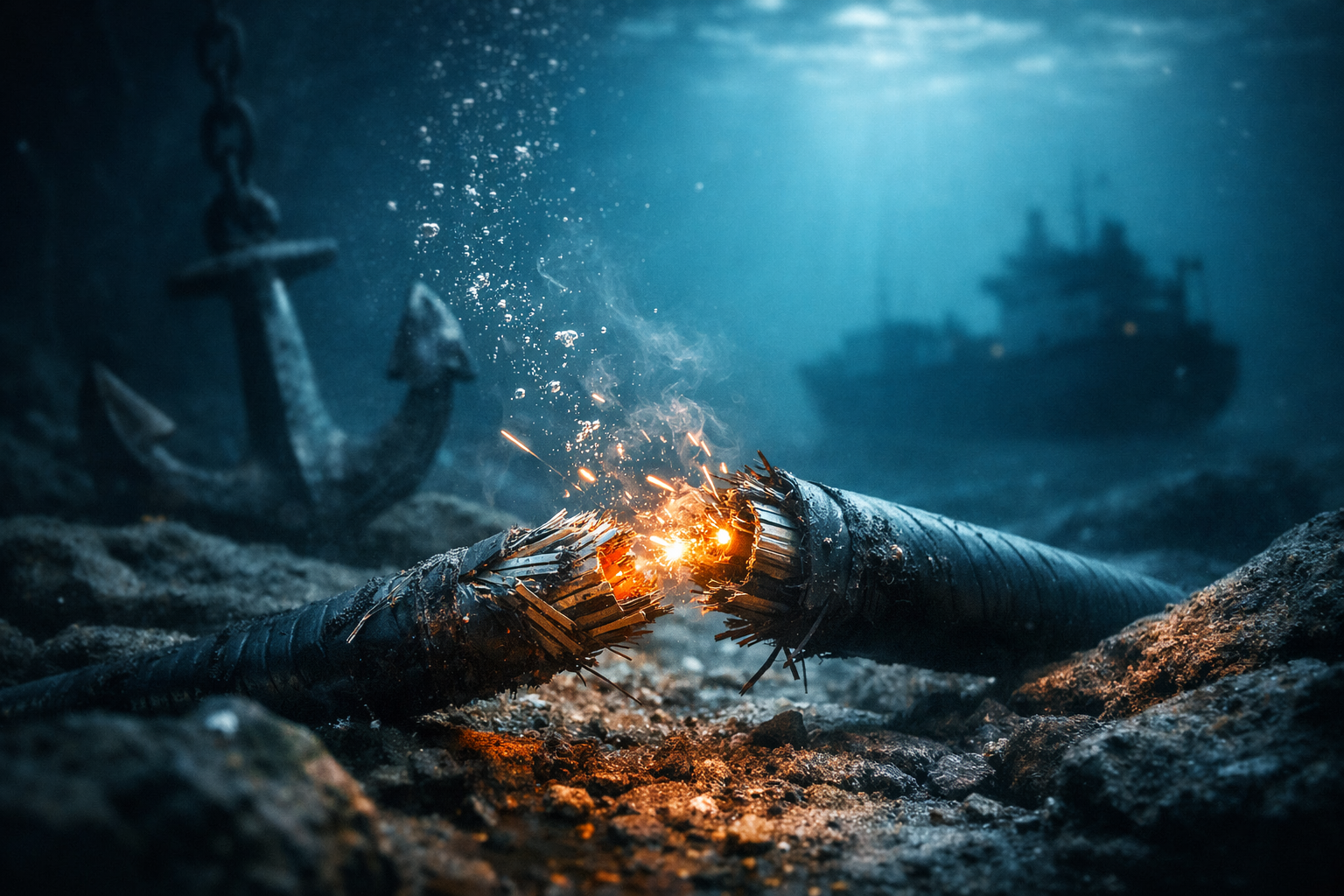
Finnish authorities have seized a cargo ship and detained crew members as they investigate Baltic undersea cable damage affecting a telecommunications link between Finland and Estonia, with arrests and travel bans now tightening the legal picture as of January 2, 2026.
The case matters because it sits on a fault line: critical infrastructure in shallow, crowded waters, a region already jumpy about “hybrid threats,” and a fact pattern that can look like either a navigational mess or something more deliberate.
This piece explains what is known so far, what is still uncertain, and how investigators typically climb from suspicion to proof in seabed incidents. It also lays out what deterrence looks like in practice when the “weapon” might be a ship’s anchor and a few hours of bad decisions.
The story turns on whether this was an accident that left unusually clear traces, or an intentional act designed to be deniable.
Key Points
Finnish police have seized the cargo vessel Fitburg and questioned its crew after damage to an undersea telecoms cable linking Finland and Estonia, with the cable reported inoperable while the extent of damage is assessed.
Two crew members have been arrested and two others placed under travel bans, signalling investigators believe individual roles and decisions on board now matter to the case.
Authorities have pointed to evidence consistent with anchor dragging in the area of the cable, a common physical mechanism in shallow-water cable incidents.
The investigation is unfolding in a heightened security climate in the Baltic Sea, where repeated infrastructure disruptions have increased political sensitivity and response tempo.
A separate sanctions-related angle has emerged around cargo reported to include Russian-origin steel subject to restrictions, adding a parallel enforcement track alongside the cable case.
The hardest question is intent: proving not just what happened on the seabed, but what was ordered, known, and preventable on the bridge.
Background
Undersea telecommunications cables carry the unglamorous bulk of modern connectivity. They are engineered to survive harsh environments, but near coasts and in busy corridors they remain vulnerable to blunt force—especially anchors, fishing gear, and construction activity.
The latest Baltic undersea cable damage involves a telecoms cable running between Finland and Estonia across the Gulf of Finland. Finnish authorities seized a cargo ship suspected of being linked to the incident and brought it into port, detaining the crew for questioning.
The legal framing matters because it hints at how investigators see the facts. In cases like this, authorities may treat the event as serious criminal damage and interference with communications if the disruption is significant, if critical infrastructure is involved, or if the risk to public services is judged high.
The wider context is a string of infrastructure incidents around the Baltic Sea in recent years. Each new disruption is now interpreted through a security lens, even when the mechanism could be mundane. That is why governments have pushed for more monitoring, more patrols, and faster cross-border coordination.
Analysis
Political and Geopolitical Dimensions
Arrests and travel bans change the temperature. Seizing a vessel is one thing; moving toward personal restrictions signals investigators believe there are accountable decisions tied to named roles. That does not prove intent, but it narrows the story from “something happened at sea” to “someone did something, or failed to stop something.”
For Finland and Estonia, the strategic problem is escalation control. If officials speak too soon, they risk over-claiming intent and inflaming tensions. If they underplay the incident, they risk looking complacent about critical infrastructure. That is why public messaging often leans on process: investigation first, conclusions later, and careful language about what is confirmed.
At the alliance level, the Baltic Sea has become a testbed for deterrence below the threshold of open conflict. Enhanced presence and surveillance aim to make deniable acts harder to execute and easier to attribute. But deterrence here is not only about catching the culprit. It is about raising the perceived probability of detection, interdiction, and legal consequences.
Scenarios to watch:
Accidental damage with negligence: evidence shows poor seamanship or procedural failures; penalties and compensation follow, without a wider political rupture.
Reckless conduct under pressure: commercial or sanctions-related incentives create risk-taking behavior; intent remains unproven but accountability sharpens.
Deliberate sabotage with deniability: investigators find signs of planning, concealment, or repeated suspicious behavior; political responses broaden beyond the ship.
A mixed picture: a real accident exploited by political narratives on all sides, producing policy shifts even without definitive intent.
Economic and Market Impact
Telecom operators design redundancy, so a single cable outage does not always translate into visible consumer disruption. The market impact often shows up elsewhere: repair costs, insurance disputes, and reputational risk around route security.
Repair operations are also weather- and logistics-dependent. Even when the fix is technically straightforward, the timeline can stretch because work requires specialized vessels, safe sea states, and coordination across jurisdictions. That delay has an economic shadow: higher operating costs for operators, tighter scrutiny from regulators, and pressure to invest in monitoring and rapid repair capability.
The sanctions-linked cargo angle, if pursued, introduces an additional economic mechanism: seizures, penalties, and scrutiny that can make certain trade routes and cargoes more costly to move. It also creates a motive-adjacent storyline—without proving sabotage—because investigators will ask whether commercial constraints influenced routing, speed, or operational decisions.
Technological and Security Implications
This is the “what can be known” ladder—how attribution is built in practice.
First rung: seabed mechanics. Investigators establish the damage type: a clean cut, a crush, a scrape, or a dragged rupture. Anchors tend to leave a distinctive story: a linear scar on the seabed, disturbed sediments, and a damage pattern consistent with a heavy object snagging and pulling.
Second rung: ship behavior. Automatic Identification System (AIS) data and voyage records can show speed changes, course deviations, and unusual pauses. AIS is not perfect—signals can be lost or manipulated—but it often provides a starting map of who was where and when.
Third rung: hardware evidence. Anchors, chains, and deck equipment can show abnormal wear, missing components, or repairs. If an anchor is recovered near a cable corridor, it becomes a focal object that can be matched to a ship’s specifications and damage.
Fourth rung: bridge decisions. Logs, orders, watch schedules, and internal communications show who knew what and when. This is where arrests become meaningful: investigators may believe specific individuals’ decisions were pivotal, or that safety protocols were knowingly breached.
Fifth rung: intent indicators. Proving deliberate action is the hardest step. Investigators look for choices that do not fit normal maritime logic: maintaining an abnormal configuration for an extended period, ignoring alarms, disabling safeguards, or repeating suspicious maneuvers. The standard is not “it looks bad,” but “the alternative explanations no longer hold.”
Deterrence shows up day-to-day as boring capability: patrols, rapid interdiction, better seabed mapping, more sensors, and closer information sharing between coastal states and operators. It is less “dramatic naval showdown” and more persistent friction for suspicious behavior.
What Most Coverage Misses
Most reporting treats “accident vs intent” like a binary. In reality, there is a large middle ground: preventable damage that still lacks provable sabotage. That middle ground matters because governments can respond strongly to negligence when the target is critical infrastructure, even if they cannot prove political intent.
The second miss is that undersea cable security is not only a navy problem. It is an engineering, insurance, and regulation problem. The fastest improvements often come from clearer cable route protections, better mariner guidance, and enforceable penalties for unsafe practices in sensitive corridors.
The third miss is that attribution is partly a time game. Physical evidence degrades. Sediment shifts. Weather complicates surveys. The longer the gap between incident and inspection, the harder it is to separate signal from noise. That is why rapid seizure, rapid interviewing, and rapid seabed surveys can be as strategically important as any public statement.
Why This Matters
The most affected regions are the Baltic coastal states and the operators who maintain the arteries of regional connectivity. In the short term, the key issues are continuity of service, repair timelines, and legal liability. In the longer term, the story is about norms: whether repeated disruptions become “background risk” or trigger meaningful upgrades in monitoring and enforcement.
Events to watch next include:
updates on the condition of the damaged cable and repair schedule,
any formal charging decisions tied to the arrested crew members,
findings from seabed surveys that clarify the damage mechanism,
whether sanctions enforcement expands beyond the cargo to broader shipping scrutiny,
and any new announcements on regional monitoring or maritime security activity.
Real-World Impact
A logistics manager in Tallinn runs customer support for a mid-sized e-commerce company. Their systems stay online, but they start paying more for resilient routing and faster failover contracts after insurers ask pointed questions about single points of failure.
A hospital IT lead in Helsinki reviews connectivity redundancy. Nothing breaks, but procurement accelerates plans to diversify providers and stress-test contingency links, because the board wants reassurance, not probability.
A small shipping operator in the Baltic reviews route planning and anchoring protocols. They face higher compliance costs and more inspections, but they also gain clarity on what behavior now triggers enforcement.
A subsea repair contractor in Northern Europe sees demand spike. Their bottleneck is not skill, but vessel availability and weather windows, which drives up costs and reshapes maintenance schedules for the coming year.
What’s Next?
The immediate question is mechanical: what exactly happened on the seabed, and can it be cleanly tied to one ship’s anchor and track. The next question is human: who on board made which decisions, and whether those decisions were reckless, negligent, or deliberate.
If investigators can align seabed scars, ship movement data, equipment condition, and bridge records into one coherent timeline, the case will harden quickly. If the physical evidence is ambiguous or the decision trail is messy, the story may drift toward civil liability and broader policy responses rather than a definitive sabotage finding.
Either way, the Baltic is entering a new normal where cable incidents are treated as security events first and maritime mishaps second. The signposts will be simple: charges that specify intentionality, technical findings that rule out benign explanations, and policy moves that turn heightened vigilance into permanent infrastructure protection.
