

Berlin Went Dark — and It Only Took One Weak Link
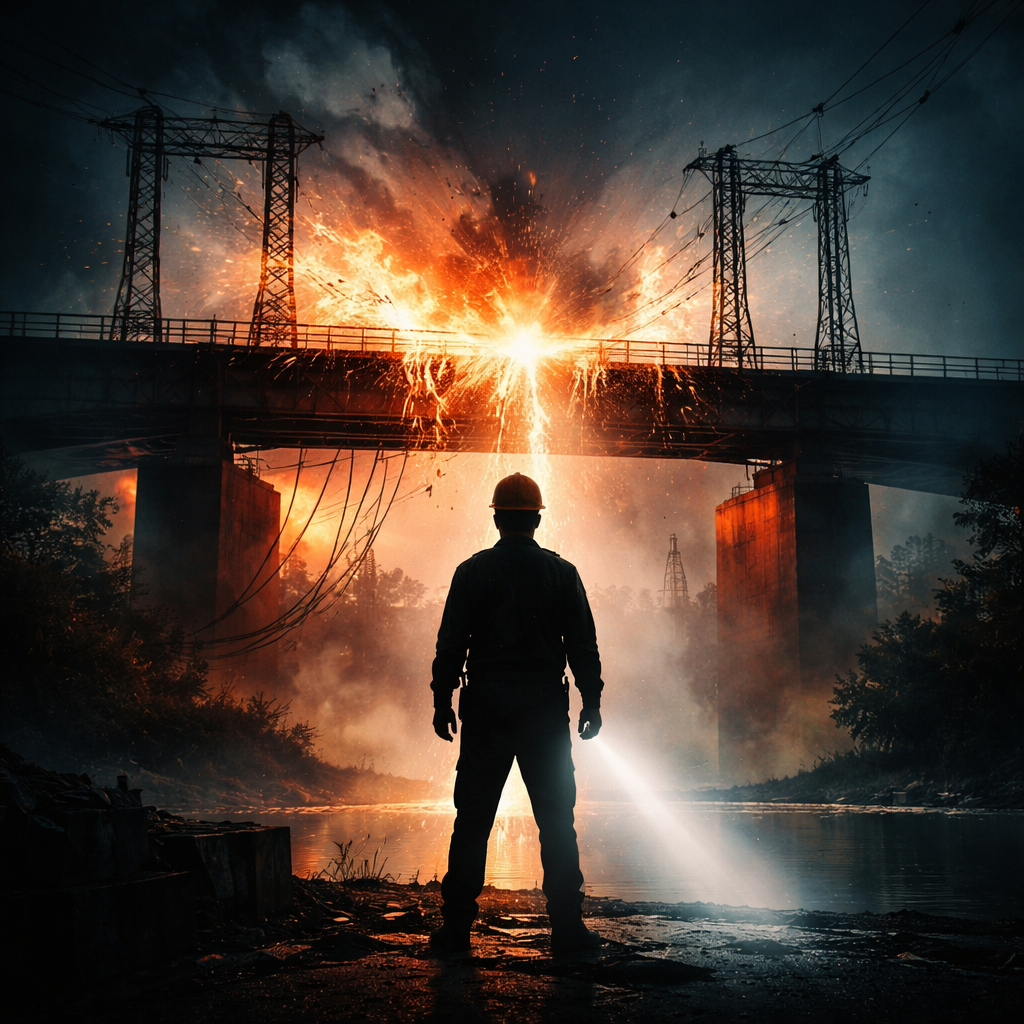
Berlin blackout sabotage fallout: how “redundant” grids still fail at chokepoints, and what fast, costed hardening looks like in real life.
Berlin Blackout Sabotage Fallout: Why “Redundant” Grids Still Have Single-Bridge Failure Points — and How Fast Cities Can Harden Them
As of January 10, 2026, a major outage in southwest Berlin that disrupted power (and, for many, heat and connectivity) has shifted from “technical failure” language toward suspected deliberate attack framing, triggering a wider European anxiety: critical infrastructure can look resilient on paper yet fail hard in one physical place.
This is the clean lesson the Berlin event puts under a floodlight: a modern city can have multiple lines, multiple substations, and multiple backups — and still be “single-bridge fragile” if those backups share the same corridor, the same crossing, the same duct bank, or the same switching room.
The story turns on whether Germany treats this as a one-off crime — or as a design signal that urban grids must be hardened for common-mode attacks, not just random faults.
Key Points
The practical difference between a “fault” and an “attack” is not just legal; it changes what resilience means: you must plan for multiple assets failing at once in the same place.
Urban grids often have “redundancy” that is real electrically but fragile physically — because the redundant paths run through the same bridge, tunnel, trench, or substation.
Blackouts are not mainly about “running out of power.” They are about protection systems isolating danger fast, then operators struggling to re-route limited capacity safely.
Restoration speed is constrained by logistics: access, safety clearances, switching plans, cable spares, specialist crews, and the time it takes to test and re-energize.
Rapid hardening is possible in weeks, not years, if you focus on chokepoints: corridor separation, temporary bypass capacity, faster reconfiguration, and pre-positioned spares.
The expensive part is not “more generation.” The expensive part is building physically diverse paths in dense cities — and doing it without years of permits and disruption.
Background
A blackout is the grid doing what it is designed to do under stress: disconnecting to prevent equipment damage, fires, and injury. The grid is a tightly synchronized machine. If a major line or transformer is compromised, protective relays trip in fractions of a second to stop runaway heating and arcing. That protective speed saves lives — but it also makes outages feel sudden and total.
In a large city, power arrives through layers:
Transmission brings bulk power in at high voltage. Substations step it down. Distribution networks feed neighborhoods via medium and low voltage. Many cities also rely on electrically-driven systems that used to be independent: telecoms, lift pumps, traffic signals, district heating pumps, even payment systems.
Berlin’s incident matters because it appears to be a physical attack on a specific piece of infrastructure in winter conditions, when electricity is not just light and convenience — it becomes heat, mobility, and safety.
Analysis
Political and Geopolitical Dimensions
When officials begin using language like “sabotage,” “terror,” or “hybrid threat,” the center of gravity moves from utilities to security services. That shift tends to produce three near-term outcomes.
First, attribution pressure rises. If a claim of responsibility exists (even an unverified one), politicians are pushed to name the actor, name the motive, and show control. The risk is overconfidence: early narratives can harden before technical forensics are complete.
Second, the policy response broadens from “fix the asset” to “protect the system.” That can include more physical patrols, tighter access controls, and new rules about what infrastructure data is published and how quickly details are released after an incident.
Third, it becomes a European story because the mechanism is transferable: railways, pipelines, substations, fiber routes, and cable crossings all share a brutal property — they are often most vulnerable at the same kinds of places: bridges, tunnels, fences, and cabinets.
Scenarios to watch: A “law-and-order” escalation where the focus becomes domestic extremism and criminal prosecution; a “hybrid threat” escalation where the focus becomes foreign-enabled targeting and counterintelligence; or a “resilience reform” route where regulators force utilities to demonstrate hardening plans for common-mode failures. Signposts are which agencies take formal lead, and whether new critical-infrastructure rules appear within weeks rather than months.
Economic and Market Impact
The direct economic loss of a city blackout is rarely captured by utility repair costs. The bigger costs sit in thousands of small interruptions: spoiled stock, closed shops, idled offices, overtime staffing, emergency accommodation, and disrupted logistics.
Insurance is also a quiet accelerant. Many businesses discover in outages that coverage hinges on property damage definitions or narrowly defined perils. That creates second-order politics: pressure on city government and network operators to compensate, and pressure on insurers to clarify exclusions.
Then there’s the infrastructure investment implication: hardening against attacks tends to favor capex-heavy solutions (new routing, undergrounding, additional substations), but voters experience the cost as higher network charges and more street works. That tension can turn a technical resilience conversation into a consumer-price fight.
Scenarios to watch: A modest, targeted hardening program focused on chokepoints; a larger push to underground or duplicate corridors that becomes a multi-year construction story; or a “do the minimum” approach that relies on policing and hopes the next incident doesn’t hit the same weak point. Signposts are the budget language: “security upgrades” vs “network reinforcement,” and whether utilities get regulatory approval to recover costs quickly.
Social and Cultural Fallout
Blackouts create a specific kind of social stress: they compress normal life into survival decisions. The first day is inconvenience. Day two becomes routine breakdown. By day three, it is a dignity story — cold rooms, dead lifts, food spoilage, and the quiet fear that emergency services may not reach you.
Winter changes everything. Power loss is not just darkness; it’s indoor temperature, safe cooking, medical equipment charging, and the ability to communicate.
Blackouts also produce blame cycles: residents blame city leaders; city leaders blame utilities; utilities blame vandals or weather; and everyone suspects the truth is being withheld. Trust erodes fastest when official messaging is either too technical (“we’re reconfiguring feeders”) or too vague (“we’re working on it”).
Scenarios to watch: A short-term anger spike that fades after restoration; a longer trust hangover if timelines slip or communication feels evasive; or a politicized narrative that turns infrastructure into a proxy for broader security debates. Signposts include whether vulnerable facilities report serious incidents, and whether the outage becomes tied to election-season messaging.
Technological and Security Implications
The Berlin story is often described as “grid security,” but the grid’s failure mode is more specific: common-mode loss at a chokepoint.
Here’s the physics in plain terms:
Electric power flows through many parallel paths, but not evenly. It follows impedance — the “resistance-like” constraints of lines and transformers. When one path is removed, the flow shifts to others. If those others are already near thermal limits, operators can’t simply “reroute everything” without overheating equipment.
Protection systems also make restoration non-trivial. After a high-energy fault (especially involving fire or damaged cables), utilities must assume the asset is unsafe until tested. Re-energizing blindly risks re-ignition, secondary faults, or explosive failures.
And security is now blended: physical attacks can be coordinated with cyber noise — not necessarily to hack the grid, but to distract, jam communications, or delay restoration logistics.
Scenarios to watch: A narrow technical response (replace and patrol) if this is treated as isolated; a broader “critical corridors” hardening program if authorities view it as proof of a repeatable tactic; or a transparency clampdown where detailed infrastructure information becomes harder to access publicly. Signposts are new requirements around corridor monitoring, rapid spares, and information release.
What Most Coverage Misses
Most coverage treats “redundancy” as a yes/no feature: either a grid has backup lines or it doesn’t. The real question is: are the backups physically independent? If multiple circuits share the same bridge crossing, trench, or substation boundary, then the grid can meet classic reliability criteria for random failures — yet still be brittle against a deliberate strike.
This is the “N-1 comfort trap.” Traditional planning often assumes one major element fails at a time. Sabotage, arson, flooding, and targeted attacks break that assumption by taking out multiple “redundant” assets together. The grid looks like a mesh on a diagram, but it behaves like a single bridge in the real world.
The second missed hinge is speed. You do not need a decade-long mega project to reduce single-bridge fragility. You need a disciplined inventory of chokepoints, pre-approved switching plans, and the ability to deploy temporary bypass capacity. The fastest resilience gains come from operational readiness — not from pouring concrete.
Why This Matters
In the short term (next 24–72 hours / weeks), the most affected are residents in electrically-dependent buildings (lifts, water pumps, communal heating controls), care facilities, and small businesses without backup power. Communication outages compound risk because they remove coordination, not just comfort.
In the long term (months / years), this becomes a test of whether European cities can adapt their infrastructure to a world where threats are not only storms and wear — but intent. The decisions to watch are regulatory: which upgrades are funded, how quickly approvals are granted, and whether “critical corridor” protection becomes mandatory.
The broader trend is clear: infrastructure is being treated less like a utility asset and more like national security substrate. The trade-off is that security-by-design often collides with transparency norms, cost sensitivity, and the practical limits of building in dense urban space.
Real-World Impact
A family in a high-rise discovers that “heat” is not just a boiler — it’s pumps, controls, and power to move warm water. They can have fuel in the system and still freeze.
A small grocer learns that stock loss is only half the hit. The other half is payment failure: card terminals down, ATMs unreliable, and customers leaving.
A care facility runs on contingency plans that were designed for hours, not days: staff overtime, generator fuel logistics, and the problem of keeping medically vulnerable residents warm and calm.
A city government finds that the public does not grade crises on technical competence alone. They grade them on clarity, urgency, and whether the response looks coordinated.
Hardening a “Single-Bridge City” Before the Next Hit
Hardening starts by admitting what the diagram hides: the grid fails at places, not abstractions. The fastest wins come from treating specific corridors as critical assets — with physical separation where possible, rapid bypass where separation is slow, and operational plans that are rehearsed, not imagined.
A practical hardening ladder looks like this: protect the chokepoints, add temporary bypass capability, then build physically diverse paths over time. The trade-off is cost and disruption, but the alternative is accepting that a single corridor can hold a city district hostage.
The signposts that matter now are concrete: whether authorities publish a corridor-risk assessment, whether utilities procure mobile and spare assets, whether permitting is accelerated for targeted redundancy, and whether security rules evolve to reflect common-mode attack reality. This is the moment when urban resilience stops being a slogan and becomes a design standard.
