China–Japan Feud Escalates Over Taiwan: What Sanae Takaichi’s Remarks Really Mean
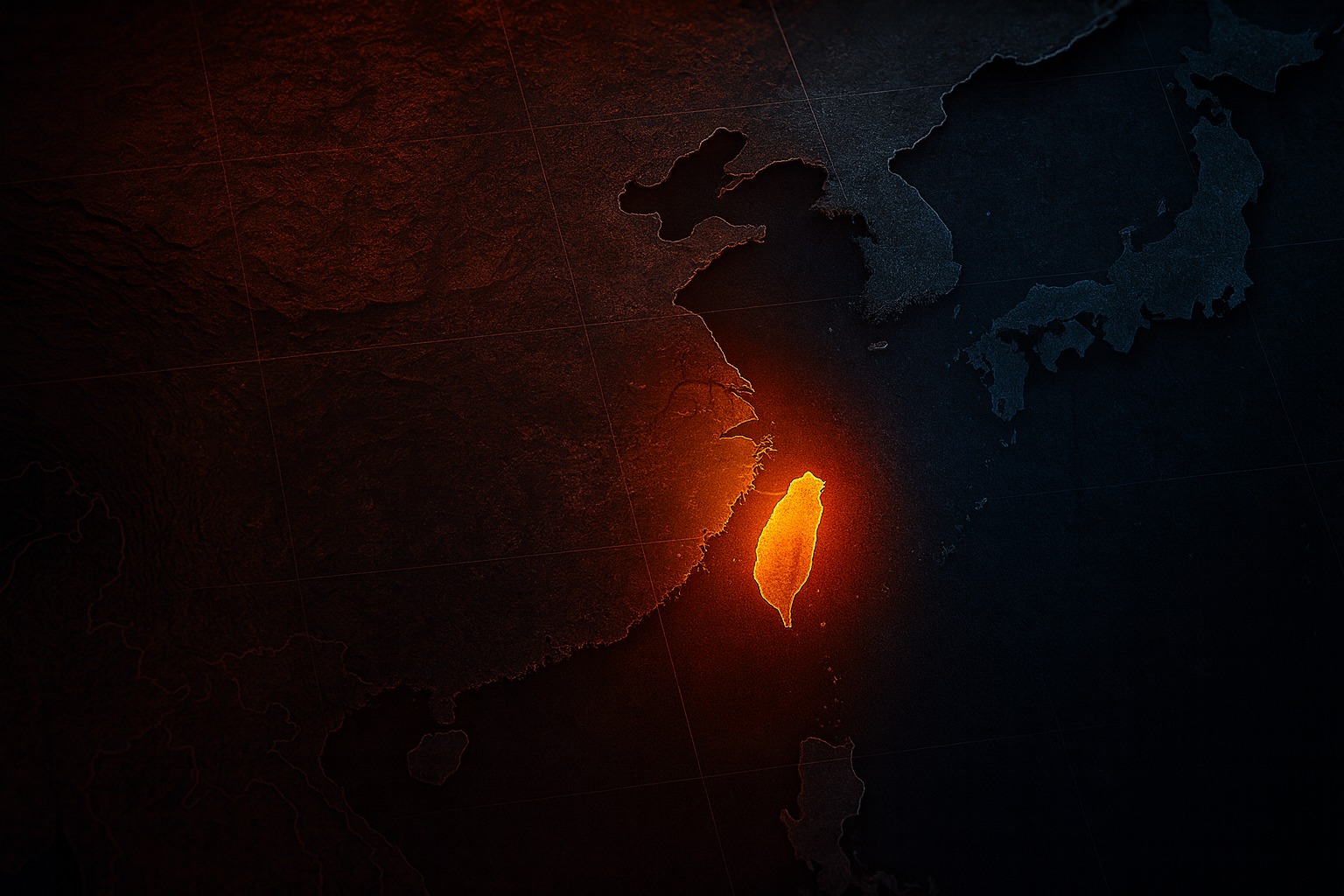
Beijing and Tokyo are locked in their sharpest diplomatic clash in years – and the trigger was a few sentences about Taiwan that go to the heart of Asia’s security order.
Key Points
Japan’s Prime Minister Sanae Takaichi told the Diet that a Chinese attack on Taiwan using force could constitute an “existential crisis” for Japan, potentially allowing military action under its 2015 security laws.
China has sharply condemned the remarks, summoned Japan’s ambassador, and warned Tokyo to “reflect on its historical crimes” while accusing Japan of meddling in China’s internal affairs.
Japan responded by summoning China’s ambassador in Tokyo, protesting comments by the Chinese consul in Osaka and defending its right to discuss scenarios that affect national survival.
The row has already spilled into economics and society: Chinese carriers are cancelling flights to Japan, tour groups are pulling trips, and Tokyo has issued safety advisories to Japanese citizens in China amid rising anti-Japanese sentiment.
The dispute unfolds against a broader backdrop of intensified Chinese military activity near Japan and Taiwan, plus Taiwan’s own rapid defence expansion.
For the UK and Europe, the episode highlights how fragile Indo-Pacific stability remains – and how quickly a Taiwan crisis could hit trade, energy routes and markets far beyond East Asia.
Background and Context
Why Taiwan is Japan’s problem too
Although Japan recognises the People’s Republic of China, it relies heavily on sea lanes passing near Taiwan. Any conflict in the Taiwan Strait could disrupt Japan’s energy imports and trade and inevitably involve the United States, Japan’s treaty ally.
Japan’s 2015 Legislation for Peace and Security allows the Self-Defence Forces to act in limited collective self-defence if an attack on an ally threatens Japan’s survival. That law has always been controversial and closely watched in Beijing.
Former Prime Minister Shinzo Abe framed Taiwan’s safety as integral to Japan’s own, and Sanae Takaichi – elected prime minister in 2025 – sits firmly in that hawkish tradition.
A relationship built on history – and mistrust
The Sino-Japanese relationship remains burdened by unresolved historical memory. China frequently references Japan’s invasion of China prior to and during the Second World War, particularly the atrocities in Nanjing.
Japan, meanwhile, is increasingly concerned about China’s military modernisation, coercive diplomacy and assertiveness in the East China Sea, especially around the contested Senkaku/Diaoyu Islands.
This latest Taiwan-related flare-up touches both historical wounds and present-day strategic rivalry.
What Has Actually Happened?
Takaichi’s trigger remarks
In early November, during parliamentary questioning, Prime Minister Sanae Takaichi outlined possible crisis scenarios around Taiwan – including cyber operations, disinformation and maritime disruption. She then added that if China attacked Taiwan using military force, it “could be an existential crisis for Japan” under the 2015 security framework.
This classification is crucial. Labelling a scenario an existential crisis permits Japan to:
Use collective self-defence
Support US operations directly
Protect key sea lanes and regional infrastructure
Her remark about Chinese “battleships” was later smoothed over by the Cabinet, but the policy stance remained unchanged.
Beijing’s furious response
China reacted with escalating diplomatic and rhetorical steps:
Formal condemnation – China’s foreign ministry denounced Takaichi’s comments and urged Japan to “reflect on its historical crimes”.
Summoning Japan’s ambassador – Beijing delivered a strong protest, accusing Tokyo of interfering in internal affairs.
Nationalistic amplification – The Chinese consul general in Osaka posted critical commentary online, triggering a wave of nationalist reactions in China.
Historical framing – Chinese officials drew parallels to pre-war Japanese militarism and invoked obscure United Nations “enemy state” clauses in an attempt to pressure Japan.
Tokyo pushes back
Japan refused to back down. Its foreign ministry summoned China’s ambassador in Tokyo to protest the online remarks and diplomatic language used by Beijing.
Officials reiterated that Japan’s position on Taiwan and national security remains consistent with its laws and strategic interests. Domestic opinion polls suggest public support for Takaichi’s firm tone.
Economic and social spill-over
The diplomatic spat rapidly spilled into the civilian realm:
Flight cancellations – Chinese airlines have cancelled large numbers of Japan-bound flights, with more reductions possible.
Tourism slowdown – Chinese tour groups have cut Japan trips, affecting hotels, retailers and regional airports.
Travel advisories – Chinese authorities have warned citizens about travelling to Japan; Japan has similarly advised its citizens in China to stay cautious.
Market impact – Japanese markets have experienced volatility as investors factor in deteriorating China–Japan relations.
The dispute goes global
The row has reached international forums such as the United Nations, where both sides have challenged each other’s interpretation of Takaichi’s remarks.
Taiwan, meanwhile, has openly welcomed Japan’s stance, viewing it as a clear sign of deepening security alignment.
Why It Matters – and Who It Affects
Japan’s security posture is shifting
Japan is now discussing, in public and at the highest political level, the conditions under which it might participate in a Taiwan conflict. This marks a notable shift from earlier decades of strategic ambiguity.
It also signals to China and the United States that Japan’s red lines in the Taiwan Strait are clearer than before.
Harder edges around the Taiwan Strait
For Taiwan, Japanese support is strategically valuable but politically sensitive. It strengthens deterrence but also feeds Beijing’s narrative that foreign powers are tightening a security ring around China.
Economic consequences
Tourism, education, shipping and supply chains all face increased risk exposure. Prolonged instability could amplify economic headwinds for Japan, and ripple outwards into global manufacturing, car exports and semiconductor supply lines.
Why the UK and Europe should care
A serious Taiwan crisis would:
Disrupt global supply chains, especially electronics and energy
Affect freight routes used heavily by European and British trade
Elevate Indo-Pacific security to a top-tier UK strategic priority
This is not merely an Asian dispute. It is a potential global shock point.
Big Picture: A More Dangerous Strategic Triangle
China, Japan and the United States
The row sharpens the alignment between Tokyo and Washington while reinforcing Chinese perceptions that Japan is edging closer to direct involvement in Taiwan’s defence.
This triangular dynamic strengthens deterrence but heightens the risk that misinterpretation or escalation could draw multiple powers into conflict rapidly.
Domestic politics matter
In both countries, leaders face incentives to appear firm. Takaichi’s rising approval ratings encourage a tougher line on China; Chinese officials find nationalism a reliable domestic rallying tool when economic conditions are challenging.
Growing militarisation
Taiwan is boosting defence spending, Japan is deploying more missile systems on southwestern islands, and China is normalising large-scale naval and aerial operations near both countries. The baseline level of military activity is rising – and with it, the chance of miscalculation.
What to Watch Next
1. Economic retaliation
Will China widen flight cuts, tourism restrictions or commercial pressure? Will Japan respond through trade channels?
2. Diplomatic temperature at the UN
Do speeches harden or moderate? Does either side soften rhetoric?
3. Military signalling
Watch for increased naval and air activity around Taiwan and the Senkaku/Diaoyu Islands. Joint US–Japan exercises may intensify.
4. Taiwan’s next steps
Expect more visible defence coordination between Taiwan and Japan, though Taipei will calibrate messaging to avoid inflaming tensions unnecessarily.
5. European positioning
The UK and EU may issue stronger statements linking Taiwan Strait stability to global economic security. More joint maritime activity with Japan is possible.
Whats Down The Road?
A brief exchange in Japan’s parliament has snowballed into one of the most intense China–Japan diplomatic rows in recent years. By linking a Taiwan conflict to Japan’s survival, Prime Minister Takaichi has brought long-simmering strategic debates into the open. China’s angry reaction shows how sensitive the issue remains.
For now, the contest is diplomatic and economic. But the deeper question endures: if Taiwan is ever attacked, would Japan be pulled in automatically?
As military activity grows and political rhetoric hardens, the Indo-Pacific is entering a more brittle, more hazardous phase — one with global consequences.
