Colombia Asks America to Join Its War Against “Narco-Terrorists”
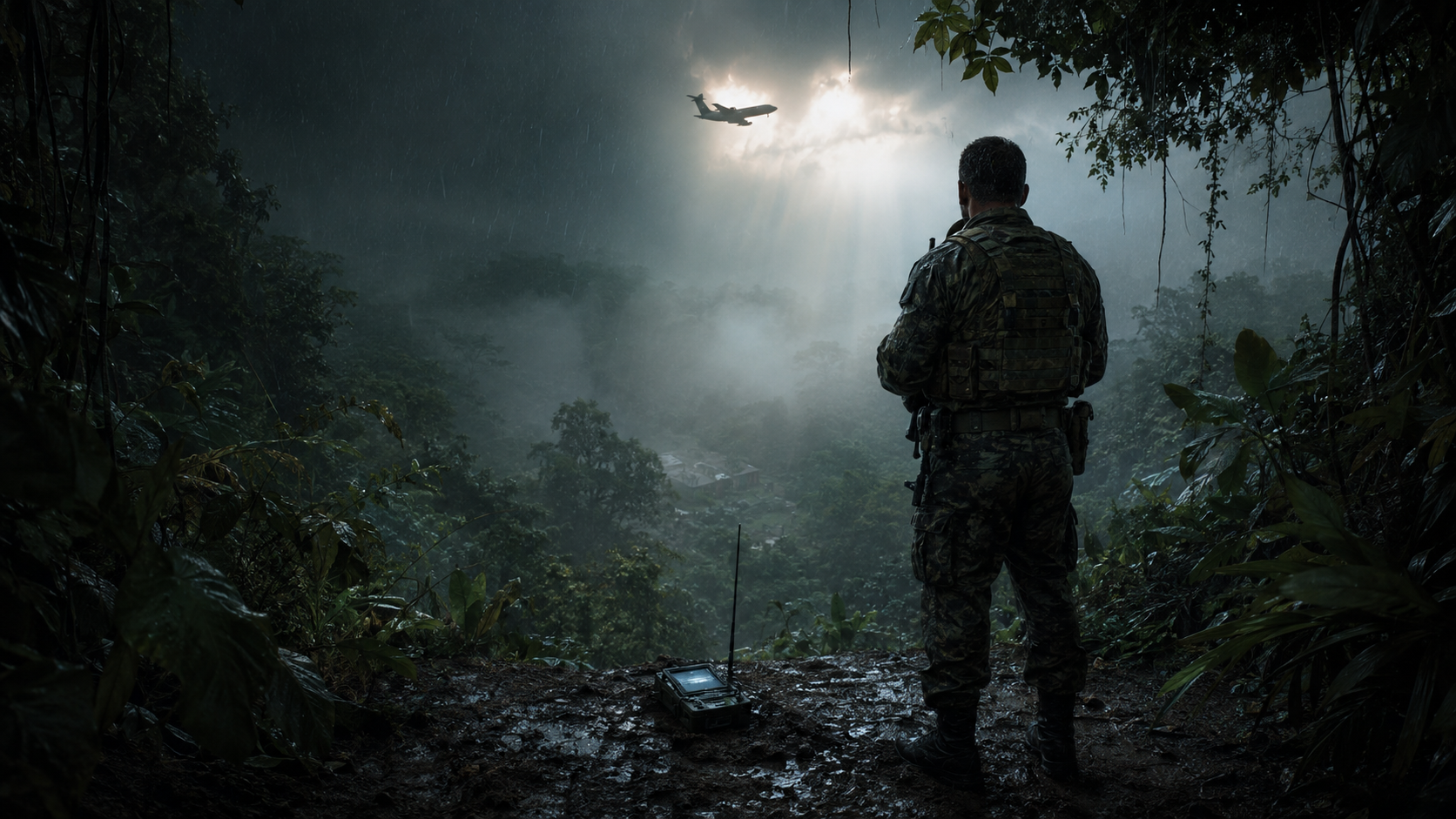
US Forces Could Strike Cartel Targets Inside Colombia
Colombia Opens the Door to US Military Strikes Against Cartels
Colombia has asked the United States to collaborate in joint military operations against armed criminal organisations, potentially opening a new front in Washington’s expanding war against drug cartels. The request could bring American intelligence, surveillance and strike capabilities directly into operations conducted on Colombian territory.
US defence chief Pete Hegseth announced the move during a meeting of the Americas Counter-Cartel Coalition in Panama on Wednesday. He said Colombia had authorised joint operations intended to destroy what Washington and Bogotá describe as terrorists and terror networks, although neither government has yet published the agreement or defined its operational limits.
Colombia’s New Government Changes Course
The request follows the inauguration of conservative President Abelardo de la Espriella, who has promised a sweeping crackdown on illicit crops, trafficking networks and armed groups. His government has also joined the US-led Americas Counter-Cartel Coalition, becoming its nineteenth member.
That represents a sharp change from the position taken under former president Gustavo Petro. His administration supported intelligence sharing and conventional drug interdiction but opposed Washington’s lethal strikes against suspected trafficking vessels and resisted the expansion of unilateral US military power across the region.
De la Espriella has instead aligned Colombia with President Donald Trump’s “Shield of the Americas” strategy. Washington has reinforced that partnership by announcing $1 billion in security assistance intended to help the new Colombian government confront criminal and armed organisations.
Joint Strikes Are Now Being Discussed
Hegseth confirmed that discussions had included possible joint strikes against groups such as the National Liberation Army, known as the ELN, and dissident organisations formed by former members of the Revolutionary Armed Forces of Colombia. Several of these groups combine territorial control, drug trafficking, extortion and armed attacks against the state.
The word “joint” matters. Colombia and the United States have cooperated against drug trafficking for decades, but much of that relationship has centred on funding, equipment, training, intelligence and Colombian-led operations rather than overt American attacks inside the country.
The emerging arrangement could go further. US forces already conduct lethal operations against organisations Washington has designated as terrorist groups, and Hegseth said such organisations could become legitimate American targets when the relevant national government agrees.
No specific target list, deployment timetable or rules of engagement have been released. It therefore remains unclear whether US involvement would initially mean surveillance and targeting support, strikes carried out from outside Colombia, embedded military personnel or direct participation in operations on the ground.
Why Colombia Wants American Power
Colombia’s armed groups have proved extraordinarily difficult to eliminate. Mountainous terrain, dense jungle, remote borders and the immense profits generated by cocaine allow organisations to replace commanders, move laboratories and rebuild networks after military defeats.
American cooperation could provide advanced reconnaissance aircraft, satellite intelligence, intercepted communications and precision-strike capabilities that Colombia cannot deploy at the same scale. Coordinated pressure on land, sea and air could make it harder for armed groups to protect production sites and move cocaine towards the Pacific and Caribbean coasts.
Colombian Defence Minister Jorge Eduardo Mora said his country could play a critical role on both coastlines. His comments indicate that Bogotá views the alliance not merely as a request for assistance but as an attempt to place Colombia near the centre of a hemisphere-wide counter-narcotics campaign.
The government’s argument is straightforward: trafficking networks cross borders, finance heavily armed organisations and exploit divisions between states. A coalition able to share intelligence and pursue the same networks across several countries could deny them the safe routes and territorial gaps on which they depend.
The Risks Are Just as Serious
Greater firepower does not guarantee a lasting reduction in the drug trade. Killing commanders or destroying camps can fracture organisations into smaller factions, redirect trafficking routes and trigger violent competition for territory without removing the international demand that finances the system.
Washington’s existing campaign illustrates the scale of the escalation. Under Operation Southern Spear, the US military has attacked suspected trafficking vessels in the Caribbean and eastern Pacific, with official oversight reporting recording dozens of strikes and more than 200 people killed or presumed dead since the campaign began.
The United States maintains that it is targeting designated terrorist organisations. Critics dispute the legal basis for treating suspected traffickers as wartime targets and argue that lethal action can bypass arrest, prosecution and the presentation of evidence before a court.
Those concerns will become even more politically explosive if American forces attack targets inside Colombia. Civilian casualties, faulty intelligence or strikes near isolated communities could rapidly weaken public support and hand armed groups a powerful recruitment narrative.
Colombia’s Constitution Could Become a Battleground
Domestic approval may also prove complicated. Colombia’s Constitution gives the Senate authority to permit the transit of foreign troops through national territory, while the Council of State has a consultative role concerning foreign forces, aircraft and warships.
The precise process required will depend on what the proposed operations involve. Intelligence sharing, remote surveillance and Colombian-led missions may be treated differently from the arrival of US combat personnel or aircraft conducting strikes.
Opposition politicians are already presenting the issue as a test of sovereignty. The administration will need to demonstrate that Colombia remains in command of operations rather than allowing Washington to decide independently who can be targeted inside the country.
That distinction could determine whether the partnership becomes a durable national security policy or an immediate constitutional confrontation.
A New Phase in America’s Cartel War
The Americas Counter-Cartel Coalition is now preparing a campaign plan expected to be approved by November. Members are assigning regional responsibilities, establishing working groups and deciding which countries will lead operations against particular networks.
For Trump, Colombia’s participation is a major strategic gain. It places the region’s largest cocaine-producing country inside a military-led coalition and gives Washington a willing partner after months of hostility with the previous Colombian government.
For de la Espriella, the decision is a wager that American military power can deliver results that decades of eradication, interdiction and peace negotiations have not. Success would require more than destroyed camps: the government would need to reduce territorial control, protect communities, prosecute criminal leadership and prevent defeated networks from regenerating under new names.
Colombia has opened the door to an unusually aggressive partnership, but it has not yet shown the public what will come through it. The next decisive moment will be the publication—or continued concealment—of the mission’s targets, legal authority and rules governing when American forces may use lethal power inside Colombia.
