

Could Elon Musk Really Bring Down Keir Starmer? The Feud Reshaping British Politics
The Political War Between Musk And Starmer Explained
Elon Musk Vs Keir Starmer: How A Tech Billionaire Became Labour’s Most Unwanted Critic
Few political rivalries have emerged as unexpectedly as the one between Elon Musk and Keir Starmer. One is the Prime Minister of the United Kingdom. The other is the owner of X, founder of Tesla and SpaceX, and arguably the most influential private citizen on Earth.
Their conflict did not begin with a single event. Instead, it developed gradually as Musk became increasingly vocal about British politics, immigration, free speech, policing and government power.
What makes the feud unusual is that Musk holds no elected office in Britain. Yet his comments regularly dominate British political discussion, forcing ministers and journalists to respond. Few foreign figures have exercised that level of influence over UK political debate in recent decades.
The Grooming Gangs Controversy Changed Everything
The relationship deteriorated dramatically in early 2025 when Musk launched public attacks over historic grooming gang scandals.
Musk argued that British institutions had failed victims for years and specifically criticised Starmer's record as Director of Public Prosecutions between 2008 and 2013. He suggested Starmer bore responsibility for failures to prosecute offenders during that period.
Starmer rejected those accusations and argued that they distorted the historical record. He pointed to reforms introduced during his time leading the Crown Prosecution Service and stated that politicians and activists were spreading misinformation about the issue.
For Musk's supporters, this was evidence that powerful institutions were unwilling to confront uncomfortable truths.
For Starmer's supporters, it was evidence that Musk was using an emotionally charged issue to attack political opponents.
That disagreement became the foundation of a much wider conflict.
Free Speech Versus Government Control
The feud expanded beyond grooming gangs and moved into broader questions surrounding free speech and online regulation.
Since acquiring X, Musk has repeatedly positioned himself as a defender of open debate. He has criticised governments across Europe for what he sees as increasing censorship and restrictions on political discussion.
Starmer's government has taken a different approach. Ministers have supported stronger regulation of online platforms, particularly during periods of civil unrest and when dealing with harmful content. The government has repeatedly highlighted the responsibilities of social media companies under Britain's Online Safety framework.
This creates a fundamental philosophical clash.
Musk generally argues that excessive moderation threatens democracy.
Starmer generally argues that insufficient moderation can threaten public order.
Neither side sees the disagreement as merely technical. Both view it as a battle over the future rules governing public debate itself.
Why Immigration Has Become Another Flashpoint
Immigration has become another major source of tension.
Musk has frequently commented on migration issues across Europe and has increasingly aligned himself with critics of current immigration policies. He has argued that uncontrolled migration creates social instability and weakens public trust in institutions.
Recent unrest in parts of Britain intensified these disagreements. Musk used X to comment on several high-profile incidents, often questioning official narratives and highlighting public anger over immigration and policing.
Starmer responded by accusing Musk of interfering in British politics and attempting to inflame divisions within the country. He argued that Britain should not allow external actors to shape domestic tensions for political purposes.
The language on both sides has become increasingly direct.
What began as criticism has evolved into open confrontation.
Could Musk Actually Remove Starmer From Office?
This is where reality becomes important.
Despite headlines and speculation, Elon Musk cannot directly remove Keir Starmer as Prime Minister.
Britain's political system does not work that way.
A Prime Minister leaves office through elections, parliamentary votes, internal party leadership challenges, resignation, incapacity or other constitutional mechanisms. A private citizen, regardless of wealth, cannot simply force a Prime Minister out through legal action.
However, there is a more nuanced question.
Can Musk influence the conditions that eventually weaken a Prime Minister?
The answer is clearly yes.
Musk commands one of the largest personal audiences in the world. His posts reach tens of millions of people. He can amplify issues, shape narratives, boost political movements and direct attention toward stories that traditional institutions might prefer to ignore.
That does not mean he controls outcomes.
It does mean he can influence conversations.
And conversations often influence politics.
The Legal Angle Behind Recent Speculation
Reports suggesting Musk is exploring legal avenues against Starmer generally stem from broader disputes involving free speech, platform regulation, AI liability and political criticism.
There are ongoing legal controversies involving Musk's companies, particularly xAI and X, in the United Kingdom. Several legal cases and regulatory disputes are developing around AI-generated content and platform responsibilities.
Those disputes could create political pressure for Starmer's government.
They could create public relations challenges.
They could even influence future legislation.
But they do not currently present a realistic route for removing Starmer from office.
That distinction is important.
Political pressure and constitutional removal are completely different things.
The Bigger Story Behind The Feud
The deeper significance of the Musk-Starmer conflict is not whether one man defeats the other.
It is what the conflict represents.
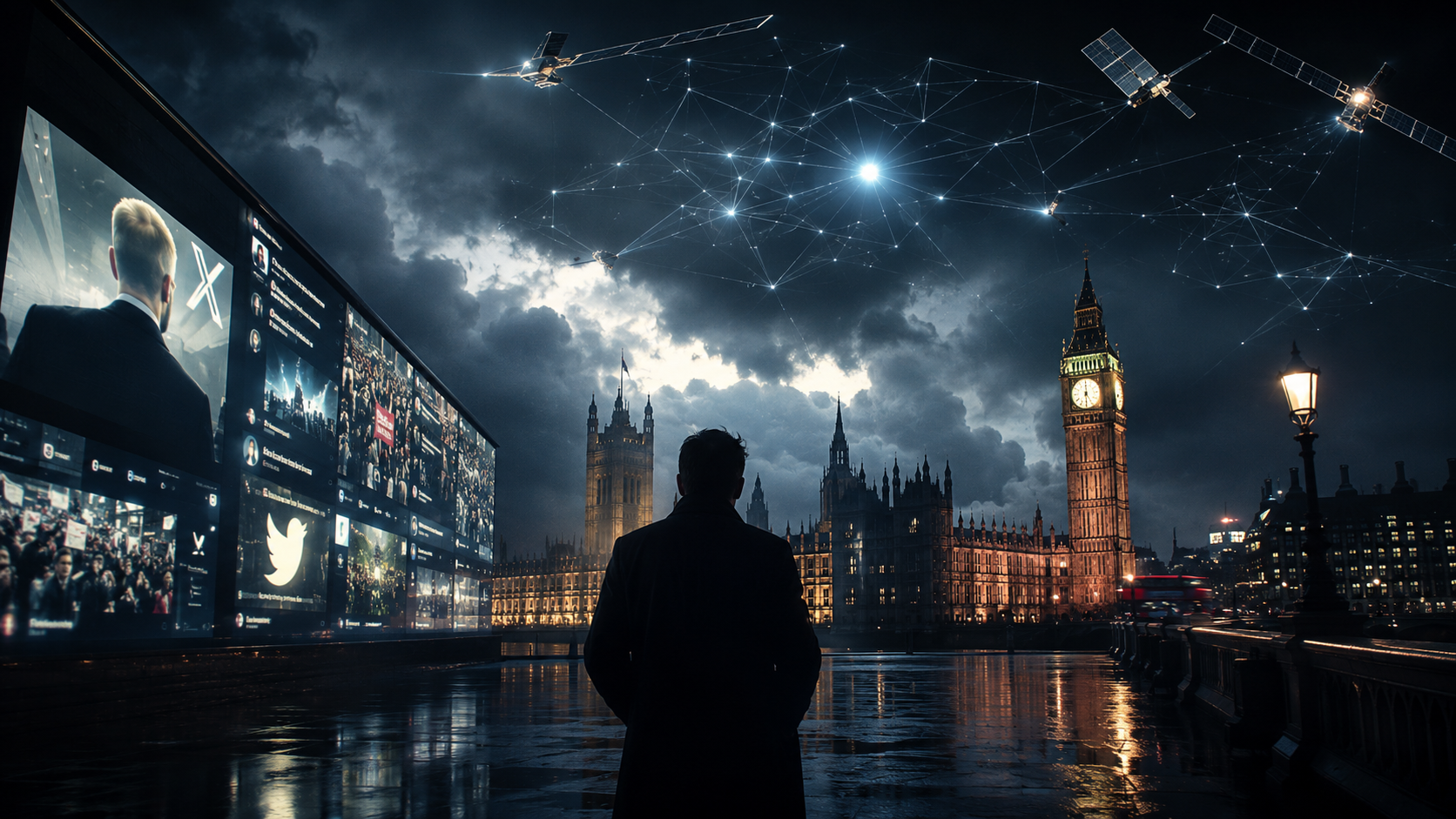
For many people, Musk symbolises a new form of decentralised influence where individuals with technology platforms can challenge governments directly.
For many others, Starmer represents the traditional democratic model in which elected governments retain authority over national institutions and public policy.
The clash between them is therefore not merely personal.
It reflects a much larger struggle unfolding across Western democracies.
Who should shape public debate?
Governments?
Media institutions?
Technology platforms?
Or influential individuals with global audiences?
That question will remain long after either Musk or Starmer leaves the political stage. The real significance of their feud is that it exposes a new reality of modern politics: elected leaders still hold formal power, but increasingly they must share the public conversation with unelected figures whose reach rivals that of entire governments.
