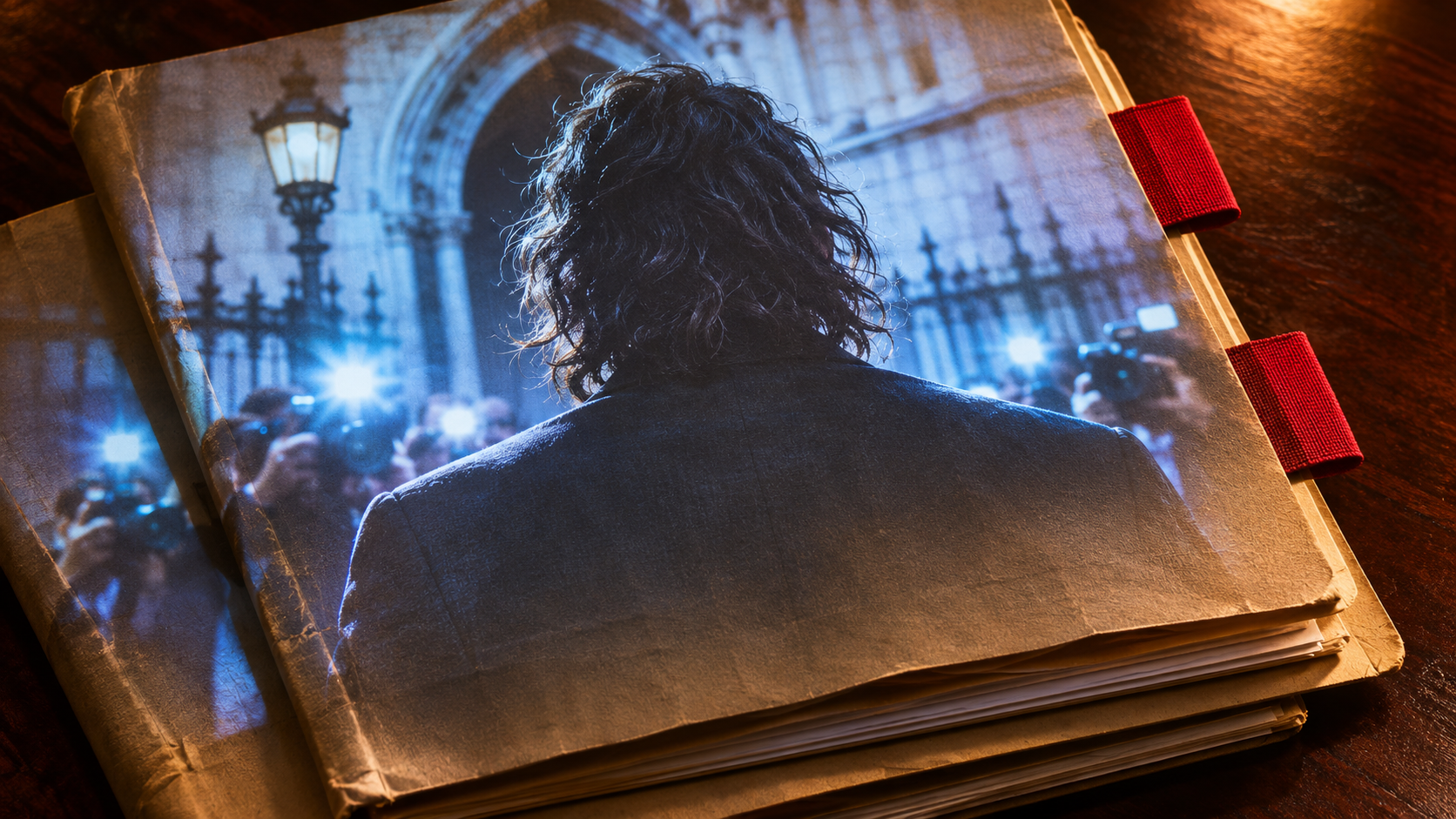
Timeline From the Channel 4 Documentary to the Verdict
The Jury Decided Seven Charges. Two Other Women Are Still Waiting For A Decision.
Russell Brand could face a further prosecution. On 5 November 2026, the day a jury convicted him of rape and three sexual assaults, it emerged that the Metropolitan Police were still investigating rape allegations made by two other women. Detectives had interviewed Brand under caution and submitted files concerning both complaints to the Crown Prosecution Service. Police said further investigative work was under way.
That leaves Brand in two different legal positions. He faces sentencing for four crimes proved at Southwark Crown Court. In the two outstanding matters, prosecutors have evidence to consider, but no further charge had been announced at the time of writing. A further conviction is possible only if a new case proceeds and Brand pleads guilty or is found guilty in court.
One detail helps explain how the case reached this point. The six women whose evidence went before the London jury were different from the women whose allegations first appeared in the 2023 investigation by Channel 4’s Dispatches, The Times and The Sunday Times. The programme helped bring the six women forward. The jury was deciding what happened to them.
What Are Police Still Investigating?
According to a Metropolitan Police statement reported by Sky News, detectives are investigating two further allegations of rape. The force confirmed three concrete steps. Officers had interviewed the suspect under caution, submitted files to the CPS in relation to both complainants and remained in contact with prosecutors while enquiries continued.
Reporting from pre-trial hearings adds one significant detail. One of the women said she had dated Brand when she was a 16-year-old schoolgirl and he was 30. Her rape allegation was outside the seven counts the jury decided. Fewer details have been made public about the second complaint. There is no sound basis for identifying that woman by matching fragments of her story to accounts in a newspaper or television programme.
The submission of both files matters because it places the allegations further along than an initial report to police. Detectives have had the opportunity to question Brand and put material before prosecutors. What the public cannot see is equally consequential. The police statement does not disclose his answers, the evidence in either file, what further work detectives are undertaking or when prosecutors expect to make a decision. Those gaps make predictions about another trial unreliable.
What Did The Russell Brand Documentary Claim?
Channel 4 broadcast Russell Brand: In Plain Sight on 16 September 2023, alongside the newspapers’ investigation. The joint reporting carried allegations from four women, including rape, sexual assault and abuse. The journalists also spoke to people who had worked around Brand. Before publication, Brand issued a video denying the allegations and saying his sexual relationships had been consensual.
One woman, identified by the pseudonym Nadia, alleged that Brand raped her at his Los Angeles home in July 2012. She told the programme they had previously had consensual sex. On the occasion she described, she said she told him to stop and tried to get away. The distinction was central to her account. She was describing what she said and did during one particular encounter with someone she already knew.
The journalists examined messages exchanged afterwards, including an apology from Brand and a reply in which Nadia challenged his conduct. They also reviewed a written account she had given when she sought treatment at a rape crisis centre that day. Those records gave the journalists something they could date independently of their interview years later. They established that she had described the incident at the time. The 2026 London verdict concerned a different rape, committed in England in 2009.
Another woman, called Alice in the programme, said she had been at school when she began a relationship with Brand. She described him encouraging her to lie to her parents and alleged that he forced her into a sexual act. A family friend confirmed to the programme that the relationship had taken place during the period she described. That witness could help establish when the two knew each other. The account of the alleged assault itself came from Alice.
A third woman, given the pseudonym Phoebe, described how a personal acquaintance became a working relationship. She said Brand offered her a job and that, after a work event, he held her down and tried to have sex with her. She also alleged that he later threatened legal action if she discussed what had happened. The programme interviewed three people she had told about the alleged incident afterwards.
The documentary also asked what colleagues had seen in the course of doing their jobs. Former personal assistant Helen Berger said Brand asked her to obtain phone numbers from women in television audiences. Other colleagues described similar requests. This part of the reporting raised a practical question for the broadcasters employing him. If a junior worker felt uncomfortable carrying out an instruction from the star of a programme, who had the authority to intervene, and what happened when somebody spoke up?
What The Jury Actually Found
The clearest illustration of the jury’s approach comes from a party at a Soho bar in 2004. An MTV worker described two incidents involving Brand that evening. Jurors convicted him of sexually assaulting her at the party. They acquitted him of raping her in a toilet. Two charges concerning the same woman on the same night produced different verdicts.
The rape conviction concerned a 21-year-old fan who met Brand after a 2009 performance at the Hammersmith Apollo. The court heard that there had been a consensual sexual encounter in his dressing room. The rape occurred later. The earlier encounter was part of the evidence the jurors heard, and they found him guilty of the subsequent offence.
The other sexual assault convictions concerned a Capital Radio worker whom Brand kissed and groped in 2005 and a Channel 4 worker whom he sexually assaulted during a work engagement in 2009. Jurors acquitted him of raping a woman he met in Bournemouth in 1999 and of an attempted indecent assault involving an MTV worker in 2001. Together with the Soho verdicts, that accounts for all seven charges.
Brand denied the charges and gave evidence in his defence. The verdicts establish four offences against four women. They also settle the outcome of the three charges on which he was acquitted. None of the seven verdicts answers the factual question detectives face in either of the two outstanding complaints.
The Timeline From Dispatches To The Outstanding Police Files
16 September 2023 — The investigation becomes public. Channel 4 airs the documentary and the newspapers publish their reporting. In the period that follows, women who had not featured in the original investigation approach the police. Reuters reported that the six complainants in the eventual London trial did not know one another.
March 2024 — Channel 4 publishes its internal findings. The broadcaster says it received two reports through its confidential reporting system after the programme aired. One contained too little information for investigators to substantiate it. In examining the other, Channel 4 found that a complaint originally made in 2009 should have gone further up the management chain and should have been investigated at the time. That finding answers part of the documentary’s workplace question. A concern had reached the organisation, and its own procedures had failed the person who raised it.
4 April 2025 — Prosecutors authorise the first five charges. These concerned allegations involving four women and incidents between 1999 and 2005. Someone following the case from this announcement would have known nothing from the charge list about the 2009 Hammersmith offence that ultimately resulted in the rape conviction.
23 December 2025 — Two charges are added. The CPS authorises one charge of rape and one of sexual assault following reports from two additional women about incidents in 2009. This brought the prosecution to seven charges involving six women. Both December charges were heard at Southwark. The phrase “further charges” in the CPS announcement from 2025 can therefore mislead anyone searching for an update now. It refers to counts already decided by the November jury.
October to 3 November 2026 — The jury hears the evidence. The prosecution and defence put their cases at Southwark Crown Court. During the proceedings, the judge reduced the 2001 allegation from indecent assault to attempted indecent assault. On 3 November, jurors retired to consider the seven counts in their final form.
5 November 2026 — Four convictions, three acquittals and confirmation of continuing enquiries. The judge told Brand to expect a significant prison sentence. Sentencing was listed for Monday 9 November. Separately, the Metropolitan Police confirmed the position on the two outstanding rape complaints, including the submission of both files to prosecutors.
What Would Have To Happen For Brand To Be Convicted Again?
The immediate decision belongs to prosecutors. Under the CPS Full Code Test, they must assess whether the available, admissible evidence gives a realistic prospect of conviction on a particular charge. That requires them to consider the reliability of the evidence, the account given by the suspect and how a defence could affect the case. If the evidence passes that test, prosecutors must also consider whether a prosecution is in the public interest.
There are several possible outcomes for the two files. Further enquiries could give prosecutors enough information to reach a decision. They could authorise a charge in one matter and reach a different conclusion in the other. They could also decide the evidence is insufficient to prosecute. The Met’s confirmation that detectives are still working with the CPS leaves those possibilities open.
If prosecutors authorise a charge and Brand contests it, a new jury would have to be sure of his guilt before convicting him. The charging decision and the verdict answer different questions, at different times, on the evidence available to different people. That distinction mattered at Southwark, where all seven counts reached the jury and three ended in acquittals.
For anyone following what happens next, there are two developments to watch for. On 9 November, the sentencing hearing is due to address punishment for the four offences already proved. For either woman whose complaint is still under investigation, the consequential announcement would come separately, when prosecutors say whether her allegation will go to court.
Sources
Reuters — The verdicts at Southwark Crown Court and the distinction between the documentary contributors and trial complainants. Reuters
Associated Press — Brand’s convictions, acquittals and sentencing date. apnews.com
Page Six — The Metropolitan Police statement supplied to Sky News about the two further files. The Sun — Reporting from the pre-trial hearings about one outstanding allegation. pagesix.com
Associated Press — The original joint investigation and Brand’s response. KQED — The accounts and supporting material described in Dispatches. apnews.com
Channel 4 — Findings on the broadcaster’s handling of complaints. Channel 4
Crown Prosecution Service — The two charges added in December 2025. Crown Prosecution Service — How prosecutors decide whether to charge. The Crown Prosecution Service
Sky News — Why the 2001 charge changed during the trial. Sky News
