Dome Collapses, Interior Destroyed: Teatro Sannazaro Fire Stuns Naples
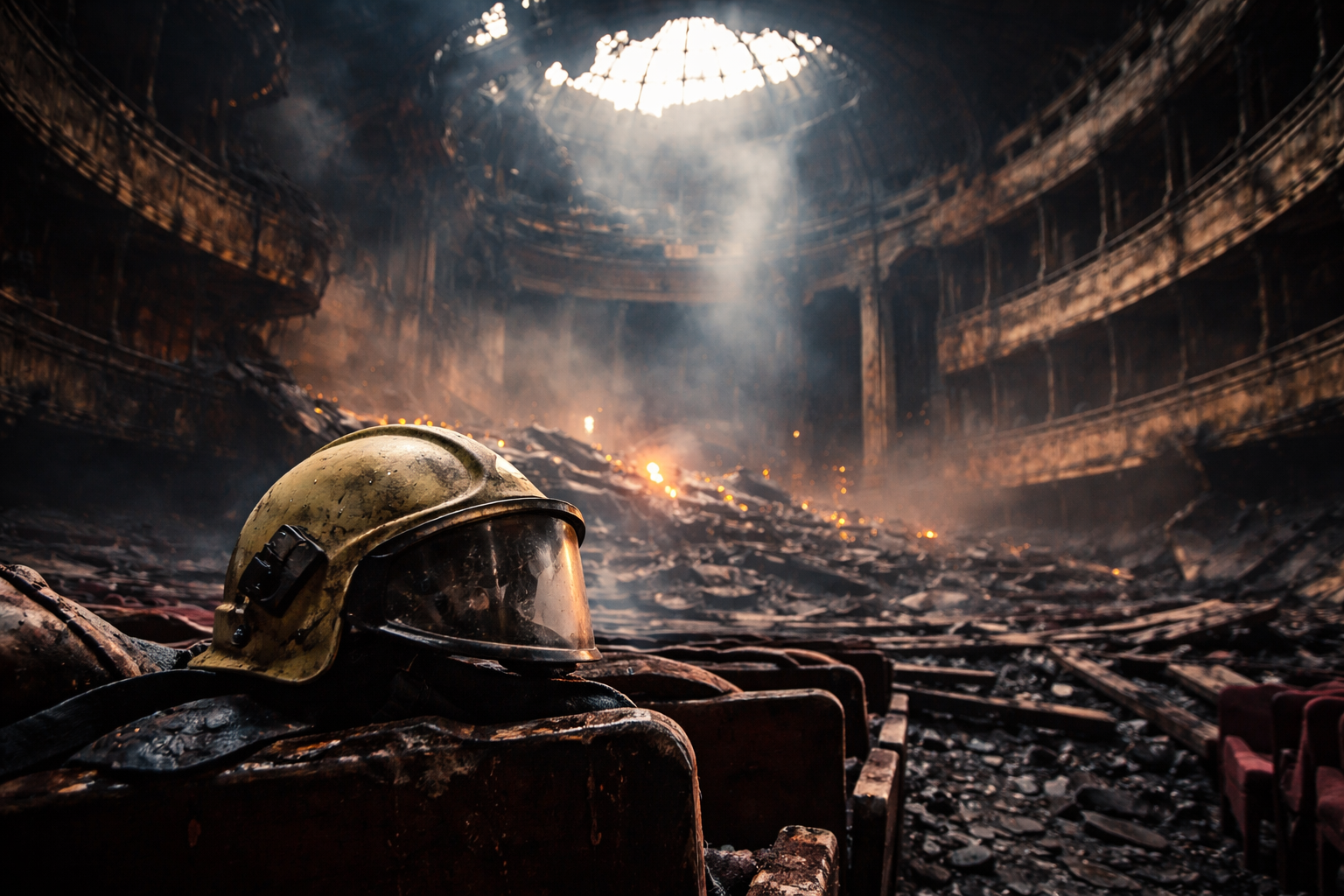
Historic Teatro Sannazaro Gutted as Fire Rips Through Naples Landmark
Naples’ Teatro Sannazaro Reduced to Ashes in Raging Blaze
The domed roof came down, and what had been velvet, gilding, and carved wood became a blackened cavity. A major fire gutted Naples' Teatro Sannazaro, an 1840s theater known for its ornate interior.
By mid-morning Tuesday, February 17, 2026, firefighters were still chasing hotspots and smoke in the Chiaia area, while residents described thick fumes hanging over the neighborhood.
Officials said the fire appears to have started in a nearby residential building and then spread rapidly into the theater, a worst-case scenario when a historic auditorium is built around a wood-heavy interior.
The central tension is simple: everyone wants to “restore it,” but the city can only reopen what engineers and investigators can certify as safe—and that certification process can dominate the timeline more than fundraising does.
The story turns on whether the structure can be stabilized and documented enough to rebuild a wood-framed interior to modern code without losing the theater’s protected identity.
Key Points
A large fire gutted the interior of Naples’ historic Teatro Sannazaro on February 17, 2026, after flames spread from a nearby residential building, officials said.
The theater’s wood-heavy interior and concealed spaces likely accelerated fire growth, and the domed roof collapsed into the building, worsening damage.
Early official statements indicate no reported deaths; multiple people were treated for smoke inhalation, and nearby residents were evacuated.
The cause is still under investigation; initial indications point to an accidental origin, but investigators will have to map ignition, spread pathways, and any contributing failures.
“Restoration” will likely mean a hybrid: salvage what can be proven stable, then reconstruct major interior elements under modern fire and life-safety requirements.
The next 24–72 hours will be dominated by scene safety, structural shoring decisions, and the first technical assessments that determine whether rebuilding is feasible on the existing shell.
Teatro Sannazaro opened in the 19th century and sat in a dense urban fabric where residential buildings and cultural venues share walls, voids, and courtyards. That proximity matters in a fire because it creates routes for heat and flame to travel—through roofs, attics, service shafts, and hidden cavities.
Historic theaters are also unusually vulnerable once fire reaches the auditorium. The “look” people love—tiered boxes, carved ornament, fabric finishes—often implies wood, voids, and layered surfaces that ignite easily, produce heavy smoke, and allow fire to run above sight lines.
Italy has lived this story before. Venice’s La Fenice and Bari’s Teatro Petruzzelli both burned and were rebuilt over years, reminding cities that reopening is possible—but slow and complex.
Analysis
How a fire in a neighboring building can consume a theater in minutes
The reported origin in a nearby apartment block matters because it shifts the first question from “What failed inside the theater?” to “How did the fire bridge the gap?” Investigators will focus on the physical pathways that let flame and hot gases move laterally.
Rooflines, shared attics, utility runs, or shortcuts from renovations can connect a theater to adjacent structures in dense districts. A small breach—an unsealed penetration, a void behind decorative finishes, a service corridor—can become a high-speed chimney once superheated smoke starts flowing.
A wood-framed or wood-lined interior then behaves like fuel packaging. Even when the exterior is masonry, the auditorium can be a combustible box inside a stone wrapper. When fire reaches that box, suppression becomes harder because flames can travel above ceilings and behind ornaments where hoses cannot easily reach.
The cause of the fight: accident, electrical fault, or human error
Officials have said it is too early to state a cause while also suggesting early indications of an accidental start. That language usually means investigators have not yet completed the basic triage: identify the ignition area, eliminate obviously incompatible theories, and preserve evidence before cleanup or collapse removes it.
Right now, there are at least three plausible cause categories, each with a different evidence signature.
An accidental domestic fire in the residential building would leave a traceable point of origin—one unit, one room, one ignition source—with witness accounts, electrical patterns, or appliance remnants. An electrical fault narrative would be tested by circuit mapping, breaker status, arc marks, and where the earliest heavy damage concentrates. Human error, including renovation or maintenance work, is examined through permits, contractor presence, and whether any hot work was underway.
The key constraint is that heavy structural damage and roof collapse can erase the clean “burn patterns” investigators rely on. That is why early scene control—photographs, drone mapping, debris sequencing, and protected evidence zones—can matter as much as the eventual lab work.
The constraint: what engineers can prove is still safe
After the flames, the next danger is gravity. A collapsed dome and a burned interior change load paths. Masonry can crack or bulge, steel can lose strength from heat, and timber members can fail days later as charred sections cool and shrink.
Engineers will typically prioritize a swift, conservative question: Can the shell stand, and can crews work inside without triggering progressive collapse? That drives decisions about shoring, temporary roofs, debris removal order, and whether adjacent buildings remain habitable.
This process is also where public optimism can collide with technical reality. If key structural elements are compromised—especially where the dome meets supporting walls—the project may shift from “restore what remains” to “carefully dismantle and rebuild,” even if the facade stays.
The hinge: “restoration” vs “reconstruction,” and who signs the paper
In a wood-framed theater interior, “restoration” is rarely a literal return of the original materials. Much of what burned—woodwork, upholstery, plaster finishes—cannot be made structurally or hygienically safe after deep charring and smoke contamination.
What usually happens instead is a staged reconstruction that aims to reproduce the appearance while upgrading the hidden systems: fire compartmentation, detection and alarm, smoke extraction, sprinkler coverage, and safe egress. The theater can look historic but behave like a modern assembly space.
The hinge is who can certify each step. Prosecutors and fire investigators determine when the scene can be altered. Structural engineers determine when the building is safe to enter and what must be removed. Heritage authorities determine what must be conserved, replicated, or documented. Insurers and funders determine what is financially covered. Each signature is a potential bottleneck, and the slowest signature often becomes the schedule.
The signal: what the first technical reports will reveal
In the next days, the most meaningful public updates will not be emotional promises to rebuild. They will be technical signals.
One signal is the declared condition of the main structural shell: “stable,” “partially compromised,” or “unsafe without major intervention.” Another is whether investigators can narrow the ignition to a specific apartment, roof void, or service area. A third is whether nearby buildings remain evacuated, which hints at ongoing structural or environmental risk.
Finally, watch for the first credible description of scope. If officials begin talking about “reconstruction of the interior” rather than “restoration,” that is an implicit admission that most fabric is gone and the project will be measured in years, not months.
What Most Coverage Misses
The hinge is that reopening will be paced less by money and more by proof: proof of origin, proof of structural stability, and proof that a rebuilt interior meets modern life-safety standards without violating heritage constraints.
That proof changes incentives and timelines because every stakeholder becomes risk-averse. Investigators delay alterations until evidence is secured. Engineers delay reopening until load paths are verified. Heritage authorities delay approvals until documentation is complete. Insurers delay payouts until causation and scope are defensible.
Two near-term signposts will confirm this. The first signpost will be whether prosecutors formally restrict site changes beyond safety shoring, thereby slowing down debris removal and design work. Second, whether engineers issue a clear verdict on the shell within days is crucial, as a “compromised” finding forces a redesign from restoration to controlled rebuild.
What Happens Next
In the short term, expect a narrow sequence. Fire crews finish extinguishment and cooling. Authorities keep residents out if there is a smoke hazard, structural risk, or falling debris. Engineers decide what needs immediate shore-up, while investigators start their origin-and-cause work.
Over the next few weeks, the timeline diverges. One path is stabilization and partial retention: shore the shell, remove unsafe elements, document heritage features, and then tender a reconstruction package. The other is a major compromise: if structural damage is severe, the plan becomes selective dismantling, facade retention if possible, and a largely new internal build.
In the long term, reopening depends on a “because” mechanism: because modern codes demand predictable evacuation and fire suppression, the rebuilt Sannazaro will likely require hidden systems that did not exist before—systems that take design time, approvals, and careful integration to avoid destroying the theater’s character.
Key decisions to pay attention to include the official count of injuries and evacuations, any legal actions that label the fire as careless or just an accident, the initial report on structural damage, and any news about state or local funding linked to a specific project instead of general support.
Real-World Impact
A neighborhood impact comes first. Residents displaced by smoke damage or structural risk may face weeks of temporary housing, insurance disputes, and uncertainty about when they can return.
Local cultural workers feel the second shock. A theater is not only a stage; it is a payroll network of technicians, musicians, front-of-house staff, and small vendors who rely on scheduled seasons.
The city’s tourism and identity ecosystem takes the third hit. Even when visitors never enter the building, a destroyed landmark changes the story a city tells about itself—and forces officials to choose between speed, authenticity, and safety.
Finally, other venues will quietly reassess their own risk. After a highly visible theater fire, owners and regulators often accelerate inspections, push for updated detection and suppression, and review whether adjacent-building interfaces create unrecognized spread routes.
The rebuild choice that will define Naples’ cultural memory
Naples now faces a trade-off that looks emotional but is actually technical: rebuild quickly to restore cultural life, or rebuild slowly to prove safety and preserve identity.
The cleanest outcome is not a replica at any cost. It is a credible, certified reconstruction that keeps what can be saved, reproduces what must be replaced, and upgrades the hidden systems that determine whether a crowded room can escape smoke.
Watch the signposts that reveal which fork the city is taking: the engineer’s language about structural compromise, the prosecutor’s control over the scene, and the first scope statement that admits whether “restoration” is, in practice, a modern rebuild in historic clothing.
If Naples can clear those hurdles, Teatro Sannazaro’s reopening will join Italy’s short list of cultural recoveries that turned a ruin into a renewed civic anchor.
