

Earl Spencer Accuses King Charles Of “Gaslighting” Him As Explosive Diana Row Deepens
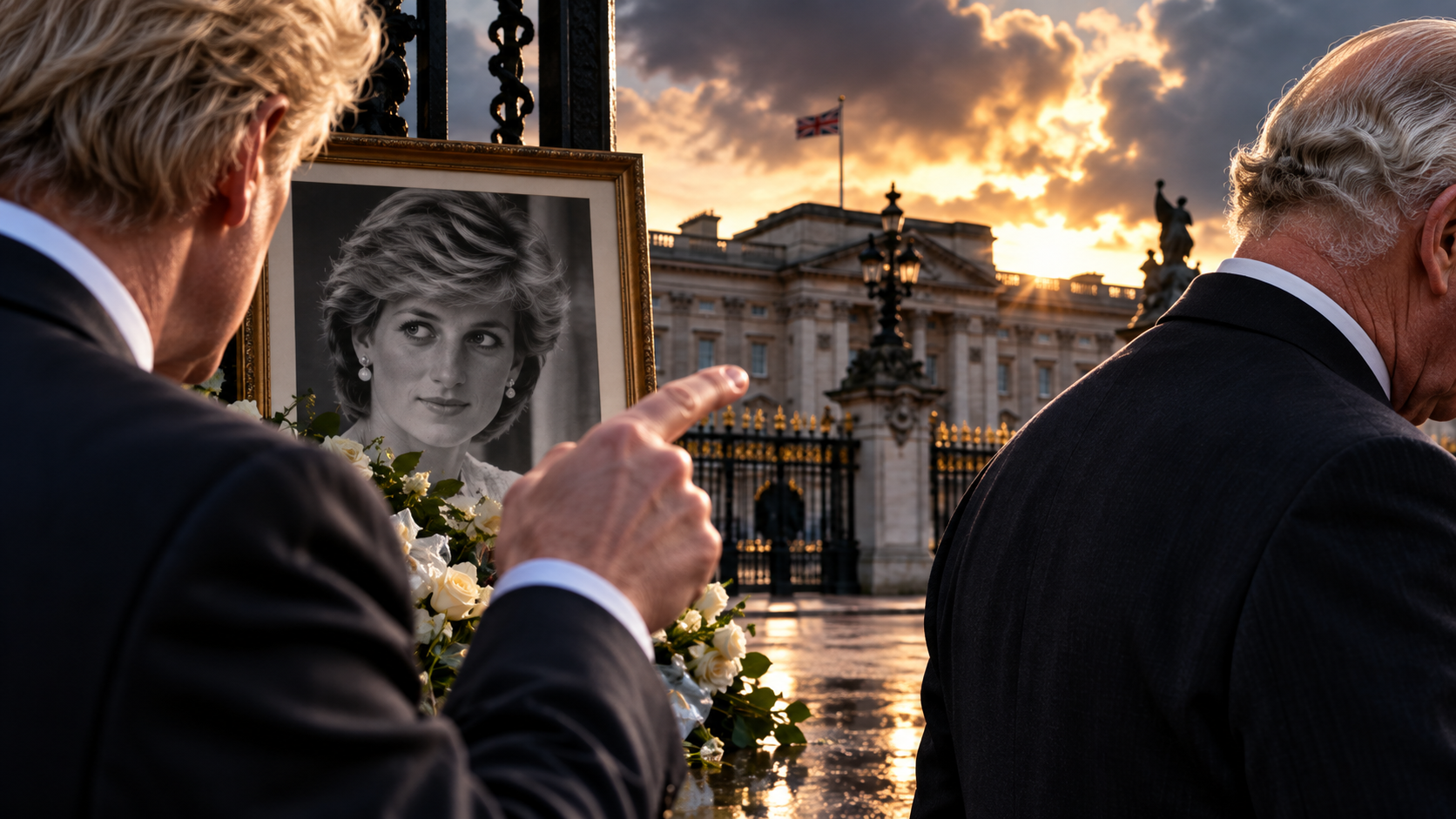
Earl Spencer Hits Back At Palace In Escalating Row Over Princess Diana
“It’s Not Every Day You’re Gaslit By A King”: Earl Spencer Escalates Explosive Diana Row
Earl Spencer has accused King Charles III of “gaslighting” him after Buckingham Palace publicly challenged his recollection of an alleged conversation following the death of Princess Diana, escalating an already extraordinary dispute over events surrounding her funeral in 1997.
Princess Diana’s younger brother, Charles Spencer, said it was “not every day you wake up to find you’ve been gaslit by the King” as he hit back at the Palace response to allegations contained in his new memoir, Swan Song: Diana, My Sister. Spencer has repeatedly insisted that his account is truthful, while Buckingham Palace has questioned whether grief may have affected his recollection.
The increasingly public disagreement centres on what Spencer says happened during a heated telephone conversation with the then-Prince Charles in the days after Diana died in Paris on 31 August 1997.
Spencer alleges that during an argument over arrangements surrounding Diana’s funeral and the involvement of Princes William and Harry, Charles eventually told him that they would “forget her soon enough”.
It is a claim that Buckingham Palace has challenged in unusually direct terms.
What Earl Spencer Has Accused King Charles Of Doing
Speaking after the Palace responded to extracts from his memoir, Spencer accused the King of effectively attempting to undermine his recollection without directly addressing every detail of what he says happened.
He described the Palace response as “astonishingly provocative” and “below the belt”, and compared it unfavourably with Queen Elizabeth II’s famous “recollections may vary” response following Prince Harry and Meghan’s 2021 interview with Oprah Winfrey.
Spencer’s central objection is that the statement questioned the reliability of his memory by invoking grief.
Buckingham Palace said that while it does not generally comment on books, the King was mindful that the pain associated with losing a sibling can affect reason, judgment and memory even many years later.
Spencer interpreted that as an attempt to cast doubt on his account.
In a separate interview broadcast by ABC’s Good Morning America on 21 September, he again described the experience as being “gaslit by a king”, showing that his accusation was not an isolated remark made during a single interview.
There is an important distinction at the heart of the story: Spencer says he remembers the conversation clearly and insists it happened as described; Buckingham Palace has challenged the credibility of that recollection.
The public does not have an independent recording of the disputed 1997 conversation.
The Alleged “We’ll Forget Her Soon Enough” Comment
The most controversial passage in Spencer’s memoir concerns the period immediately after Diana’s death.
According to Spencer, he and Charles argued about Diana’s funeral, including whether the teenage William and Harry should walk behind their mother’s coffin.
Spencer says Charles became extremely angry during the call and criticised the Spencer family before allegedly making the remark that Diana would soon be forgotten. Spencer has described the words as “monstrous”.
Asked during a BBC interview what evidence he had for the conversation, Spencer said he told close friends and relatives about it immediately afterwards because of how extraordinary he found the alleged remark.
“I’m telling the truth,” he said while defending the account.
That does not independently establish precisely what was said during the private call, but it forms an important part of Spencer’s argument that the story is not a recently reconstructed memory created almost three decades later.
Buckingham Palace Makes A Rare Intervention
What transformed a controversial book extract into a wider royal confrontation was Buckingham Palace’s decision to respond.
The Royal Household often declines to engage publicly with claims made in books about members of the Royal Family. In this case, however, it issued an unusually pointed statement.
The Palace said the King recognised that “fraternal grief” could affect reason, judgment and memory following such a profound loss. Associated Press described the response as an unusually firm intervention, while Reuters also reported it as a rare public response from the Palace to Spencer’s account.
Rather than ending the story, the statement intensified it.
Spencer has argued that questioning the reliability of his memory without accepting his version of events amounted to an attempt to discredit him personally.
That disagreement now extends beyond what Charles may or may not have said in 1997. It has become a dispute about whose account of one of the monarchy’s most traumatic periods should be believed.
Spencer Also Claims Charles Sounded “Like A Lottery Winner”
The alleged funeral conversation is not Spencer’s only controversial account of the King’s behaviour after Diana’s death.
In extracts from Swan Song, Spencer claims the then-Prince Charles sounded unusually upbeat during an earlier telephone conversation after Diana died, comparing his tone to someone who had won the lottery.
Reuters reported Spencer’s allegation that Charles sounded “giddily elated”, while other extracts from the book portray Spencer as believing the Royal Family felt Diana’s death had removed a major complication from its future.
These remain Spencer’s allegations and interpretations of private conversations and behaviour.
The Palace has pushed back against the wider account by questioning the effect grief may have had on Spencer’s recollections.
Why Diana’s Funeral Is Central To The Dispute
Diana’s funeral on 6 September 1997 became one of the defining public events of modern British royal history.
Prince William was 15 and Prince Harry was 12 when they walked behind their mother’s coffin through London alongside their father, Prince Philip and Earl Spencer.
Spencer says he opposed the idea of the boys taking part in the procession and believed Diana herself would not have wanted them placed in that position.
His memoir presents the disagreement over their involvement as the setting for the alleged confrontation with Charles.
That history gives the current row added emotional weight.
The image of William and Harry following Diana’s coffin has remained one of the most recognisable images of the funeral, and Harry has himself discussed the lasting impact of walking in the procession.
Spencer’s new account therefore revisits not simply a private family disagreement, but an event watched by millions around the world.
Why Earl Spencer Says He Wrote The Book
Spencer has rejected suggestions that the memoir is intended simply to attack the King.
Speaking about Swan Song: Diana, My Sister, he said he felt a responsibility as an “eyewitness to history” to record what he remembers while he still could.
He has described the book as a personal account of Diana rather than an exposé and said he wanted to put down events that he believed were true “once and for all”.
The memoir is due to be published on 22 September 2026, almost 29 years after Diana’s death.
Its release has already generated days of coverage before readers have seen the complete book.
William And Harry Are Once Again Part Of The Story
The dispute inevitably touches Diana’s sons.
Spencer has said the claims in his book would not come as a surprise to Princes William and Harry, although that does not mean either prince has publicly endorsed every allegation.
He has also stressed that he does not regard himself as choosing between his nephews amid their long-running estrangement, saying he cares about and supports both men.
The timing has nevertheless placed Harry particularly close to the renewed discussion of Diana.
Harry and Meghan recently returned to Britain for engagements after years living in the United States, while Spencer has separately argued that Harry should receive adequate security when in the UK. Reuters reported that Spencer linked his concern to lessons he believes should be learned from Diana’s death.
Spencer Says Harry And Meghan Face Echoes Of Diana’s Treatment
Spencer has also broadened his criticism beyond the Palace response to his memoir.
Discussing press treatment of Harry and Meghan, he said he saw echoes of the hostility Diana experienced and described relentless negative coverage as potentially having a “cancerous influence” on a person’s life.
He stressed that he was not speaking on behalf of the Duke and Duchess of Sussex, but argued that lessons should be drawn from what happened to his sister.
The comments are significant because Spencer’s memoir appears to be attempting something larger than reconstructing one conversation.
It revisits the relationship between Diana, the monarchy and the British press while placing contemporary royal disputes against the backdrop of what happened in the 1990s.
The Timing Could Hardly Be More Sensitive
The controversy has erupted at a moment when Diana’s public legacy is again highly visible.
Her famous black “revenge dress”, worn in 1994 on the evening Charles publicly acknowledged adultery during their marriage, has gone back on display ahead of a planned auction.
Reuters noted that the renewed attention around the dress has coincided with the dispute over Spencer’s book, demonstrating the continuing cultural fascination with Diana almost three decades after her death.
For King Charles, it means events from one of the most difficult periods of his life are again dominating international headlines.
For Spencer, it is an opportunity to put his version of events permanently into the historical record.
And for William and Harry, it means the circumstances surrounding their mother’s death and funeral are once again being publicly debated.
A Dispute That May Never Be Definitively Resolved
The central problem is also what makes the story so enduring: the most serious allegation concerns a private conversation between two men almost 29 years ago.
Spencer says his memory is clear.
He says he discussed the alleged comments with people close to him at the time.
Buckingham Palace has challenged his recollection by pointing to the impact profound grief can have on memory and judgment.
Without contemporaneous audio or another independent record of the call, the precise words spoken cannot currently be established from publicly available evidence.
What can be established is that the disagreement is now remarkably public.
A future king and the brother of his former wife were once arguing privately over the funeral of one of the most famous women in the world.
Nearly three decades later, Earl Spencer has put his version of that conversation into print, Buckingham Palace has taken the unusual step of challenging it, and Spencer has responded by accusing King Charles of “gaslighting” him.
With Swan Song: Diana, My Sister arriving on 22 September, a dispute rooted in the chaotic days after Diana’s death has moved back to the centre of the royal story — and neither side is presenting the other’s version as the final word.
