Elon Musk And Xi Jinping
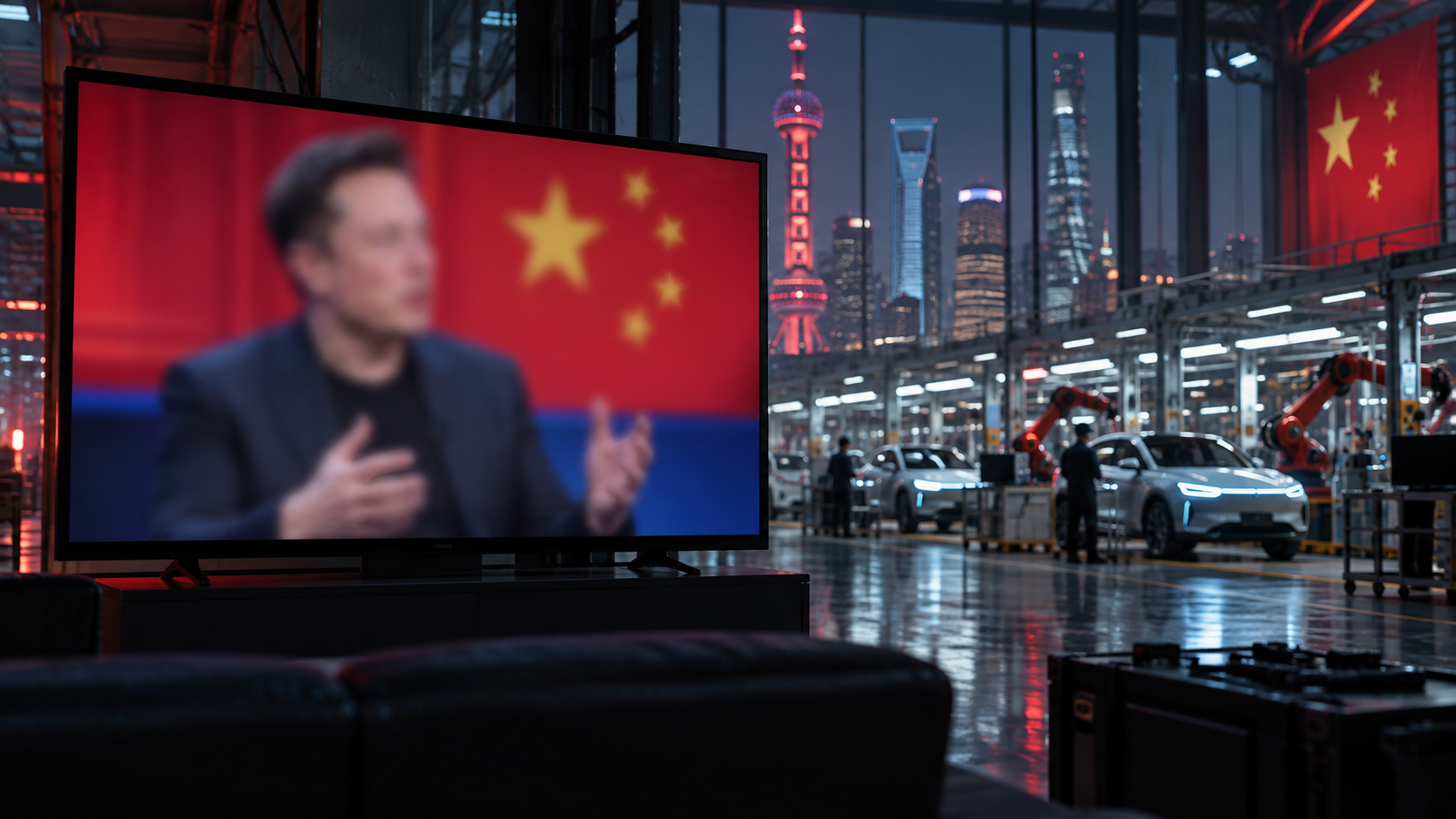
Musk Praises Xi As Trump Prepares To Welcome China’s Leader
Elon Musk Has Praised Xi Jinping On Chinese State Television Just Before Xi’s Summit With Donald Trump.
In an interview broadcast by CCTV on Wednesday, 23 September, the Tesla chief executive called China’s president a “great leader”. Reuters reported that Musk pointed to buildings, infrastructure and what he described as greater prosperity under Xi. He also praised the workforce at Tesla’s Shanghai factory and called the facility a “gem”.
The comments matter because Musk is both a prominent American technology figure and the head of a company with major operations in China. Xi is due to meet President Trump in Washington on Thursday, bringing questions about trade, technology and the two countries’ economic relationship into unusually sharp focus.
Musk’s praise is his assessment. It should not be presented as an independently established measure of how every Chinese citizen has fared under Xi, or as an endorsement of a specific agreement at the summit.
Why Tesla Makes This More Than A Diplomatic Compliment
Tesla’s Shanghai operation gives Musk a direct business interest in the stability of US–China relations. The factory is a major manufacturing hub for the company, making Chinese industrial capacity, market access and the treatment of foreign businesses practical concerns for Tesla.
His televised comments therefore have two audiences. In China, praise for Xi and for the Shanghai workforce reinforces Tesla’s commitment to its local operation. In the United States, the same remarks may prompt scrutiny of how closely a leading American executive should align himself publicly with the Chinese leader while Washington and Beijing contest trade and technology policy.
The available interview does not establish Musk’s private motive. Business interest is an important context for understanding the statement; it is not proof that he made it at anyone’s request or in exchange for a concession.
The Timing Before Trump Meets Xi
Xi’s state visit is scheduled for 23–25 September, with the principal Trump–Xi meeting expected on Thursday. Reuters has reported that the governments have been preparing to discuss economic issues while managing significant differences. Earlier reporting identified potential Chinese business participants, though the eventual delegation remained unsettled.
Musk’s remarks land in an awkwardly complex position. American policymakers want domestic investment and strategic strength in areas such as advanced technology. American companies, meanwhile, often depend on Chinese manufacturing, customers or supply chains. A chief executive can argue for constructive relations with Beijing even as the two governments compete.
That tension does not mean Musk has switched political sides. Nor does a flattering interview tell readers what Trump and Xi will agree. The test of the summit will be its concrete announcements and any subsequent implementation, rather than the warmth of an executive’s television appearance.
What Did Musk Actually Say?
Reuters’ account of the CCTV interview records Musk praising Xi’s leadership, describing visible construction and infrastructure, and commending the Shanghai factory team. Those are the substantiated elements of the story. Claims that Musk announced a new Tesla deal, joined Xi’s official delegation or negotiated on behalf of the US would go beyond the material reviewed for this article.
The distinction is useful because a short clip can acquire a larger implied meaning once it circulates online. A supportive statement about China’s leadership is politically striking. It does not, by itself, resolve disputes over electric vehicles, export controls, investment or artificial intelligence.
For Tesla, the immediate question is whether the company’s position in China changes after the summit. For US–China relations, the question is whether both governments can turn ceremonial goodwill into specific, durable arrangements. Musk’s interview offers a vivid illustration of the commercial stakes, while the policy outcome remains to be seen.
