

Greta Thunberg arrested in London under the Terrorism Act: what the proscribed-group case changes
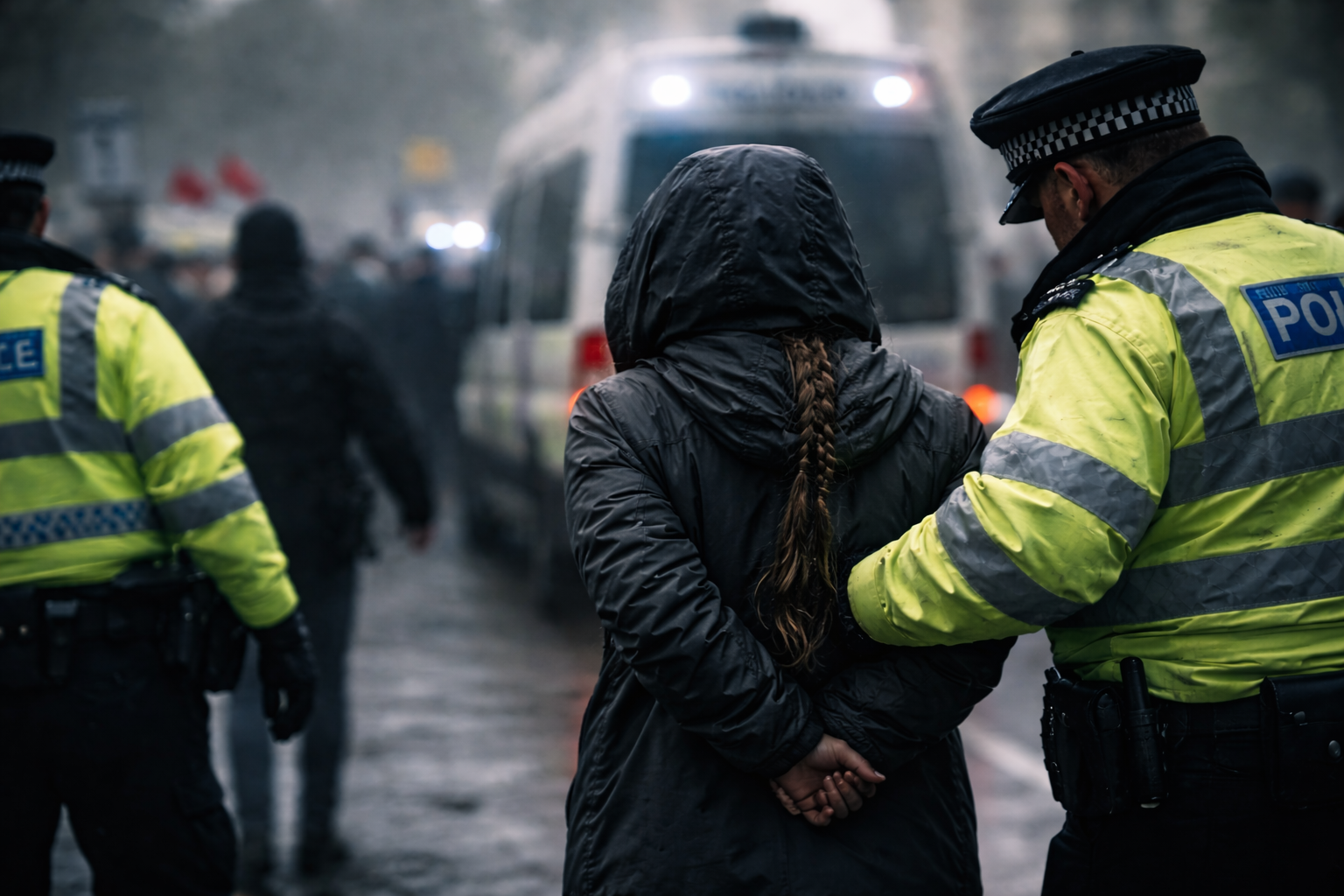
As of December 23, 2025, Greta Thunberg was arrested in central London at a pro-Palestinian protest after police said she displayed a placard in support of a proscribed organization, an offense tied to the UK’s Terrorism Act 2000.
The news coincides with a significant political moment: the UK is attempting to establish a clear distinction between legitimate protest and the legal ramifications that ensue when a group is officially designated as terrorist. In practice, this line can quickly become hazy, particularly in public demonstrations where symbolism is the primary focus.
This piece explains what is known about the arrest, what “proscription” changes legally, and why this case matters beyond one high-profile activist. By the end, the reader will understand the incentives driving tougher enforcement, the risks of overreach, and what to watch next.
The story turns on whether proscription law can be enforced against symbolic protest without chilling lawful dissent.
Key Points
Greta Thunberg was arrested in London on December 23, 2025, after police said she displayed a placard supporting a proscribed organization, an offense connected to the Terrorism Act.
The protest was linked to support for prisoners associated with Palestine Action and a hunger strike, with organizers framing the action as solidarity with detainees awaiting trial.
Police said earlier arrests at the scene related to alleged criminal damage involving red paint and hammers at a building in the City of London.
Palestine Action was proscribed in 2025, meaning certain forms of support, including public displays that arouse suspicion of support, can trigger terrorism-related offenses.
The proscription decision is under sustained legal challenge, with High Court hearings held in late November and early December 2025 and judgment pending at the time of reporting.
The wider backdrop is a tightening posture toward protest policing in the UK, including contested interpretations of lawful powers and heightened scrutiny of protest language and symbolism.
Background
Thunberg attended a demonstration outside offices linked by organizers to a company they said is connected to an Israeli-linked defense contractor. Police described damage at the site earlier in the morning and said two people were arrested on suspicion of criminal damage, with specialist officers involved after protesters glued themselves nearby.
Police then arrested Thunberg, saying she displayed an item in support of Palestine Action, which is a proscribed organization. The reported basis was Section 13 of the Terrorism Act 2000, a provision used when an item is worn, carried, or displayed in circumstances that arouse reasonable suspicion of membership or support for a proscribed group.
“Proscription” is a formal legal designation. The Home Secretary can add an organization to a list of banned groups under the Terrorism Act if the government believes it is concerned in terrorism. Proscription makes it illegal to belong to, or invite support for, the organization, and restricts public displays that suggest endorsement.
In 2025, the government announced plans to proscribe Palestine Action alongside other groups, arguing it had crossed the legal threshold. Ministers said the move was not aimed at banning protest supporting Palestinian rights, while insisting serious criminal damage and intimidation fall outside legitimate protest.
The decision has been contested in court and in public debate, with critics warning of a chilling effect on lawful protest and free expression.
Analysis
Political and Geopolitical Dimensions
This case sits at the junction of domestic law and a conflict that has become a global political accelerant. UK officials face pressure to demonstrate firmness on national security while avoiding the perception of suppressing political dissent.
Proscription policy is partly about deterrence. Once a group is proscribed, authorities do not need to wait for violent acts at a specific protest to intervene. Visible “support” becomes the enforcement point.
That logic carries a democratic cost. When enforcement focuses on symbols—signs, slogans, images—public trust can fracture. Supporters argue this polices ideas rather than conduct. Defenders respond that proscription targets organizational methods, not beliefs.
Two scenarios matter. Authorities may continue using proscription-linked offenses aggressively at protests, believing deterrence outweighs controversy. Or courts may narrow how “support” is interpreted, tightening enforcement without rewriting the law.
Economic and Market Impact
The economic effects are indirect but real. Protests aimed at insurers, defense contractors, logistics firms, and financial intermediaries impose costs through security measures, operational disruption, and reputational risk.
For companies perceived as linked to contested conflicts, boards reassess exposure. Insurance terms can tighten. Counterparties reconsider relationships. Activist groups often intend exactly this: converting distant geopolitical disputes into domestic economic pressure.
Ambiguity itself becomes a cost. When proscription enforcement enters everyday protest policing, locations associated with flashpoints carry a higher risk premium.
Social and Cultural Fallout
Thunberg’s prominence elevates the case beyond routine policing. It becomes a cultural argument about who counts as a peaceful protester and what counts as unlawful support.
This debate sits alongside wider disputes over protest policing in the UK, including concerns about expanding police powers and unclear boundaries between lawful expression and criminalized conduct.
The risk is polarization. One side sees enforcement as necessary and overdue. The other sees it as a warning that solidarity itself can become criminal.
Over time, this reshapes protest behavior. Some demonstrators self-censor to avoid legal exposure. Others deliberately test the boundary, forcing repeated confrontations.
Technological and Security Implications
Modern proscription enforcement unfolds in a world of instant documentation. A placard is no longer just an object at a protest; it becomes a viral artifact.
Because offenses hinge on perception and context, stripped-down clips can inflame disputes long after the event. Activists and police operate knowing every decision may be replayed, dissected, and litigated.
Operationally, officers must make rapid judgments about wording and symbolism. That raises the risk of inconsistent enforcement and post-event legal challenges.
What Most Coverage Misses
The overlooked shift is from conduct to association. Enforcement no longer depends solely on actions like damage or obstruction, but on whether symbols appear to signal support for a banned group.
That creates second-order effects. Movements fragment, rebrand, and communicate indirectly. Policing shifts toward interpreting symbols rather than managing immediate safety risks.
High-profile arrests also serve strategic purposes. Authorities may see deterrence. Activists may see validation. Each side can use the same event to mobilize supporters, deepening the standoff.
Why This Matters
In the short term, the focus is procedural. Terrorism-linked arrests involve interviews, evidential review, and charging decisions that can take time, even as public attention moves on.
In the long term, this shapes the boundaries of democratic space under security law. Regular use of proscription powers in protest settings would alter how movements organize, how police plan, and how courts define political expression.
Events to watch include any charging decision related to the December 23 arrest and forthcoming judgments in ongoing legal challenges to the proscription decision.
Real-World Impact
A postgraduate student in London now thinks carefully before bringing a sign to a march, worried that wording alone could trigger legal trouble.
A compliance officer at a UK charity revises public messaging, aware that a single phrase could invite scrutiny if it appears linked to a proscribed group.
A security manager at a City office block updates arrival procedures after repeated demonstrations raise concerns for staff safety and business continuity.
A front-line police officer makes split-second calls about symbolism, knowing every interaction may be recorded and contested.
What’s Next?
The immediate question is procedural: whether the arrest leads to charges and how a court interprets “support” in a protest context.
The broader question is political. Will proscription enforcement become a routine tool for managing protest, or will legal and public pressure force clearer limits?
The signal to watch is consistency. If similar actions produce different outcomes, pressure will mount for judicial clarification. If enforcement is uniform, protest culture will adapt—either through caution or confrontation.
