

MAGA Infighting Breaks Into the Open at Turning Point USA’s AmericaFest
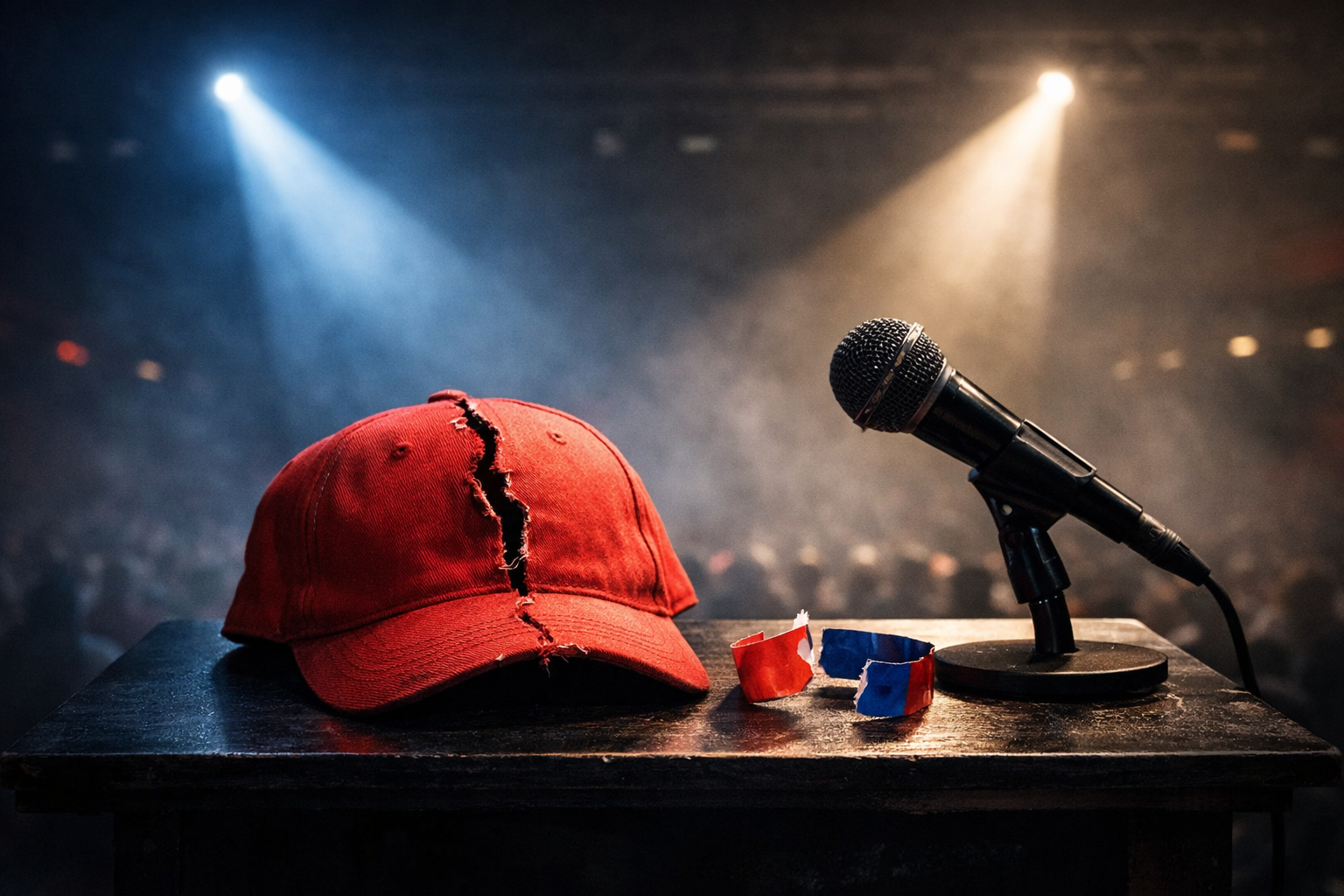
Why did a movement built on message discipline suddenly air its arguments on the main stage?
This week in Phoenix, Turning Point USA’s AmericaFest became less a rally and more a stress test. Prominent MAGA-aligned media figures and activists publicly challenged each other over boundaries: who belongs inside the tent, what kind of rhetoric is tolerated, and which issues matter most heading into the next election cycles.
The timing matters. AmericaFest is designed to project momentum and unity. Instead, the friction became part of the event’s story, with rival camps using a friendly venue to sharpen their lines in front of the same audience.
This piece explains the causes of the clashes, the constraints on each faction, and what must happen for the movement to settle before 2026 and 2028.
The story turns on whether MAGA can enforce a shared set of rules without splitting its own coalition.
Key Points
AmericaFest, Turning Point USA’s annual convention in Phoenix (Dec. 18–21, 2025), became a visible venue for intra-MAGA conflict rather than a closed-door dispute.
High-profile commentators and influencers publicly criticised one another over issues including antisemitism, conspiracy claims, and the movement’s “America First” boundaries.
The immediate stakes are reputational and commercial: platform access, sponsorship risk, audience loyalty, and who gets labelled as “gatekeeper” versus “dangerous”.
The political stakes are longer-term: who inherits leadership energy and grassroots infrastructure as the coalition looks beyond the next cycle?
A growing fault line is less left-versus-right and more “movement as brand” versus “movement as factional network”, with competing incentives for unity and conflict.
Confirmed: the arguments are now public and attached to major names. Unknown: whether organisational leaders will impose consequences, or whether the audience will reward escalation.
Background
Turning Point USA is a conservative youth organisation known for large-scale events and campus-focused activism. AmericaFest is its flagship gathering, built around speeches, influencer programming, vendor booths, networking, and recruitment.
This year’s event has carried additional emotional weight after the killing of the organisation’s founder earlier in 2025, which has also intensified arguments over conspiracy narratives and where the movement draws moral and strategic lines.
The convention also sits inside a wider transition: MAGA’s media ecosystem has become a parallel power centre. It raises money, mobilises supporters, and enforces norms in real time. That makes conventions less like party conferences and more like live auditions for influence.
Analysis
Political and Geopolitical Dimensions
At the political level, the fight is about coalition definition. One camp argues that tolerating conspiratorial or extremist-adjacent rhetoric is a strategic and moral liability that eventually contaminates candidates, policy, and turnout. Another camp frames policing language as weakness, elitism, or a way to sideline dissent on foreign policy and national priorities.
Israel and antisemitism have become a high-friction junction because they combine identity, foreign policy, and the movement’s self-image. For some, it is evident that certain tropes and accusations are disqualifying. For others, the red line is “who gets to enforce red lines”.
Scenarios to watch:
Containment scenario: Key organisers and allied politicians signal standards, and the loudest rhetoric gets quietly deprioritised. Trigger: fewer high-profile collaborations with repeat offenders and a shift in stage access at major events.
Escalation scenario: factional conflict becomes a feature, not a bug, driving attention and donations. Trigger: more on-stage callouts, targeted boycott campaigns, and rival events positioned as “the real movement”.
Fragmentation scenario: the coalition holds electorally but fractures operationally into semi-separate media and activist networks. Trigger: distinct donor channels, distinct conference circuits, and public endorsement wars for 2028.
Economic and Market Impact
MAGA media is not just ideology; it is a business model. Attention converts to subscriptions, ads, speaking fees, and paid communities. Conflict can be profitable in the short run because it creates content loops and forces audiences to pick sides.
But conflict also raises the cost of doing business. Brands and platforms prefer predictable risk. Political operators prefer message cohesion. When controversies revolve around taboo topics, the penalty is not just reputational. The risks include deplatforming, loss of sponsors, and internal blacklisting.
This is why “unity” appeals often fail. The factions do not share the same payoff structure:
Influencers often gain from sharper conflict.
Campaigns and organisers often lose due to sharper conflict.
Event hosts gain from spectacle until sponsors or speakers start refusing invitations.
The bottleneck here is not ideology. It is revenue stability. The side that can keep its income resilient under pressure can afford to keep fighting.
Social and Cultural Fallout
These clashes also represent a cultural struggle over status. Who represents “the base”? Who speaks for younger activists? Who counts as brave versus reckless? In a movement built on distrust of institutions, status is earned through perceived authenticity, not formal credentials.
AmericaFest functions as a social sorting mechanism. The stage, the crowd response, and the post-event clips create a hierarchy. That makes every public dispute a contest for legitimacy.
Second-order effect: public infighting can widen the movement’s reach in the short term by pulling in viewers who treat it like sport. But it can also harden subgroup identities so tightly that compromise later becomes performatively impossible.
Technological and Security Implications
The movement’s internal fight now plays out on platforms optimised for conflict. Algorithms reward replies, quote posts, and “feud arcs”. That creates a ratchet effect: each faction must escalate to hold attention, even if leaders privately prefer de-escalation.
Additionally, there is a more tangible layer of security involved. High-profile events already carry elevated risk. When the internal discourse turns towards narratives of accusation and betrayal, it can escalate the situation beyond the control of the organisers.
Triggers to watch:
Platforms are tightening enforcement around certain claims and labels.
Major creators are losing monetisation or distribution and blaming rival factions.
Event organisers change security postures, access rules, or speaker vetting.
What Most Coverage Misses
The key story is not simply “MAGA is divided.” Most political coalitions are.
The overlooked mechanism is enforcement. The movement is arguing about rules because it lacks a single legitimate referee. Political parties have committees, primaries, and formal discipline. Influencer ecosystems have reach, money, and mob energy. They can punish, but they cannot reliably adjudicate.
So the real contest is over who becomes the de facto referee: the event circuit, the donor class, the platforms, or a charismatic political successor. Until that referee emerges, public conflict is not an anomaly. It is the system working as designed.
Why This Matters
In the short term, these clashes shape what Republican candidates feel safe saying and who they will appear with. That impacts fundraising, volunteer mobilisation, and media coverage heading into 2026.
In the long term, the fights shape succession. If MAGA is an umbrella brand, the next few years will decide whether it becomes a disciplined machine or a permanent marketplace of rival tribes.
Events to watch next:
The post-AmericaFest speaker circuit in early 2026: who shares stages with whom, and who gets iced out?
The 2026 midterm primaries: whether candidates get punished for association with specific factions.
The first clear endorsement for 2028 pushes whether major organisers, donors, and media blocs converge or split.
If you remember one thing: a coalition without an agreed referee eventually turns every disagreement into a loyalty test.
Real-World Impact
A campaign staffer in Arizona tries to book surrogate speakers for a fundraising weekend. Two big names now refuse to appear together. The staffer either loses the draw or chooses a side and absorbs the backlash.
A small business owner in Florida sponsors conservative events for community reach. They now worry a sponsorship could become a screenshot in someone else’s feud. They pull back, and local organisers lose predictable funding.
A college organiser in Ohio wants to recruit new volunteers. Prospective recruits ask about “the drama” first. The organiser spends more time defending the brand than building a ground game.
A podcast producer in Texas sees a spike in downloads when feuds flare up. The producer leans into the conflict because it pays, even while privately admitting it makes long-term coalition-building harder.
Road Ahead
AmericaFest showed that MAGA’s internal boundaries are no longer handled quietly. They are being argued in public by people with large audiences and competing incentives.
The decision is straightforward: either enforce shared standards and risk alienating a faction, or tolerate anything and risk becoming politically and commercially radioactive.
The next signs will be practical, not rhetorical. Watch who gets invited back, who gets funded, who gets clipped and amplified, and who suddenly becomes too costly to defend.
