Iran Blocks Hormuz — Now Trump Must Decide: Strike, Wait, or Deal
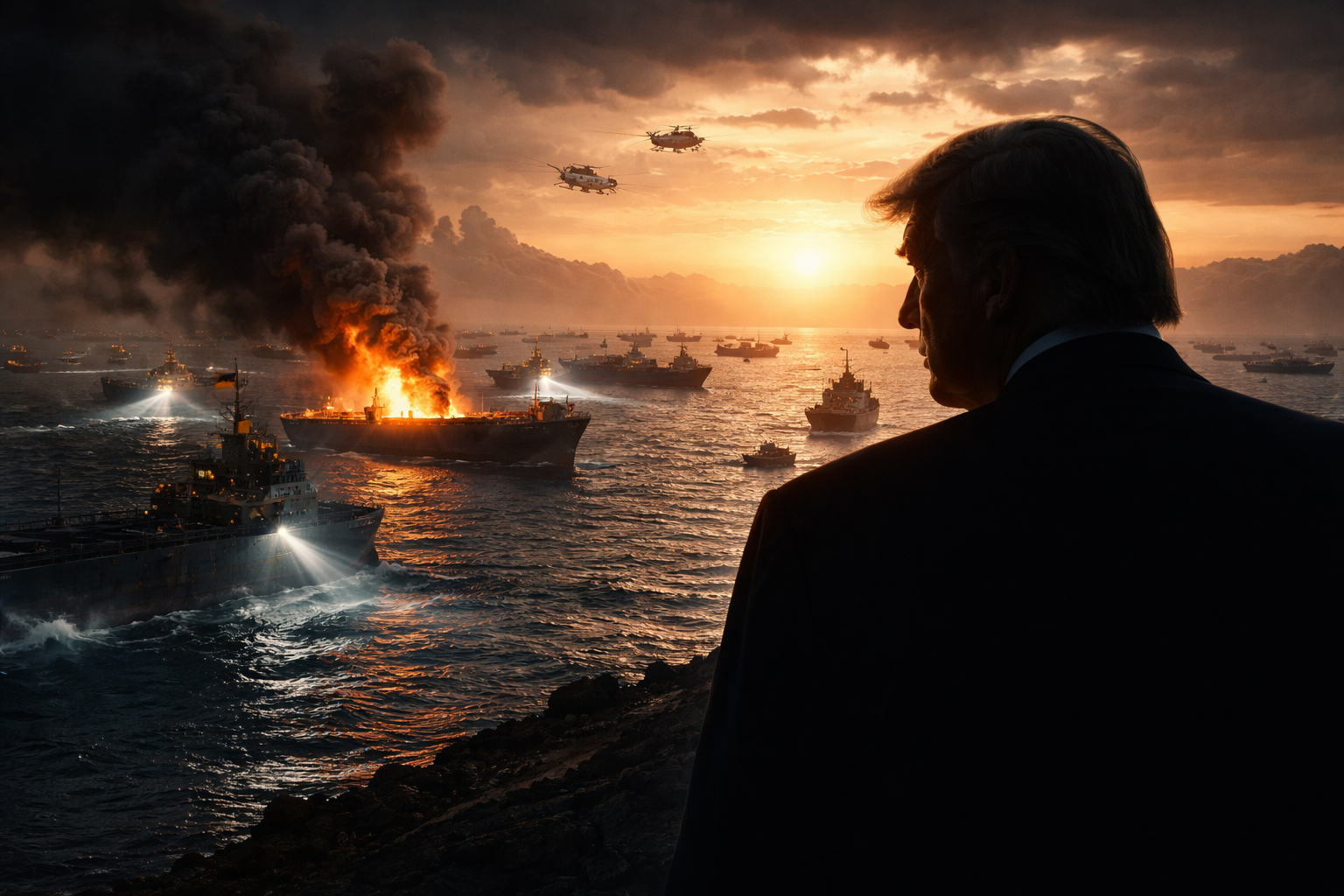
“No Vessel Allowed”: Iran Forces Trump Into a High-Stakes Global Showdown
Hormuz Goes Dark: Iran Orders “No Vessel Allowed” — Global Shipping Frozen, War Risk Explodes
A sudden Iranian radio command has effectively shut one of the world’s most critical shipping lanes—stranding thousands, rattling energy markets, and forcing a decision from Washington that could reshape the conflict within hours.
A Single Radio Message Just Changed the Global Economy
“No vessel of any type or nationality is allowed to pass.”
That was the message broadcast by Iran’s navy across the Strait of Hormuz — not as rhetoric, but as operational reality.
Within hours, one of the most important arteries of global trade effectively stopped.
Hundreds of ships are now stranded
Around 20,000 seafarers are stuck in limbo
Multiple vessels have already reported being fired upon
The situation is not a theoretical blockade. It is being enforced.
Gunfire from Iranian-linked forces hit two commercial ships attempting to transit the strait, forcing them to turn back.
And that changes everything.
This Isn’t Just a Shipping Story — ’s a Global Pressure Point
The Strait of Hormuz carries roughly 20% of the world’s oil and LNG supply.
When it closes, the impact is immediate and systemic:
Energy markets destabilise
Insurance costs for shipping spike
Supply chains begin to seize
Governments are forced to react
We have seen disruption here before.
But this moment is different.
The closure is occurring within an active geopolitical confrontation, not outside of it.
The United States is already enforcing a naval blockade on Iran.
Iran is now asserting total control over the strait.
That is not a standoff.
That is a collision course.
What Just Happened — And Why It Matters Now
Only days ago, there were signs of de-escalation.
Iran had indicated limited reopening of the strait under strict conditions.
Negotiations were ongoing.
A fragile ceasefire was in place.
Then came this.
Iran’s message explicitly blamed the United States for “failure to fulfill commitments.”
That matters.
This reframes the closure not as a defensive measure but as leverage in a negotiation that may now be collapsing.
And once Hormuz becomes leverage, it becomes a weapon.
The Reality on the Water: Fear, Confusion, and Risk
Shipping companies are now facing an impossible calculation:
Enter the strait and risk being fired upon
Stay anchored and absorb massive financial losses
Wait for military escorts that may or may not come
Even before this latest escalation, traffic had already fallen sharply due to attacks, mines, and navigation disruption.
Now, effectively, it has stopped.
And when traffic drops to zero in Hormuz, the consequences are not gradual.
They are immediate.
What Media Misses
This is not just about oil.
It is about control.
Iran is not trying to permanently shut global trade.
It is demonstrating that it can.
That distinction is critical.
Because the power to interrupt the system—even briefly— is often more valuable than destroying it.
It allows Iran to:
Pressure negotiations
Test U.S. resolve
Signal dominance in its immediate region
Raise the cost of continued confrontation
The message is simple:
If the conflict continues, the global economy pays the price.
Trump’s Likely Response — And Why It Matters
President Donald Trump has already made a significant commitment to this confrontation.
He has:
Ordered a naval blockade of Iranian-linked shipping
Deployed significant U.S. naval assets in the region
Publicly tied Hormuz access to negotiation outcomes
That limits his options.
Realistically, the U.S. response will fall into three paths:
1. Escalation Through Force
Naval escorts for tankers
Direct confrontation with Iranian vessels
Potential strikes on Iranian maritime assets
This approach is the fastest way to reopen the strait.
It is also the fastest way to widen the war.
2. Controlled Pressure
Maintain blockade
Increase economic and diplomatic pressure
Avoid direct naval confrontation
Such an approach prolongs the standoff—and keeps Hormuz unstable.
3. Rapid Negotiation Push
Seek immediate deal concessions
Trade sanctions relief for guaranteed passage
Attempt to stabilise markets quickly
This approach reduces short-term risk — but may be seen as conceding leverage.
Trump has already hinted at both optimism and impatience with negotiations.
That combination is volatile.
What Happens Next
Three scenarios now dominate:
Most Likely
A tense standoff continues.
Ships remain stranded.
Limited, controlled passage may resume under heavy conditions.
Most Dangerous
A U.S.-escorted tanker is challenged or attacked.
At that point, escalation becomes impossible to contain.
Most Underestimated
Markets react faster than militaries.
Oil price spikes, insurance shocks, and supply disruptions may force political decisions before any naval confrontation occurs.
The Real Meaning of This Moment
This incident is not just another Middle East flare-up.
It is a demonstration of how fragile the global system really is.
A single radio message—transmitted across open water—has just
Frozen hundreds of ships
Stranded thousands of workers
Threatened a fifth of global energy supply
Forced the world’s most powerful military into a decision
That is the scale of leverage sitting inside the Strait of Hormuz.
And now, once again, it is being used.
The question is no longer whether the crisis is real.
It depends on whether anyone can stop it from becoming something much bigger.
