Iran Executes Two Men Arrested During January Protests As Crackdown Deepens
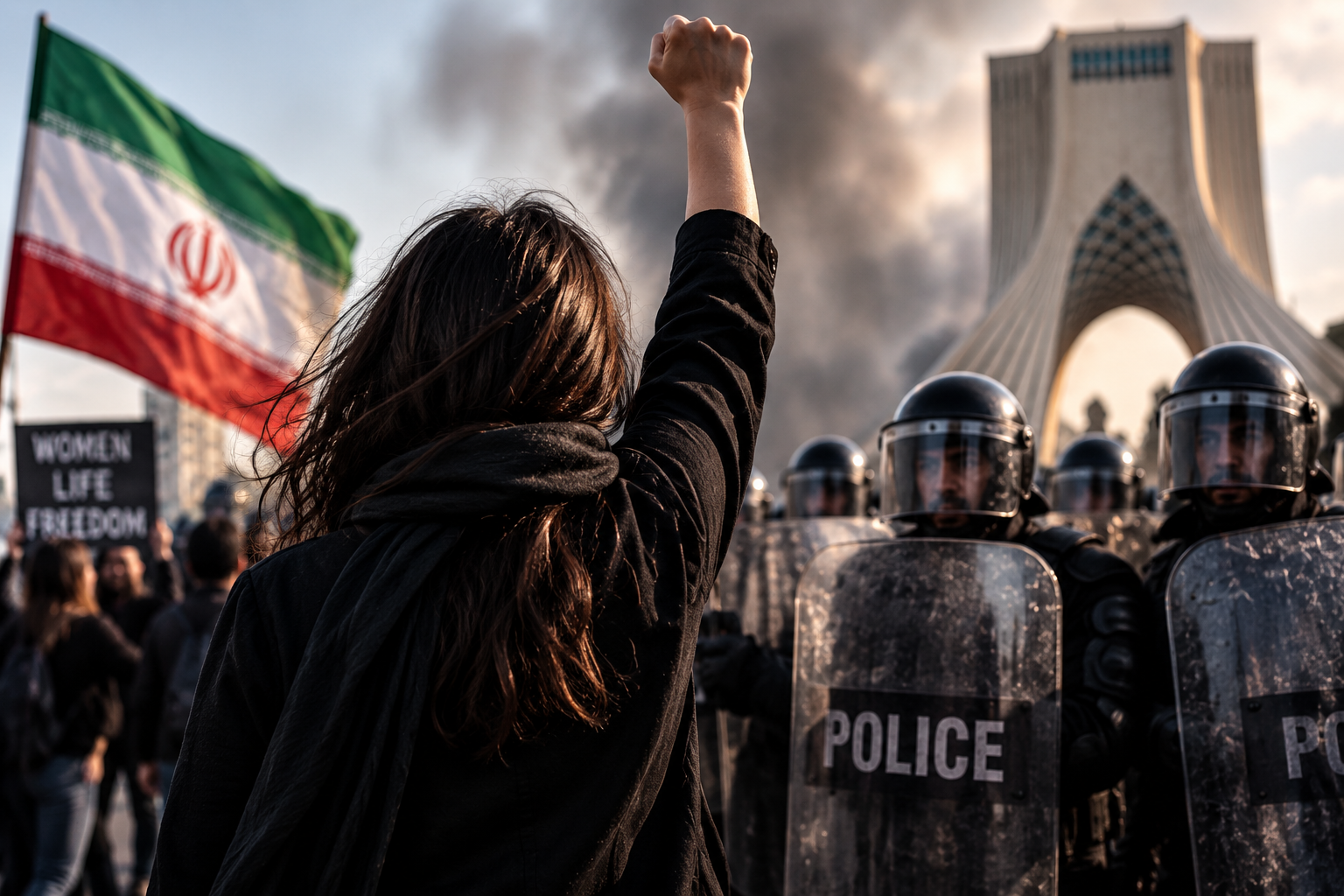
Iran Carries Out Two More Executions Connected To January Demonstrations
Death Sentences Enforced After Isfahan Clashes
Alireza Sepahi And Alireza Raeisi Were Put To Death After Iran’s Supreme Court Upheld Sentences Tied To Fatal Clashes In Isfahan
Iran has executed two men arrested in connection with the nationwide protests that shook the country in January 2026, adding another pair of deaths to a widening campaign of protest-linked executions.
Alireza Sepahi and Alireza Raeisi were executed on Monday morning, 5 October, after Iran’s Supreme Court upheld their death sentences. The case arose from unrest in Isfahan, where the authorities accused defendants of involvement in violence that killed four members of the security forces.
Iran’s judiciary said the men had been convicted of offences including membership of an armed rebel group, “waging war against God” through the use of weapons, spreading corruption on earth and involvement in killing.
Those are among the most serious charges available under Iranian law and can carry the death penalty.
The Executions Came From One Of January’s Deadliest Cases
The two men were defendants in a case centred on Alikhani Square in Isfahan, where demonstrations and clashes took place on 8 January.
The January unrest had begun weeks earlier amid anger over the economy and the cost of living before spreading into a much broader challenge to the Iranian authorities. The demonstrations became one of the most serious episodes of domestic unrest Iran had faced in years.
The government says armed groups and foreign-backed actors exploited the protests and were responsible for deadly violence. Human-rights organisations, by contrast, have documented allegations of mass arrests, lethal force, torture and proceedings that did not meet international fair-trial standards.
That divide is important when assessing the Isfahan case.
Iranian authorities say four security personnel were killed during the clashes and that the defendants were involved in armed violence. Rights monitors have challenged aspects of the prosecution process and allege that some detainees were tortured and forced to confess.
Those allegations have not been independently proven in every individual case.
Sepahi Had Already Faced Execution Once
Sepahi, who was reported to be 25, had previously been scheduled for execution alongside other defendants from the same case.
Rights monitors say he became seriously ill while being transferred for execution during the summer and was taken to hospital before being returned to prison.
His cousin, Abolfazl Sepahi, was among defendants already executed in connection with the same case.
The latest executions therefore do not stand alone. They form part of a continuing sequence in which people arrested during the January demonstrations have moved from detention and Revolutionary Court proceedings to final death sentences and execution.
Iran Human Rights said on 3 October that more than 30 people connected to the January protests had already been executed since March. The executions of Sepahi and Raeisi push that pattern further.
The broader story is no longer simply about how Iran suppressed the demonstrations in January. It is also about what is happening to those prosecuted months later.
The Fair-Trial Question Is Becoming Central
United Nations experts have repeatedly raised concerns during 2026 about arbitrary detention, enforced disappearance, torture allegations and death sentences imposed after proceedings said to lack adequate due-process safeguards.
Those concerns matter because capital punishment leaves no room to correct a wrongful conviction after the sentence has been carried out.
In the Isfahan case, rights organisations have alleged that Sepahi and other defendants were subjected to severe mistreatment in custody and pressured into confessions. Iranian authorities have rejected wider accusations that the justice system is being used simply to punish peaceful dissent.
The distinction between peaceful protest and criminal violence is also critical.
A person taking part in a demonstration is not automatically responsible for violence committed during that demonstration. Equally, participation in political unrest does not provide immunity from prosecution for a proven killing or armed attack.
The decisive issue is whether individual responsibility was established through reliable evidence and a fair judicial process.
That is precisely where international concern has concentrated.
Why Iran Is Still Using The Death Penalty After The Protests Ended
Executions months after a protest wave can serve more than one purpose.
For the Iranian state, officials can present them as punishment for serious crimes committed during disorder and as evidence that attacks on police or state institutions will bring severe consequences.
For critics of the government, the timing creates a different interpretation: that executions function as a warning to anyone considering joining future demonstrations.
The wider pattern gives that argument greater weight than any single case could on its own.
Taylor Tailored documented in January how Iran’s unrest was already moving from economic protest into a wider confrontation with the state. At the time, publicised death sentences and a harder security response were among the indicators that would signal a deeper crackdown.
That crackdown has now moved beyond the streets and into the judicial system.
The Political Context Has Become Even More Volatile
The executions are also taking place in an Iran that is under intense external pressure.
Relations with the United States and several European governments have deteriorated sharply during 2026. Sanctions have widened, military tensions have increased and the country’s leadership is confronting both domestic discontent and an increasingly hostile international environment.
Britain has expanded its own pressure on Tehran, while Washington has pursued a much broader campaign aimed at Iran’s military, financial and energy networks. Britain’s tougher Iran sanctions are part of that wider effort.
That external confrontation can cut in two directions inside Iran.
It can weaken the government economically and increase public anger. But it can also give hardliners a security justification for treating domestic dissent as part of a wider struggle against foreign enemies.
Iranian authorities have repeatedly blamed outside powers for encouraging unrest.
That makes protest prosecutions especially sensitive because ordinary criminal allegations, national-security charges and political dissent can become entangled in the same case.
More Prisoners Could Still Face Execution
The immediate question is whether the two executions on 5 October mark the end of the Isfahan case or another stage in it.
Rights groups say other defendants from the Alikhani Square proceedings have also received death sentences. More broadly, monitors say many prisoners detained during the January unrest remain at risk of capital punishment.
That means international pressure is likely to continue.
European governments have already explored stronger measures against Tehran over repression and other security concerns. Previous European moves towards tougher Iran sanctions show how human-rights issues can become intertwined with the much larger confrontation over nuclear policy, regional security and Iran’s external activities.
Yet sanctions and diplomatic condemnation have so far not stopped the executions.
For Sepahi and Raeisi, the legal process has ended.
For the other prisoners whose cases emerged from the January protests, it has not.
Sources
Reuters — Iran executes two men arrested over January 2026 protests, Mizan reports — Confirms the 5 October executions, the men’s names, the judiciary’s charges and Supreme Court approval of the sentences.
Hengaw Organization for Human Rights — Iran executes Alireza Sepahi and Alireza Raisi over January protests — Provides details on the Alikhani Square case, detention history and allegations of torture and forced confessions.
Office of the United Nations High Commissioner for Human Rights — Iran special-procedure communications — Documents UN expert concerns in 2026 about executions, arbitrary detention, disappearance, torture allegations and fair-trial safeguards in Iran.
Next Reads
Iran unrest turns deadly as Trump threatens intervention: what’s confirmed, disputed, and what to watch — Background on how the January unrest escalated and the early warning signs of a deeper state crackdown.
UK Unleashes Tough New Iran Sanctions as Britain Moves Closer to Trump’s Maximum-Pressure Strategy — Explains the expanding international pressure campaign surrounding Tehran.
EU Iran sanctions 2026: What Europe can hit fast — Examines how European sanctions could respond to Iranian repression and wider geopolitical tensions.
