Iran Threatens Immediate Attacks on US Troops as Ground War Edges Closer
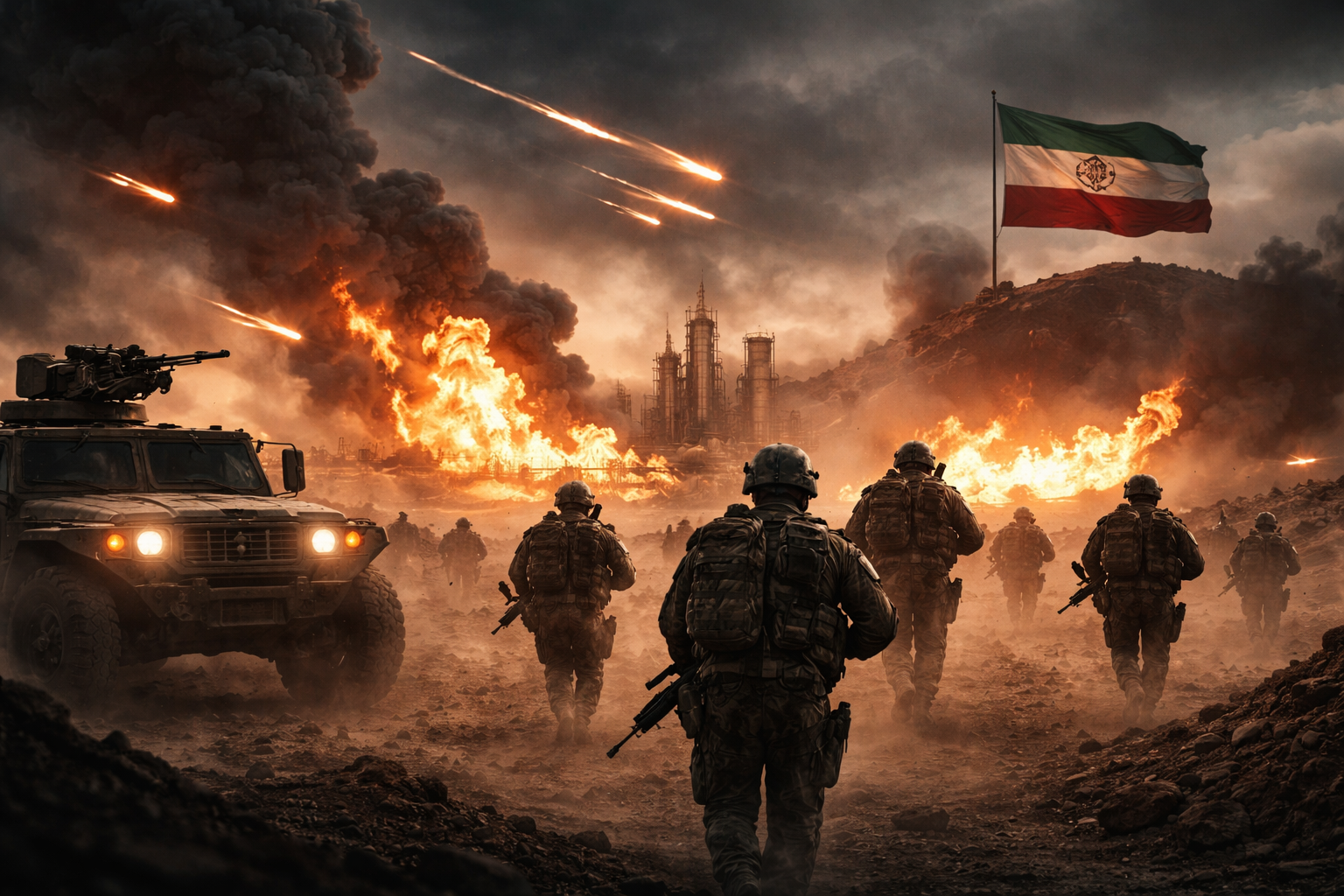
Iran Threatens Direct Attacks on US Troops as Invasion Fears Spike
The Final Minutes Before a US-Iran Ground War?
Iranian leadership has issued its clearest warning yet: any US ground deployment will be met with direct, immediate attacks on American forces. The statement marks a shift from proxy retaliation to explicit confrontation, raising the probability of a direct US–Iran ground conflict.
This escalation comes as US military planners prepare for potential ground operations and troop deployments intensify across the region.
What’s new is not just the threat—but its timing. Iran is indicating that the war will fundamentally change as soon as US troops arrive on the ground.
The story turns on whether the threat but also the United States actually crosses the threshold from air war to ground war.
Key Points
Iran has warned it will directly attack US troops if they enter Iranian territory, marking a shift from indirect to confrontation.
US military planning now includes potential ground operations, including raids and seizure of strategic targets like oil infrastructure.
The region is witnessing the positioning of thousands of US troops, including Marines and airborne units, which is fueling speculation about an invasion.
The war has already expanded regionally, with attacks on US bases, shipping routes, and Gulf infrastructure.
Iran still retains significant missile and drone capability despite heavy US-Israeli strikes.
Casualties are rising, with US forces already suffering losses in retaliatory attacks linked to Iran.
The Moment the War Changes: From Air Campaign to Ground Risk
For the past month, the conflict between the US, Israel, and Iran has largely been fought through airstrikes, missile exchanges, and proxy attacks across the Middle East.
The US has struck thousands of targets inside Iran, aiming to degrade missile systems, command infrastructure, and military capacity.
Iran has responded asymmetrically—launching drones and missiles, targeting regional bases, and leveraging allied groups.
But a ground invasion is different.
The moment US troops enter Iranian territory, the war shifts from controlled escalation to full-spectrum conflict.
Iran’s warning is explicit: such an action would trigger immediate, direct engagement.
Why Iran Is Escalating Its Language Now
Iran’s messaging is not random—it is strategic.
Tehran understands that once US troops are deployed on the ground, the political and military costs for Washington rise sharply.
By publicly declaring it will attack immediately, Iran is trying to:
Deter a US invasion before it begins
Raise the perceived cost of escalation
Signal readiness to fight conventionally, not just via proxies
This is consistent with Iran’s broader doctrine: avoid direct war until unavoidable, then escalate rapidly and decisively.
The language—describing US troops as targets the moment they arrive—is designed to remove ambiguity.
The US Position: Planning Without Commitment
Despite the escalation, the US has not formally committed to a full ground invasion.
Military planning suggests a more limited approach:
Short-duration raids
Seizure of strategic sites like oil export hubs
Targeting coastal and logistical infrastructure
This operation reflects the risk.
Iran is not Iraq in 2003. It has:
A large standing military
Extensive missile systems
Deep underground facilities
Regional proxy networks
Even limited ground operations carry high casualty risk.
The Regional War Is Already Expanding
The war has already expanded beyond the confines of US troops in Iran.
Iran has already:
Targeted US bases in the Gulf
Struck infrastructure in Bahrain and the UAE
Supported attacks across Iraq, Syria, and maritime routes
Shipping lanes, especially around the Strait of Hormuz, are under threat—placing global energy markets at risk.
This issue matters because a ground war would not stay inside Iran.
It would ripple outward immediately.
What Most Coverage Misses
The key issue is not whether Iran will attack US troops.
It’s whether the US can conduct “limited” ground operations at all.
Most coverage treats raids or targeted seizures as controlled escalation.
But Iran’s doctrine—and geography—make that unlikely.
Iran does not separate “limited incursions” from full invasion. Any US ground presence becomes a national-level conflict trigger.
This creates a structural trap:
The US wants limited, precise operations
Iran treats any ground incursion as existential escalation
That mismatch means even a small operation could trigger a much larger war than intended.
This is not about rhetoric. It’s about incompatible definitions of escalation.
The Military Reality: Iran Is Weakened but Not Neutralized
US and Israeli strikes have degraded Iran’s capabilities—but not eliminated them.
Missile infrastructure has been heavily damaged
Launch rates have dropped significantly
But underground systems and mobile units remain active
Intelligence assessments suggest only a portion of Iran’s arsenal has been destroyed.
That means Iran retains enough capability to:
Target US troop concentrations
Strike regional bases
Disrupt logistics and supply lines
In a ground war scenario, that residual capability becomes critical.
What Happens Next: The Fork in the Road
The next phase depends on one decision: whether the US commits ground forces inside Iran.
Three plausible paths are emerging:
1. No Ground War
The US continues airstrikes and containment. Iran retaliates regionally but avoids full escalation.
2. Limited Ground Operations
The US conducts targeted raids. Iran responds directly, but conflict remains geographically constrained—though volatile.
3. Full Escalation
A US ground presence triggers sustained Iranian attacks on troops, bases, and regional infrastructure—expanding the war across the Middle East.
The signposts to watch are clear:
Movement of large US troop formations toward Iran
Official authorization of ground operations
Iranian pre-emptive strikes on staging areas
This moment is the inflection point.
If US troops cross into Iran, the war doesn’t just escalate—it transforms.
