Israel Signals Peace Talks With Lebanon — Even As Bombs Keep Falling
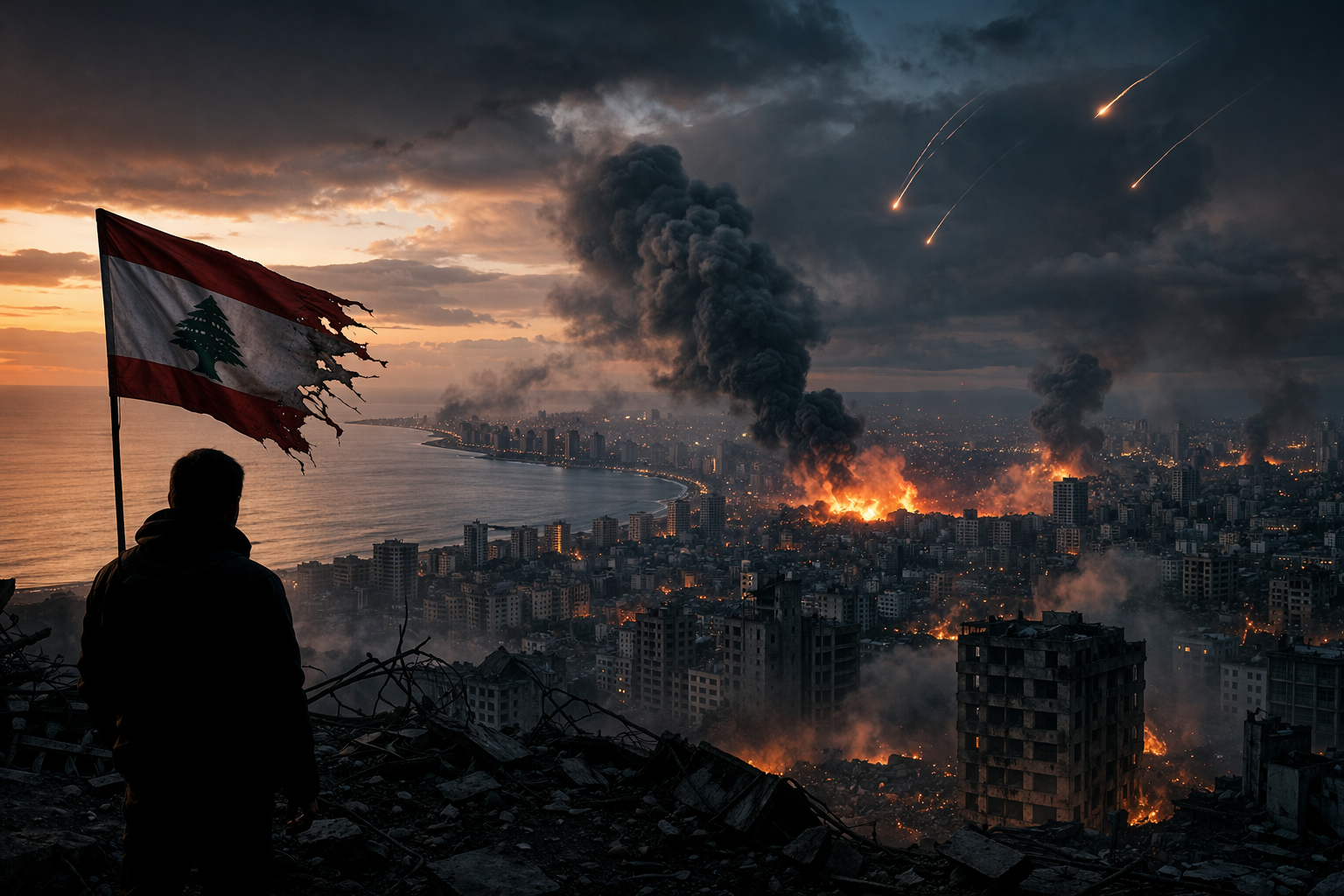
Israel Moves Toward Talks With Lebanon While War Still Rages
Netanyahu Opens Door To Negotiations—But Refuses To Halt Strikes
Talks Announced In The Middle Of Escalation
Israel has signaled it is ready to begin direct negotiations with Lebanon—a move that, on paper, looks like a breakthrough.
In reality, it comes at one of the most violent moments in the conflict.
Israeli Prime Minister Benjamin Netanyahu has instructed his government to open talks “as soon as possible,” with a stated goal of disarming Hezbollah and establishing some form of peaceful relations.
At the same time, Israeli military operations in Lebanon are continuing—and intensifying.
Airstrikes have killed hundreds recently, while Hezbollah has continued launching attacks into northern Israel.
This is the paradox of the current situation: diplomacy is being introduced not as a replacement for war, but in conjunction with it.
Why Now—and Why It Matters
The situation isn’t happening in isolation.
The push toward negotiations comes under significant international pressure, particularly from the United States and European actors who are trying to prevent a wider regional collapse.
Lebanon itself has been calling for talks for weeks, backed by France and other diplomatic channels.
But the deeper driver is strategic.
Israel is attempting to reshape the security architecture in southern Lebanon—specifically by targeting Hezbollah’s military capability while simultaneously opening a path to formal negotiations.
That combination is not accidental.
It reflects a classic pressure strategy:
Escalate militarily
Degrade the opponent’s capabilities
Force a negotiation from a position of strength
The stated goal of disarming Hezbollah is not just a diplomatic ambition—it is the central objective of Israel’s military campaign.
The War Behind The Talks
To understand the stakes, you have to look at what’s happening on the ground.
The current escalation has already produced:
Thousands of casualties
Over a million displaced civilians in Lebanon
Large-scale destruction of infrastructure
Recent Israeli strikes have targeted Hezbollah infrastructure, leadership figures, and urban areas—including Beirut.
In one of the most significant developments, Israel claims to have killed Hezbollah leader Naim Qassem in an airstrike—a move that, if confirmed, would represent a major strategic blow to the group.
At the same time, Hezbollah remains operational and continues to retaliate.
This is not a conflict winding down.
It is a conflict being reshaped.
What Media Misses
The announcement of “talks” sounds like de-escalation.
It isn’t.
This is not a ceasefire process. It is a parallel track.
Israel has made clear that military operations will continue even as negotiations begin.
That changes the meaning of the talks entirely.
Instead of signaling peace, the negotiations are part of the strategy—a way to:
Test diplomatic options
Signal willingness to external powers
Maintain international legitimacy
While continuing to pursue military objectives
In other words, diplomacy here is not replacing force.
It is being used alongside it.
The Hezbollah Factor
At the center of everything is Hezbollah.
The group is not just a militia—it is deeply embedded in Lebanon’s political and military structure.
Efforts to disarm it have repeatedly failed.
Even Lebanon’s own government has struggled to assert control over Hezbollah’s weapons and operations, despite formal attempts to declare its military activity illegal.
For Israel, any meaningful negotiation requires Hezbollah to be weakened or removed.
For Lebanon, that demand cuts directly into its internal stability.
That is the core tension that makes these talks so fragile.
What Happens Next
There are three realistic paths from here:
1. Controlled Negotiation Under Fire
Talks begin while fighting continues, with gradual pressure on Hezbollah to accept constraints.
2. Escalation That Breaks Diplomacy
Further strikes—or retaliation—push the conflict beyond the point where talks are viable.
3. External Powers Force A Broader Deal
The US, Iran, and regional actors impose a wider framework that includes Lebanon, whether Israel accepts it or not.
Right now, all three are in play.
The Bigger Picture
This moment sits inside a wider regional crisis.
The conflict between Israel, Hezbollah, and Iran is already entangled with
A fragile US-Iran ceasefire
Rising global energy tensions
Increasing international condemnation
Growing humanitarian pressure
Negotiations between Israel and Lebanon are not just about two countries.
They are a pressure valve for a much larger system.
The Real Meaning Of This Moment
On the surface, this looks like a step toward peace.
In reality, it is something more complex—and more dangerous.
Negotiations are beginning at the exact moment the conflict is peaking.
That tells you everything.
This is not the end of the war.
It is the moment where diplomacy and escalation collide—and where the next phase of the conflict will be decided.
