

Japan Loses Contact With Global Hawk Drone — What The Missing Aircraft Means
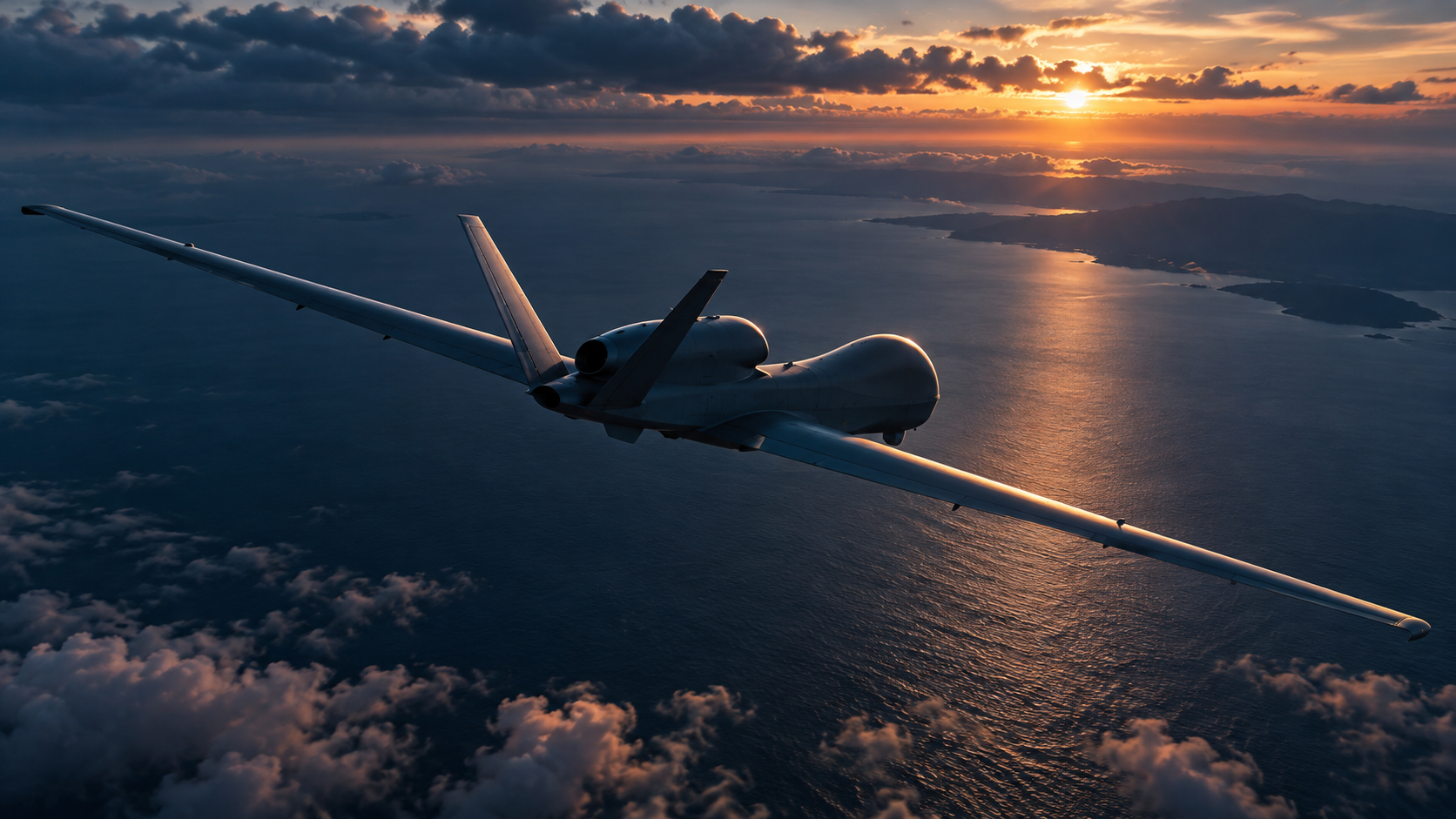
Japan Global Hawk Incident: Why The Fleet Numbers Need Context
The Search For Japan’s Global Hawk And The Questions Still Unanswered
The loss of contact with one of Japan’s three Global Hawks raises questions about a specialist surveillance asset, while its fate remains unresolved.
Japan lost contact with an RQ-4B Global Hawk surveillance drone on Tuesday 15 September, according to Associated Press reporting. The uncrewed aircraft was flying off the country’s north-western coast, near Tottori, and was one of three operated by Japan’s air force.
Aviation Week reported that a search had been launched after communications were lost at about 12:58pm in Japan. Loss of contact is the established starting point; it should not be rewritten as a confirmed shootdown, sabotage incident or completed finding about a crash.
Why The Global Hawk Is A Specialist Asset
Northrop Grumman describes Global Hawk as a high-altitude, long-endurance aircraft for intelligence, surveillance and reconnaissance. Its purpose is to collect information across large areas and provide that information to users who need to understand activity on the ground.
The manufacturer describes flights lasting more than 30 hours. Such persistence is part of the aircraft’s value: the ability to keep observing matters alongside what a sensor can detect at a single moment.
Those are platform capabilities, not a disclosure of the missing aircraft’s specific mission. The general role of an aircraft cannot establish what it was observing when contact was lost.
One Of Three Is A Fleet Fraction, Not A National Capability Estimate
One aircraft represents one-third of a fleet of three. That arithmetic does not establish that Japan has lost one-third of its national surveillance capability.
To calculate a capability loss, an assessment would need to consider serviceability, scheduled missions, other aircraft, other sensors and the ability to substitute coverage. None of those quantities follows automatically from the fleet total.
This distinction matters because the smaller and more specialised a fleet is, the more tempting it becomes to turn a simple fraction into a dramatic strategic claim. The aircraft’s importance can be explained without pretending to know the full operational effect.
What Investigators Need To Establish
The immediate questions concern the aircraft’s location and condition, the sequence before communications stopped and whether contact can be restored. The cause is a separate finding that must be supported by evidence.
A communications problem, an aircraft malfunction and hostile interference would have different implications. Listing them as theoretical categories is not evidence that any one occurred. There was no basis in the reporting reviewed for assigning responsibility to another country.
The Next Update Matters More Than A Premature Explanation
The search outcome and a subsequent official account could materially change the story. Confirmation of recovery, damage or a technical cause would each justify a more specific headline.
Until then, the report concerns a missing connection to an important uncrewed aircraft. Its surveillance role explains the concern; the available evidence sets the limit on what can responsibly be said about its fate.
