

EU Digital Services Act fine hits X: why a €120 million penalty turned into a free speech flashpoint
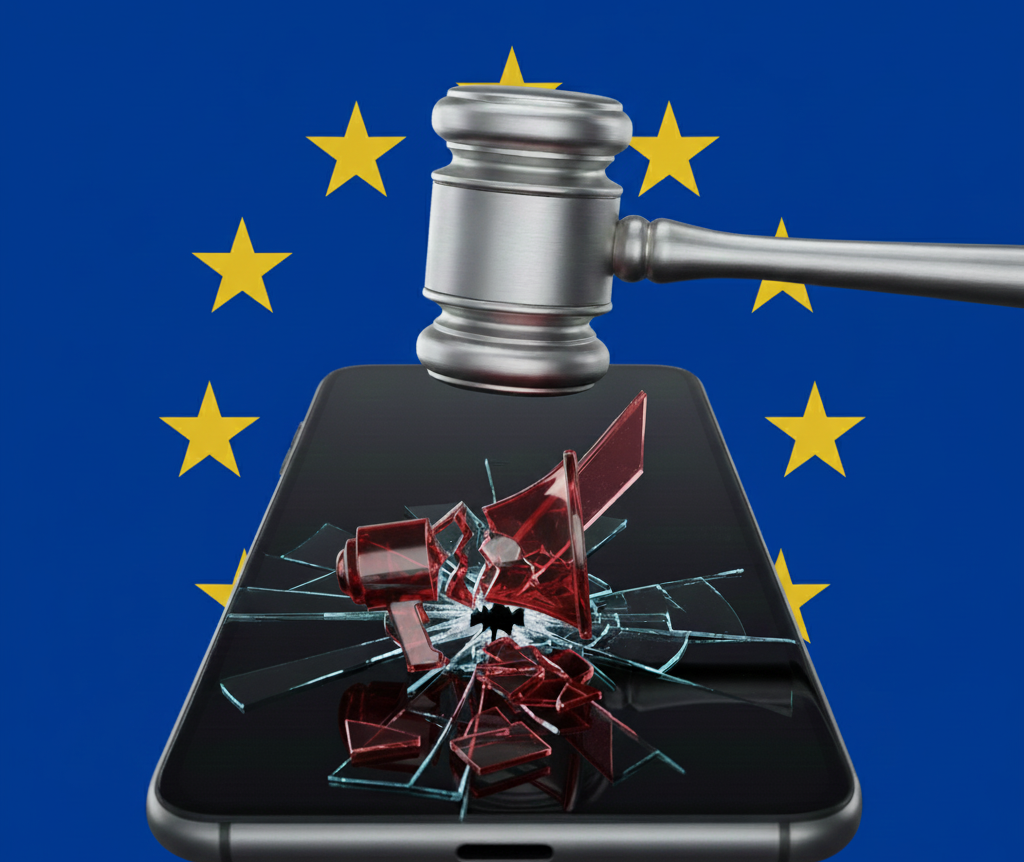
The European Union has hit X with a major Digital Services Act fine, slapping the platform with a €120 million penalty tied to transparency rules. It is not a ban, and it is not a demand to delete specific political opinions. But it is a direct challenge to how X signals trust, explains advertising, and opens its data to scrutiny.
Why it matters right now is the fallout. In the past 48 hours, the dispute has started to spill out of the “tech regulation” lane and into trade politics, with Washington openly signaling it could retaliate against Europe over how it polices American platforms. That turns a compliance case into a wider test of who sets the rules for online speech, and who pays when they do.
This piece breaks down what the EU says X did wrong, what X is likely to argue back, and why this is becoming a global template for platform regulation. It also connects the dots to another recent fine X faced elsewhere, showing the broader pattern: governments are no longer just arguing with social platforms. They are billing them.
The story turns on whether transparency rules are treated as basic consumer protection, or as a backdoor lever over power and speech.
Key Points
The EU issued a €120 million Digital Services Act fine against X for alleged transparency failures, including how the “blue check” is presented, how ads are logged, and how researchers access public data.
The EU framed the decision as its first major enforcement move under the Digital Services Act, setting a precedent for future cases against major platforms.
X faces deadlines to explain fixes and submit an action plan, with the risk of further penalties if the EU finds the response inadequate.
The political temperature is rising: the US has signaled it may consider countermeasures, turning a platform compliance fight into a transatlantic pressure point.
Elon Musk’s allies see this as ideological overreach dressed up as “transparency,” while EU officials describe it as rules-of-the-road for platforms operating in Europe.
The case is also part of a wider pattern: X has faced fines and court orders in other countries this year, revealing how fragmented global speech governance has become.
Background
The Digital Services Act is the EU’s framework for governing online platforms used by people in the European Union. It aims to make the online environment safer and more trustworthy, while stressing that fundamental rights still matter online, including freedom of expression. For the biggest platforms, it also pushes for stronger transparency and accountability, because their design choices can shape public debate at scale.
The EU’s top finding against X in this case is about signals and visibility, not a specific opinion. Regulators say the “blue checkmark” can mislead users if it looks like an identity verification badge when, in practice, it may be obtainable through payment without meaningful identity checks. The EU also says X’s advertising repository does not meet transparency and accessibility requirements, and that the platform has not provided adequate access to public data for eligible researchers studying systemic risks.
The fine is large enough to matter, but it is also smaller than the maximum theoretical punishment. Under the Digital Services Act, the harshest penalties can reach a meaningful percentage of global turnover. In other words, this is not the ceiling. It is a marker.
Separately, this is not the first time X has been ordered to pay up in a major jurisdiction in 2025. Earlier this year, a top court in Brazil ordered X to pay fines tied to noncompliance with judicial orders. The amounts were far smaller than the EU’s €120 million, but the underlying message was similar: if a platform wants access to a market, it has to follow local legal commands, even when the platform argues the commands collide with free expression.
Analysis
Political and Geopolitical Dimensions
This fine lands in a moment when online speech is a geopolitical asset. Platforms shape narratives, amplify movements, and influence elections. That is exactly why governments want leverage over platform systems, and why platform owners resist.
For the EU, the cleanest argument is that the decision is about transparency obligations, not censorship. The EU can point to basic aims that do not require judging political viewpoints: do not mislead users with design signals; make ad systems inspectable; allow qualified research into systemic risks.
For Musk and free speech advocates, the fear is escalation. Even if this decision is framed as “just transparency,” it sits inside a wider regulatory architecture that can pressure platforms on moderation, risk mitigation, and algorithmic choices. Critics see that as a slippery slope where bureaucracy ends up shaping the boundaries of acceptable online debate.
Then there is the US–EU relationship. The latest political development is that Washington is signaling it could respond with trade-style tools if it views EU enforcement as discriminatory against American firms. That shifts the incentives on both sides. The EU does not want to look like it can be intimidated out of enforcing its laws. The US does not want to normalize the idea that Europe can set speech-adjacent rules for American platforms without pushback.
Economic and Market Impact
A €120 million fine is not existential for a global platform, but it is not “parking ticket” money either. The bigger economic effect may come from what the EU forces X to build: compliance systems, reporting processes, ad transparency tooling, and researcher-access pipelines. Those are ongoing costs, not one-off penalties.
There is also a second-order impact on advertisers and political campaigns. If ad repositories become more searchable and complete, it becomes easier for watchdogs and rivals to analyze messaging strategy and targeting patterns. That can increase accountability, but it can also chill experimentation, particularly for smaller groups that do not have legal support on standby.
Finally, Europe’s approach signals to other regulators. The more the EU establishes an operational playbook for platform enforcement, the more likely other jurisdictions are to copy parts of it, whether for consumer protection, national security, or blunt political control.
Social and Cultural Fallout
The cultural fight is about trust. X has positioned itself as a home for rough-edged debate, where more speech is the antidote to bad speech. That is a coherent worldview. But it depends on users being able to assess credibility in real time, especially during breaking news.
The EU’s “blue checkmark” complaint sits right in that fault line. If a trust badge can be bought, users may mistake status for identity verification. That does not just affect politics. It affects scams, impersonation fraud, and public safety alerts.
At the same time, heavy-handed regulation can push users toward the belief that elites are managing the conversation. Even when the regulation is not about content, perception matters. A transparency case can still become a symbolic battle over who controls the public square.
Technological and Security Implications
Ad transparency and researcher data access sound technical, but they are deeply tied to security. Ads can be used for fraud, influence operations, and coordinated manipulation. Research access can help detect patterns that platforms miss, especially when bad actors adapt quickly.
X, for its part, is likely to argue that open data access can be abused, that scraping can create privacy and security risks, and that the platform should not be forced into building tools that expand attack surfaces. That is not a frivolous point. The hard problem is designing access that is useful for legitimate research without becoming a gift to spammers, doxxers, or automated exploitation.
This is why the compliance details matter more than the headline fine. The next phase is about engineering and governance, not speeches.
What Most Coverage Misses
The overlooked point is that “free speech vs regulation” is not the real engineering question. The real question is whether modern platforms can remain open arenas while still being auditable.
Transparency is the currency of legitimacy now. If a platform wants to host high-stakes debate, it has to convince users they can distinguish real people from impersonators, organic trends from paid influence, and genuine advertising from shadow campaigns. The EU is effectively saying: prove it, systematically.
Musk’s strongest counter is not that transparency is bad. It is that regulators can weaponize it, selectively enforce it, and slowly convert “auditability” into “control.” The outcome depends on whether enforcement stays narrowly tied to clear, measurable transparency standards, or drifts into content and viewpoint policing by other means.
Why This Matters
In the short term, this affects EU-based users, advertisers targeting European audiences, and researchers trying to track online manipulation. It also affects political actors on both sides of the Atlantic who want a test case for the limits of digital sovereignty.
In the long term, the case helps define the global rulebook for platform accountability. If the EU’s approach stands, other governments will feel emboldened to demand similar concessions. If X successfully blunts the impact, other platforms may take a harder line against regulator demands, and the internet could fragment further into jurisdiction-by-jurisdiction versions.
Concrete events to watch next include X’s formal compliance submissions, any appeal steps, and whether the US escalates its countermeasure threats into specific actions.
Real-World Impact
A small business owner in Texas runs ads that target customers in France and Germany. If X’s ad repository becomes more transparent and standardized, competitors may learn more about the business’s targeting and messaging. That could raise costs and reduce experimentation, even as it makes scams easier to spot.
A cybersecurity researcher in Berlin studies coordinated influence campaigns. If researcher access improves, the work gets faster and more reliable. If it tightens, independent scrutiny shifts to guesswork and incomplete datasets.
A community organizer in Spain relies on X for rapid mobilization during protests. If trust signals become clearer and impersonation drops, organizing becomes safer. If users feel regulation is steering the platform’s boundaries, some communities may migrate elsewhere, fragmenting the audience.
Whats Next?
The €120 million fine is not just about money. It is a collision between two instincts: regulate platforms like infrastructure, or treat them as speech engines that must stay maximally unconstrained.
Europe is betting that transparency requirements are the least controversial way to discipline platform power without arguing over viewpoints. Musk’s camp is betting that even “neutral” transparency rules can become the start of managed speech, especially when politics turns hot.
The clearest sign of where this is heading will be practical, not rhetorical: what X changes in its verification signals, what it delivers for ad and data transparency, and whether enforcement stays tightly focused on measurable transparency rather than drifting into content-level control.
