

LATEST UPDATE: U.S. strikes in Venezuela: the acknowledgement that changes the crisis’s shape
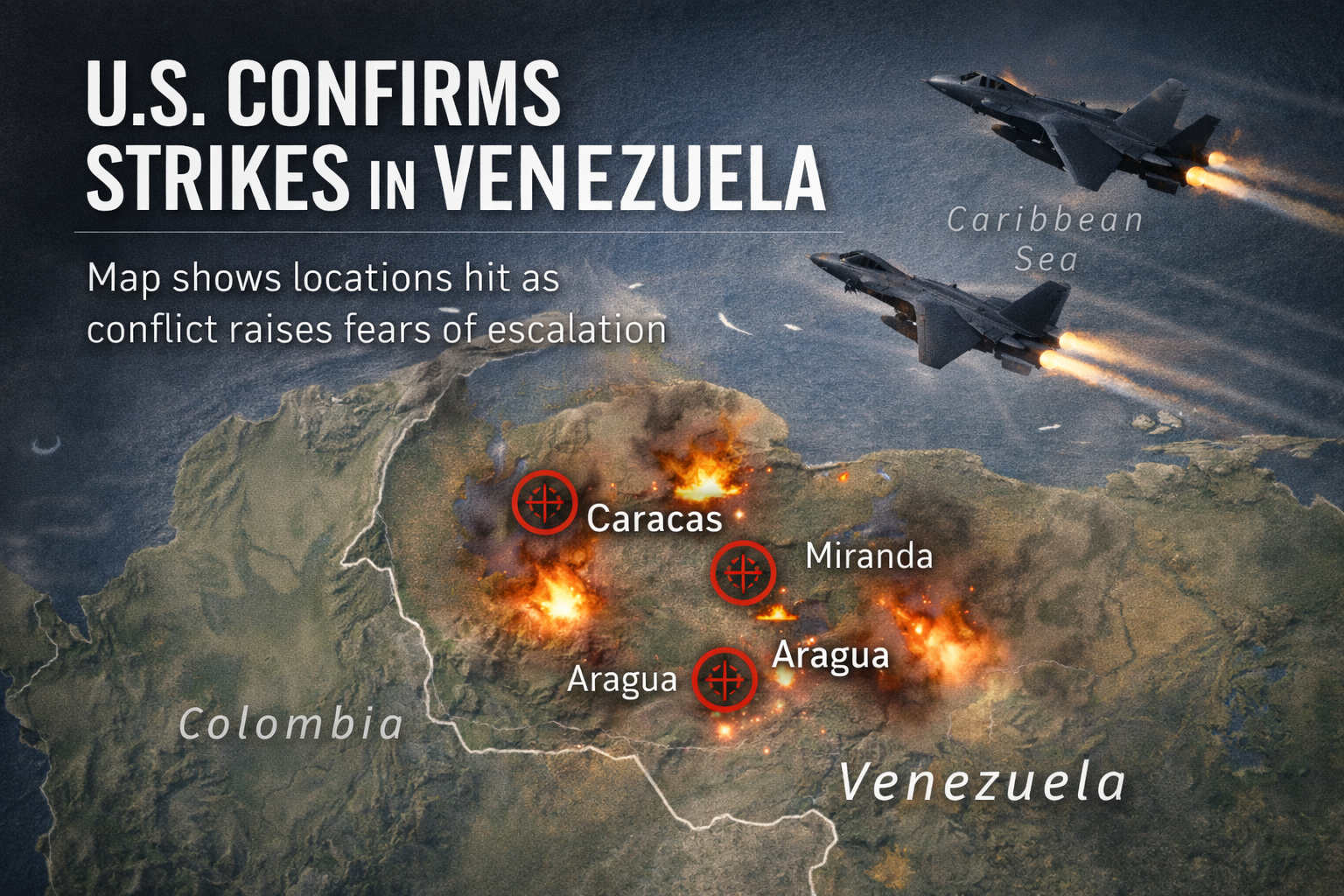
As of January 3, 2026, Venezuela says it is under attack, and a U.S. official has acknowledged that the United States is carrying out strikes inside Venezuela. That acknowledgement is the step-change. It moves the story from accusation to escalation management, where intent is judged less by rhetoric and more by what happens next.
Venezuela’s government has declared a national emergency and called for mobilisation, saying impacts were felt in Caracas and nearby states. In Caracas, reports describe multiple explosions, low-flying aircraft, power outages, and visible smoke near military-linked sites. Separately, U.S. authorities have moved to restrict flight operations over Venezuelan airspace due to ongoing military activity.
This piece sets out what has firmed up since the first wave of reports, what remains unclear, and the fastest signals that will reveal whether this is designed to end quickly or widen into a longer campaign.
“The story turns on whether this is a one-night shock meant to deter, or the opening phase of a rolling campaign.”
Key Points
A U.S. official has acknowledged U.S. strikes inside Venezuela, shifting the story into a more overt phase of state-on-state confrontation.
Venezuela has declared a national emergency and called for mobilisation, saying attacks hit Caracas and the states of Miranda, Aragua, and La Guaira.
Reporting from Caracas describes at least seven explosions, low-flying aircraft, power outages, and smoke from a hangar area at a military-linked site.
A U.S. embassy security alert has told U.S. citizens in Venezuela to shelter in place, reflecting heightened concern about unpredictability on the ground.
U.S. aviation restrictions over Venezuelan airspace are being framed as a safety-of-flight response to ongoing military activity.
The public target list, scale, and verified casualty totals remain incomplete, and an on-the-record U.S. statement of aims and limits is still thin.
Background
Venezuela’s standoff with the United States has moved through years of sanctions, diplomatic rupture, and periodic military signalling in the wider region. What makes the current moment different is not only the intensity of overnight reports from Caracas, but the move toward acknowledged responsibility.
A national emergency declaration is not a procedural footnote. It can create legal cover for rapid restrictions on movement, communications, and assembly, alongside detention powers and accelerated internal security measures. It also gives the state a framework for explaining disruption as necessary and patriotic.
Aviation warnings matter in the same way. In fast-moving conflicts, formal airspace restrictions often arrive before the public has a settled picture of damage. They are a practical recognition that conditions are volatile enough that even routine civil activity can become unsafe.
Analysis
Political and Geopolitical Dimensions
The immediate question is containment. Acknowledged strikes inside Venezuela raise the odds of retaliation, miscalculation, or a cycle of action and response that becomes difficult to stop once it gathers momentum.
Washington’s constraint is clarity. If public messaging stays minimal while activity continues, opponents will fill the gaps with the most inflammatory interpretation. Caracas’s incentive is unity through external threat, using emergency powers and mobilisation language to consolidate control and raise the costs of internal dissent.
The next 12–24 hours will define which track this is on:
Pause and posture: A limited strike followed by a visible diplomatic push and a clearer definition of aims and limits.
Rolling campaign: Follow-on strikes over multiple nights, which would imply a broader objective than a one-off deterrent.
Internal clampdown: Emergency powers translate quickly into restrictions, detentions, and communications pressure, widening the story into rights and governance.
Regionalisation: Neighbours and multilateral bodies move toward emergency sessions, forcing public alignment and increasing the political stakes.
Economic and Market Impact
Even before confirmed disruption to critical infrastructure, perception can move markets. The biggest short-term effects typically show up through risk premiums and operating costs: energy, shipping insurance, trade routes, and aviation rerouting.
If this remains a short burst, markets can absorb it as a shock. If strikes repeat, the story shifts from shock to repricing. Firms start delaying shipments, insurers revise terms, and household behaviour changes inside Venezuela as supplies and mobility become uncertain.
Technological and Security Implications
Crisis information will lag operational reality. Competing claims will travel faster than verified detail, and both sides have incentives to shape narratives in ways that serve internal control and external legitimacy.
The shelter-in-place posture and airspace restrictions also speak to the same underlying reality: unpredictability. In a live military environment, the biggest risks are not only the intended effects of strikes, but the unintended effects—confusion, panic, and errors that produce escalation even when neither side wants it.
What Most Coverage Misses
Most coverage will focus on the headline of attribution and the drama of explosions. The overlooked hinge is signalling discipline.
If this is designed to be a one-night shock, the off-ramp is usually made legible: tight target set, clear limits, and rapid diplomatic activity to prevent misreads. If this is the beginning of sustained pressure, the limits often remain vague while the pattern of action becomes the message.
So the real “tell” is sequence, not statements: do strikes repeat, do targets broaden, do emergency measures tighten daily life, and do regional leaders force formal international action?
Why This Matters
In the short term, Venezuelans in Caracas and surrounding states face the most immediate disruption: power reliability, mobility, access to essentials, and fear-driven decision-making. Even without a comprehensive public damage tally, the lived effect is uncertainty and constraint.
In the medium term, the region faces spillover risk: border pressures, political polarisation, and the possibility of escalating sanctions and countermeasures that spill into trade and energy.
In the long term, the danger is normalisation: a shift toward routine coercive action that raises the baseline risk for the Caribbean and northern South America, making future crises more likely and harder to resolve.
What’s Next?
The next few hours are about pattern recognition. If there are follow-on strikes, the story becomes a campaign. If there is a sustained pause, the story becomes deterrence, bargaining, and crisis management.
Watch for three signs that this is widening: repeat strikes over multiple nights, a broader target set, and rapid tightening of internal restrictions under emergency powers. Watch for three signs it is containing: a clearer public statement of aims and limits, urgent regional diplomacy aimed at de-escalation, and a pause that lasts long enough for backchannels to work.
