

Luigi Mangione's latest news involves a significant evidence fight that could shape the entire case.
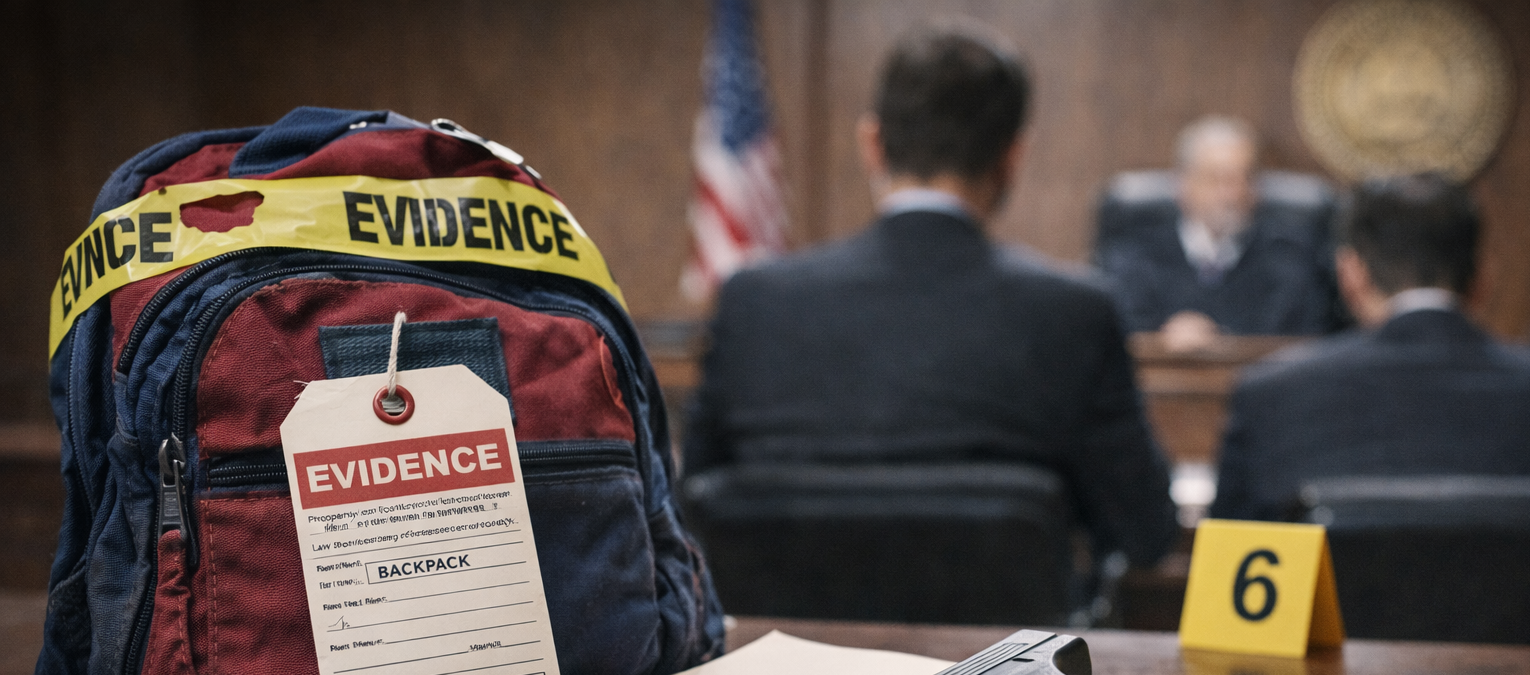
As of December 30, 2025, the most important new development in the Luigi Mangione case is procedural, not dramatic: the key evidence-suppression hearing in New York has wrapped, and the judge has set a long runway to a decision that will determine what the jury can actually see.
Why it matters right now is simple. If the court throws out major items seized at arrest, the prosecution’s narrative gets harder to prove. If the evidence stays, the defense’s leverage shrinks, and the case accelerates toward a trial date.
This piece explains what just happened in court, why the “backpack evidence” question is so central, what the parallel federal death-penalty track changes, and what to watch next as filings and hearings stack up.
The story turns on whether the judge blocks critical evidence—or lets it all in.
Key Points
The New York evidence-suppression hearing has concluded, and the judge is now set to decide later what evidence, if any, should be excluded before trial.
The legal debate centres on whether police were allowed to search Mangione’s backpack without a warrant immediately after his arrest.
Prosecutors say the search was justified by safety and standard arrest procedures; the defense argues it violated constitutional protections.
A separate dispute is also flaring over claims attributed to Mangione’s mother—claims now publicly challenged by a police sergeant involved early in the case.
On the federal track, Mangione’s lawyers are pushing to suspend the death penalty effort, arguing the Attorney General’s ties create a conflict.
Next milestones include a federal court date in early January 2026, written filings in the state case through March, and a decision date in May 2026.
Background
Luigi Mangione is accused in the December 2024 killing of Brian Thompson, the chief executive of UnitedHealthcare, who was shot in Manhattan. Mangione has pleaded not guilty.
After a manhunt, Mangione was arrested in Altoona, Pennsylvania, at a McDonald’s. From the beginning, the case has followed two separate tracks. One is the New York State prosecution. The other is a federal prosecution that carries the possibility of the death penalty if prosecutors prevail.
In September 2025, the New York state case narrowed when a judge dismissed terrorism-related charges, leaving a second-degree murder count and other charges in place. The state case now turns less on headline labels and more on admissible evidence and intent.
That is why the suppression hearing mattered. A suppression hearing is where the court decides whether evidence can be used at trial. If evidence was obtained unlawfully, the judge can exclude it. In cases built around physical items and recorded interactions, a single exclusion can ripple outward, changing what each side can prove and how quickly the case resolves.
Analysis
Political and Geopolitical Dimensions
This case sits inside a broader American argument about violence, punishment, and institutions. On paper, it is a homicide prosecution. In practice, it has become a proxy battlefield for ideological narratives: about the health insurance industry, about public anger, and about how the justice system should respond to highly visible crimes.
The federal death-penalty track adds political voltage. Death-penalty decisions are not only legal calculations; they are also statements of posture, priority, and deterrence. That is why the defense focus on potential conflicts and public commentary matters. Even if those arguments fail, they shape the court’s scrutiny and the way jurors are screened and selected later.
The state-versus-federal split also changes incentives. State prosecutors can move toward a life-sentence case under New York law. Federal prosecutors can pursue capital punishment. That means plea dynamics, scheduling decisions, and evidentiary fights are not happening in a single vacuum. Each side is implicitly negotiating against the other track’s risks.
Economic and Market Impact
The immediate market impact is not a simple stock story. The more realistic economic consequence is cost and behavior— corporate security budgets, executive travel protocols, and event safety planning.
When a high-profile executive killing becomes a national spectacle, companies tend to tighten routines that used to be informal. That can mean more protective services at conferences, more controlled arrivals and departures, and more investment in threat monitoring. Those costs do not show up as a single headline number, but they accumulate across an industry.
There is also a slower reputational drag on institutions already under pressure. When public attention fixes on insurers, pricing, and grievances—fairly or not—companies face a double burden: operational security and narrative management. That does not determine verdicts in court, but it can influence the public environment around the case for months.
Social and Cultural Fallout
A striking feature of the Mangione story is how intensely it is being followed online, including the way courtroom moments, legal strategy, and even the lawyers themselves are turned into content. The case is being consumed not just as news, but as a running serial.
That matters because pretrial publicity can harden public impressions long before a jury is seated. It also creates a vacuum-filling problem: when the court calendar stretches out, speculation expands. Every procedural step becomes a “reveal,” even when the real work is hidden inside motions, transcripts, and legal standards.
The dispute over what Mangione’s mother did or did not say is a good example. Once a line becomes a viral shorthand, it can be hard to dislodge—even if law enforcement sources contest it later. For a future trial, that kind of narrative residue is not harmless colour. It can shape jury selection, the framing of witnesses, and the temperature inside the courtroom.
Technological and Security Implications
This is also a modern evidence case. Body-worn camera video, surveillance footage, digital receipts, and recorded custodial interactions are not background details; they are the architecture of the prosecution and the defense response.
That is why the backpack search is so pivotal. If the court decides officers acted within accepted limits, the state can show jurors a chain of physical items tied to the arrest. If the court decides the search went too far, the state may still proceed—but it must rebuild its proof around other threads, such as surveillance timelines and witness testimony.
The recorded-statement controversy points to another modern fault line: what investigators can record, when, and under which rules. If one side persuades the court that investigators crossed a line, the remedy can be exclusion—removing a set of words that prosecutors would otherwise treat as persuasive.
What Most Coverage Misses
Most coverage treats the case as if it is waiting for a single “trial day”. But the real decisive moment may arrive earlier and quieter, inside a ruling about admissibility. A trial is theatre. Suppression is engineering. Engineering determines what props are even allowed on stage.
The long gap between the hearing’s end and the judge’s decision also changes the balance of power. Time lets each side refine arguments, but it also magnifies leaks, rumours, and politicised framing. The longer the wait, the more the public narrative hardens without the discipline of sworn testimony and cross-examination.
Finally, the two-track structure means that the concept of "winning" can vary for each side. A defense victory in state suppression can echo into the federal case. A federal death-penalty fight can influence how aggressively the defense contests every state detail. The chessboard extends beyond the confines of a single courtroom.
Why This Matters
For the general public, the immediate concerns are clarity and speed: whether the case progresses towards trial or stagnates in the motion practice phase. For the families involved, time is not an abstraction—it is months of uncertainty attached to a fixed loss.
Concrete dates matter here. Early January 2026 is a key federal waypoint. Late January and early March are major state filing deadlines. May 2026 is positioned as the decision moment on evidence and the likely point when a trial date is set.
In the short term, the case will be shaped by paper: briefs, replies, and rulings. In the long term, it will be shaped by what evidence survives and how jurors are filtered for bias in a story that has already travelled far beyond New York.
Real-World Impact
A corporate security lead for a mid-sized US firm watches this case and quietly rewrites the playbook for conferences: fewer uncontrolled entrances, more advance screening, and stricter transport routines for executives.
A health insurance broker in the Midwest fields tense calls from clients who are angry about premiums and suspicious of the industry. Even without any policy change, the broker’s job becomes part education, part damage control.
A public defender in a large city points to the case when explaining suppression law to a client: the public often sees exclusion as a “technicality”, but the system sees it as a boundary that limits state power.
A nurse in London follows the headlines for a different reason: the story becomes a mirror held up to healthcare systems, trust in institutions, and how quickly online narratives can turn legal proceedings into cultural conflict.
What’s Next?
The next phase is slower but more consequential. The court must decide which parts of the arrest story the jury can see.
If the judge excludes major items tied to the backpack search, prosecutors may need to lean harder on surveillance, timelines, and other corroboration. If the judge admits the evidence, the defense may shift emphasis toward context, procedure, and credibility rather than exclusion.
Either way, the federal death-penalty fight keeps the case under a brighter, harsher light. The signal to watch is not a single headline, but a pattern: court orders on evidence, rulings on contested recordings, and the scheduling decisions that reveal whether this is heading toward a fast trial—or a long legal winter.
