

MH370 Deep-Sea Search Restarts, Reopening Aviation’s Most Haunted Mystery
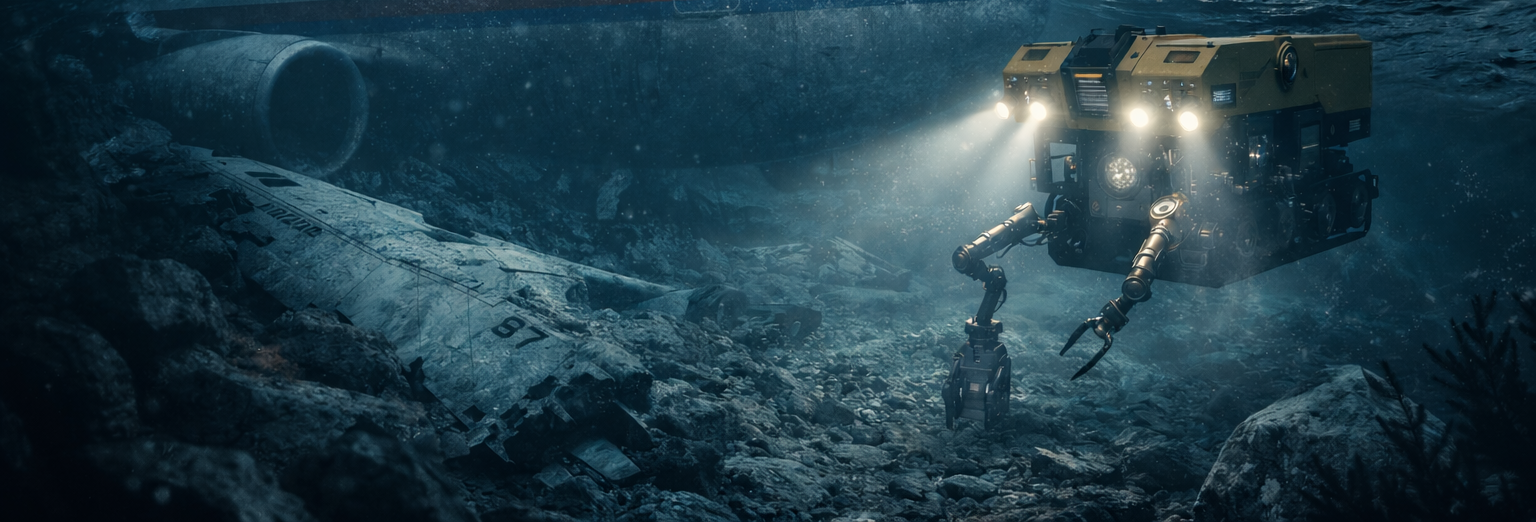
As of December 31, 2025, the MH370 deep-sea search is underway again in the southern Indian Ocean, led by the marine robotics firm Ocean Infinity under an agreement with Malaysia. The restart is important because it focusses the investigation into a specific area for a short time: a detailed search of the ocean floor using improved robots and better maps to turn guesses into actual findings.
The tension is familiar and brutal. After more than a decade, the world has theories, drift models, and satellite “handshakes”. What it still does not have is the plane itself. A new search has the potential to yield answers, but it also has the potential to exacerbate existing issues if it follows the path of previous efforts.
This piece explains what changed this week, why Malaysia is backing another attempt now, and what a discovery would unlock for families, investigators, and aviation safety.
The story turns on whether a tighter search box and improved underwater robotics can finally turn the MH370 mystery into a physical location.
Key Points
The Malaysian government says a new deep-sea search for MH370 resumed on December 30, 2025, under an existing service agreement signed on March 25, 2025.
The operator, Ocean Infinity, is conducting up to 55 days of intermittent seabed search activity in a targeted area assessed as having the highest probability of locating the aircraft.
Malaysia has described the arrangement as “no-find, no-fee”, meaning payment is tied to successfully locating the wreckage.
The search restarts after a brief 2025 attempt was paused earlier in the year due to seasonal weather in the southern Indian Ocean.
A search vessel linked to the operation has staged it in Fremantle in Western Australia, reflecting how remote and logistically demanding the search zone is.
If the aircraft is found, it could clarify the crash sequence, strengthen safety lessons, and end years of unresolved grief for families of the 239 people on board.
Background: MH370 Deep-Sea Search Timeline
Malaysia Airlines Flight 370 vanished on March 8, 2014, while flying from Kuala Lumpur to Beijing with 239 people aboard. After an early phase of confusion over its last known location, investigators concluded the aircraft deviated from its planned route and likely ended in the southern Indian Ocean. The central problem has always been that the best available data points—military radar traces, satellite communications, and models of how debris might drift—leave room for uncertainty measured in hundreds or thousands of square miles.
From 2014 through early 2017, a multinational effort carried out one of the largest and most technically demanding underwater searches in history, scanning a vast section of seabed far from land and exposed to harsh conditions. That search did not locate the main wreckage, though pieces believed to be from the aircraft were later found along the western Indian Ocean rim, adding weight to the southern Indian Ocean conclusion without revealing the crash site.
Ocean Infinity ran a separate private search in 2018, also without success. Since then, the case has remained stuck between strong probability and missing proof: enough to keep credible search proposals alive, not enough to close the book.
Analysis
Political and Geopolitical Dimensions
For Malaysia, restarting the search is partly about responsibility and legitimacy. MH370 is not only an aviation disaster; it is a national trauma that never resolved into a clear account of what happened. Re-engaging signals to families—Malaysian, Chinese, and others—that the state is still willing to act when a viable pathway exists.
Internationally, MH370 sits at the intersection of sovereignty and cooperation. The likely search area is in the southern Indian Ocean, with Western Australia functioning as a practical launch point for ships and equipment. That geography makes coordination unavoidable: ports, technical expertise, and maritime operations need alignment even when the formal investigation structures have long since thinned out.
Two near-term scenarios matter most. One is quiet continuity: the search proceeds, Malaysia provides periodic updates, and technical partners review any candidate findings without public drama. The other is pressure escalation: if the search turns up credible targets—or ends with nothing—families and governments may push harder for transparency on what data drove the new search box and what will happen next.
Economic and Market Impact
A renewed search does not move global markets, but it does move money and incentives in a specialized corner of the economy: deep-sea robotics and high-end marine surveying. A “no-find, no-fee” structure concentrates risk on the operator and makes the business case hinge on confidence in the narrowed search area and the maturity of the technology stack.
There is also a reputational economy at work. Finding MH370 would be a landmark proof point for autonomous underwater search at extreme depth. It would likely accelerate demand for similar capabilities in defense, offshore infrastructure inspection, and salvage, because it would demonstrate that persistent, high-resolution seabed mapping can solve problems that once looked impossible.
The key scenarios here are straightforward. If the search produces a verified discovery, underwater robotics develops a halo effect: more contracts, faster innovation cycles, and a stronger case for private operators partnering with governments. If it fails, the market impact is still not zero, but it shifts toward incremental learning—better maps, improved methods, and a harder sell to fund the next attempt.
Technological and Security Implications
The operational core of this restart is not a single new sensor. It is the system: autonomous underwater vehicles scanning the seabed with sonar, generating high-resolution terrain and object signatures, and then iterating on targets that look “wrong” against natural seabed geometry. The improvement over a decade is not just better hardware but better integration—navigation accuracy, data processing, and how quickly teams can re-task machines when something looks promising.
If MH370 is found, it also becomes a security and safety evidence trove. Wreckage location can validate or challenge assumptions about the final flight path. Damage patterns can shed light on impact dynamics. Even with years underwater, certain structural clues can survive long enough to narrow what happened in the final minutes.
The future splits into three plausible paths. In the best case, the search finds the wreckage and produces enough forensic signal to tighten the narrative. In a middle case, it finds ambiguous debris that requires repeated verification passes and careful public communication. In the worst case, it finds nothing and reinforces the possibility that the true crash site sits outside the current probability box.
Social and Cultural Fallout
MH370 has become a global symbol of uncertainty in the modern age: a world where satellites track phones, planes broadcast telemetry, and yet a widebody aircraft can still vanish into ocean depths. Restarting the search reopens that cultural wound. Families relive the timeline. The public relives the speculation. Each new update becomes a stress test for how institutions communicate uncertainty without inviting chaos.
The social stakes are highest for relatives who have lived for years in the limbo between mourning and waiting. A confirmed wreckage site can end a certain kind of suffering, even when it does not answer every question. Another failed effort can deepen cynicism and intensify the feeling that closure is always one expedition away and never actually arriving.
Two scenarios dominate the human side. If the search is quiet and disciplined, families may acquire the dignity of steady communication and realistic expectations. If it becomes sensational, the weeks ahead could produce a second trauma—false hope followed by abrupt silence.
What Most Coverage Misses
Most coverage treats the restart as a binary: either it finds the plane or it does not. The overlooked reality is that the biggest win may be reducing uncertainty, not just claiming victory. A modern deep-sea search can generate new exclusion zones with higher confidence than older methods, effectively shrinking the map of “maybe” in a way that improves the next attempt, even if this one does not deliver the wreckage.
The second overlooked factor is seasonal constraint. The Southern Indian Ocean dictates the schedule more than headlines do. Weather windows, sea states, and distance from port shape how long autonomous systems can stay effective and how reliably they can revisit targets. This makes “55 days intermittently” a practical admission: the ocean decides the tempo.
Finally, public expectations often assume that better tech automatically means success. In reality, improvements help most when paired with a better search hypothesis. The decisive variable is not just how well the machines see the seabed, but whether the search box is centered on the right patch of ocean.
Why This Matters: MH370 Deep-Sea Search Stakes
In the short term, the people most affected are families who have spent nearly twelve years with no confirmed crash site and no shared account of what happened. A verified discovery would offer a place in the world where grief can land, and a basis for answering questions that have lingered far too long.
In the longer term, MH370 remains a forcing function for aviation safety and tracking debates. The case continues to shape how regulators, airlines, and technology providers think about flight tracking resilience, satellite communication assumptions, and how accident investigation systems cope when the primary evidence is missing.
What to watch next is concrete. Malaysia’s transport ministry updates will indicate whether the search is progressing smoothly, whether targets are being revisited, and whether technical partners are being asked to review candidate imagery. The operational rhythm—steady scanning versus abrupt pauses—will also signal whether the ocean is cooperating or imposing limits again.
Real-World Impact
A family member in Beijing follows every official update and every rumor, not because it changes the past, but because a confirmed site would change how the future is lived. It could turn “missing” into a place and an endless debate into a finite set of facts.
A marine robotics engineer in Western Australia sees the restart as the hardest kind of test: machines operating at extreme depth, far from port, in weather that can erase a schedule overnight. Success would validate years of engineering decisions that rarely make headlines.
An aviation safety professional in the United States treats the search as more than a mystery story. A confirmed wreckage location could sharpen guidance on tracking, emergency communications, and what should be required when aircraft deviate from expected routes over remote oceans.
What’s Next?
The restart is a wager on focus. Instead of sweeping vast areas, this effort concentrates on a targeted zone judged most likely to contain the aircraft. That design can succeed quickly if the underlying assumptions are right, but it can also fail cleanly if the crash site lies just beyond the search boundary.
The next signal is not a dramatic announcement but a pattern: sustained operations, disciplined updates, and credible handling of any candidate findings. If the search produces a plausible target, the process will likely slow down rather than speed up, because verification at depth demands repeat passes and careful interpretation. If the search ends without a discovery, the key question will shift immediately to whether the new data meaningfully shrinks the uncertainty—and whether Malaysia and Ocean Infinity can justify another iteration.
