

Nigeria’s Nightmare: 315 Pupils Abducted from Catholic School
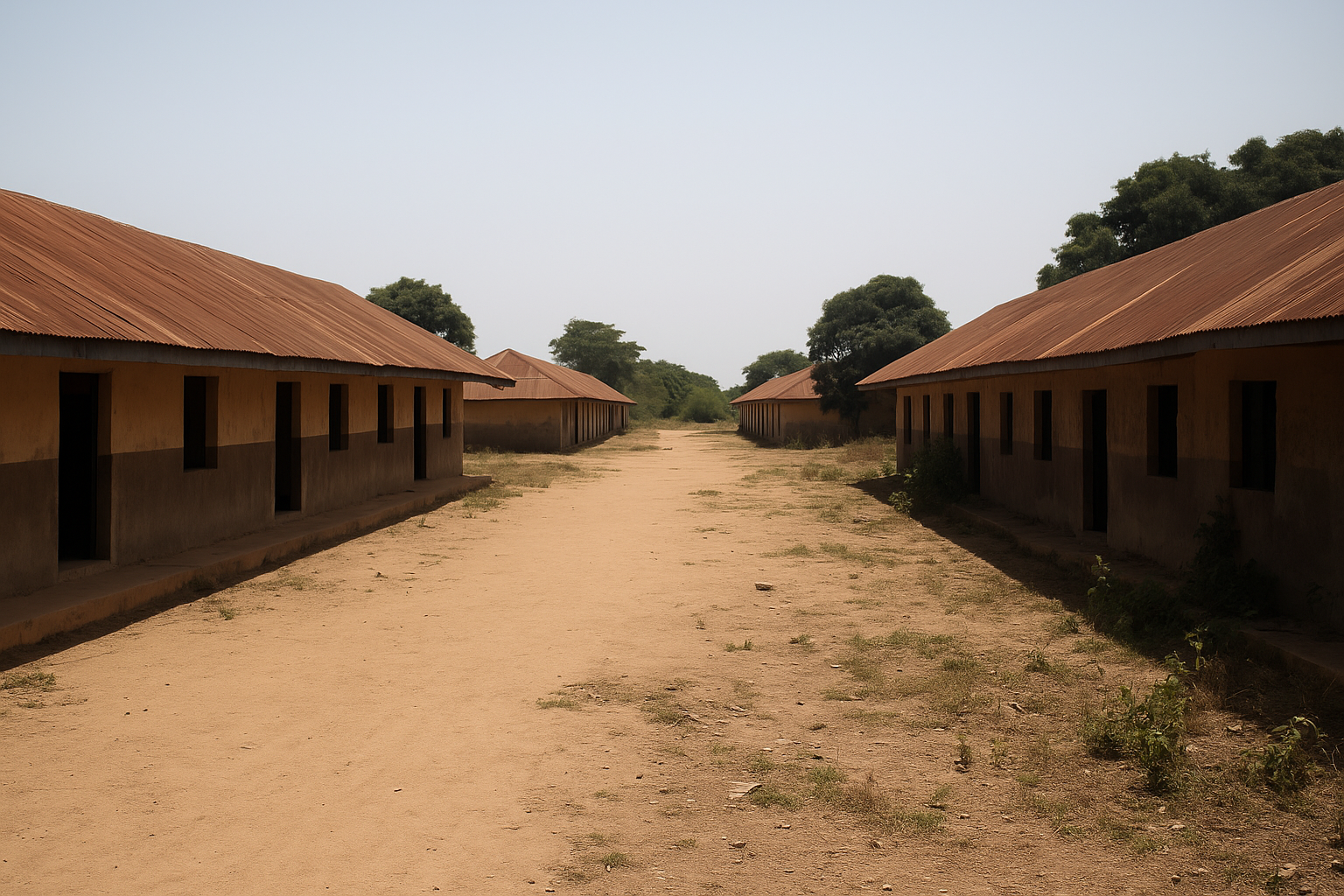
In the pre-dawn darkness of Papiri, Niger State, gunshots shattered the silence. Armed men stormed the campus of St. Mary’s Catholic School. Teachers and guards raced to the dorms, but the assailants were swift. By morning light, 315 terrified children and staff had vanished.
Empty beds lay stiff beneath the cool breeze. School gates stood wide open, hinges jammed on disuse. In the courtyard, a lone schoolboy’s shoe told its own story. Parents gathered in prayer circles, eyes wide with horror. In that moment Nigeria faced yet another school kidnapping, a fresh reminder of a years-long nightmare.
This raid was one of the largest abductions Nigeria has ever seen. It followed other recent attacks – a church raid in Kwara state, girls taken from a boarding school in Kebbi – each wave sparking new fear. Yet for many Nigerians, the violence is painfully familiar. Bandits and jihadists have roamed these lands for years. But as news of 315 missing students spread, the shock was raw. In hushed tones across the nation, people asked: how did we get here?
Background: A History of Mass Kidnappings
Nigeria has seen kidnappings on a massive scale before, and none more infamous than Chibok. In April 2014, Boko Haram militants kidnapped 276 schoolgirls from Chibok in Borno State. The world watched in horror as the girls disappeared into the night. The “Bring Back Our Girls” campaign made headlines. To this day many of those girls are still missing. That was Boko Haram’s signature move: attacking schools, especially girls’ schools, to spread terror and grab ransom.
Since then, dozens of mass abductions have happened across Nigeria. In 2018, Boko Haram struck again at Dapchi (Yobe State), seizing over 100 schoolgirls from their dorms. Also in 2018, gunmen took 333 students from a school in Kankara (Kaduna State).
In recent years, a new scourge has grown in the northwest. Criminal gangs known as “bandits” have sprung up in the forests of Zamfara, Katsina, Kaduna and neighboring states. At first these gangs focused on cattle rustling and small raids. But they quickly learned that kidnapping students and villagers pays big. Entire schools have been swept clean. In December 2020, bandits grabbed dozens of students from a school in Kuriga (Kaduna), and in February 2021 over 300 girls were taken from a school in Jangebe (Zamfara). In the past year alone, media reports tallied hundreds more schoolchildren abducted for ransom.
2014 (Chibok, Borno): Boko Haram abducts 276 girls at night. Many remain captive.
2018 (Dapchi, Yobe): Over 100 schoolgirls seized by Boko Haram.
2018 (Kankara, Kaduna): 333 male students kidnapped from a boarding school.
2020–2021 (Northwest): Dozens of mass school kidnappings by bandits (Kuriga, Jangebe, others).
These attacks have become almost routine in some regions. Each time, security forces promise to rescue the captives and prevent more raids. But they rarely succeed. Villages remain wounded by each incident. Parents grow too afraid to send their children far from home.
Drivers of Nigeria’s Insecurity
Nigeria’s kidnapping crisis is driven by a tangle of factors. Several intertwined conflicts and weaknesses feed the violence.
Islamist Terrorism: Groups like Boko Haram and its offshoot Islamic State – West Africa Province (ISWAP) have terrorized the Northeast since 2009. They seek to impose a hardline religious rule and have declared Nigeria’s government to be “infidel”. They target education directly, attacking schools they view as Western or un-Islamic. In fifteen years, the Boko Haram insurgency has displaced over two million people and killed tens of thousands. Many victims have been Muslims who resisted Boko Haram, but the group also kidnapped Christian students and villagers.
Criminal Banditry: In Nigeria’s northwest and central belt, loosely organized criminal bands have turned kidnapping into big business. These armed gangs roam vast forests and mountains, often on motorcycles. They have no clear ideology or unified leadership, but they know how to strike at weak targets. Schools and villages are easy prey. The captives fetch ransom from desperate families or local governments. It is said to be “the most lucrative business” in some poor northern areas. Over time, some bandit groups have even joined forces with jihadists, trading loot and tactics.
Farmer–Herder Clashes: Across the Middle Belt (where Muslim Fulani herders cross Christian farmlands), a deadly cycle of revenge has taken root. Scarcity of water and grazing land has pitted farmers and Fulani herdsmen against each other. What began as arguments over cattle trespass has repeatedly exploded into mass violence. In many attacks, churches and villages were burned, and scores of people killed. Farmers, who are often Christian, claim these raids are also religious terror. Fulani groups say they are defending themselves against anti-pastoralist vigilantes. This conflict adds yet another layer to Nigeria’s insecurity.
Weak State and Corruption: Nigeria is a vast country with a population of over 230 million. Its armies and police forces are among Africa’s largest, but they are stretched thin. In remote communities there is little government presence. Forest hideouts where bandits lie low often have no roads, no cell coverage, and no patrols. Security forces are often poorly equipped and sometimes divided by local politics. In some cases, state authorities have quietly paid ransoms to get children home, even while publicly vowing not to negotiate with kidnappers. Governments also blame out-of-date laws (like a colonial-era gun law) for failing to control weapons. In short, many Nigerians feel the state simply cannot protect them.
Together, these forces create chaos. Jihadist ideology fans religious divisions, bandits prey on easy targets for profit, communal fights blur lines between tribe and faith, and weak governance makes all of it possible.
Religion and the Persecution Debate
Nigeria is roughly split between Islam and Christianity, and religion often colors perceptions of the violence. Some observers say recent attacks are evidence that Christians are being targeted in a sort of “religious cleansing”. They note that many of the latest kidnappings – including the Catholic school raid – happened in predominantly Christian communities. American officials, for instance, have raised alarms about violence against Christians in Nigeria.
The Nigerian government and other analysts push back on this. They point out that civilians of all faiths are being killed and kidnapped. In the Northeast, for example, Boko Haram has slaughtered far more Muslims (who lived under its rule) than Christians. In the farming conflicts of the Middle Belt, both Fulani (mostly Muslim) and local farmers (often Christian) have suffered. A Crisis Group expert noted that in many mass attacks, Muslim villages and herders have also been struck.
This debate is tense because it shapes the narrative. Many victims themselves simply see the violence as brutal crime or ethnic tension, not a holy war. Yet outsiders often frame the crisis as religious persecution. Nigeria’s leaders argue that is an oversimplification – a “false narrative” that ignores how complex the mix of motives is. They stress that the country has had peaceful Christian-Muslim coexistence for decades, and warn that labeling the violence as one-sided could fuel more division.
In practice, the truth is mixed. Some jihadist propaganda does talk about “defending Islam” against unbelievers, and attacks on churches do occur. But on the ground in many recent kidnappings, attackers shouted “money” more often than any religious slogan. In short, faith is one factor, but so are ethnic rivalry, resource fights, and sheer criminal greed.
Why This Matters: Impact on Nigeria and the World
This cycle of violence is not just a local tragedy – it has deep consequences for Nigeria’s future and its standing in the world.
Economically, it is disastrous. Northern Nigeria was once a major food basket, with farmers growing grains and raising cattle. Now, insecurity forces many farmers to flee their fields. Crops rot in the ground and transport routes become too dangerous. Food prices rise. Foreign companies eyeing investment see a land where running a factory or a farm means hiring armed guards. International investors have already grown wary. The World Bank and IMF have warned that political turmoil and violence could slow growth in Africa’s largest economy. In daily life, businesses in affected towns suffer. Markets are half-empty. People hesitate to travel or trade in troubled regions.
Socially, the impact is heartbreaking. Education, especially, is under threat. Thousands of children who would have been in classrooms are now hidden at home or wandering refugee camps. Schools in several states have been closed “indefinitely” after attacks, depriving children of learning. Imagine an entire generation growing up without basic schooling. That promise of the future is stolen with each classroom that falls silent. Families are torn apart. Even when kidnapped children are freed, they often carry deep trauma. Some refuse to ever return to boarding schools. One 15-year-old who escaped a mass abduction in Zamfara said he would never step foot back in that dorm again. Mothers who once tucked their girls into bed at night now live in fear of sirens or gunshots.
Politically, the toll is equally grave. The credibility of Nigeria’s government and security forces is at stake. Citizens are asking: If air strikes and armies can’t stop these raids, what can? President Tinubu’s government has faced criticism at home and abroad for failing to protect citizens. Outgoing trips to international summits were canceled amid security fears. The crisis also strains Nigeria’s relations with allies. The United States, for example, has taken the unusual step of threatening sanctions and even calling Nigeria a “Country of Particular Concern” over religious violence. That drama over perceived attacks on Christians is partly a reaction to incidents like this school abduction. It means that big powers are now demanding Nigeria show results, linking aid and cooperation to improved security for all communities.
On the world stage, Nigeria’s image as a stable African giant is slipping. For years it was seen as a leading democracy and Africa’s largest market. Now headlines focus on failing schools and kidnap for ransom. Tourists are warned against travel. Diplomats whisper that Nigeria must fix this or risk losing influence. There is even talk of regional spillover: if bandits roam freely in Nigeria, they could cross borders into neighboring countries in the Sahel, feeding larger West African instability.
But perhaps the most personal effect is on Nigerian society itself. Communities are living in trauma. Neighbors suspect neighbors of harboring criminals or weapons. Vigilante groups have sprung up to protect villages, sometimes taking the law into their own hands. Civic life, like local elections or markets, is disrupted by fear. In the Middle Belt, mistrust between ethnic and religious groups deepens with each attack. Nigeria’s social fabric – once held together by shared schools, workplaces, and worship spaces – is fraying.
The world is watching. Human rights groups warn that years of impunity could lead to even worse atrocities. Meanwhile, African leaders call for international support. The chairman of ECOWAS warned that this violence is an “existential threat” to the region’s stability. In short, Nigeria’s crisis is not isolated; it affects us all in a globalized age.
Other Attacks and the Toll on Communities
The kidnapping at St. Mary’s School is only the latest in a grim list. Across Nigeria, families know these stories too well. Schools and villages have been targeted with sickening regularity. For example:
Chibok (2014): 276 schoolgirls abducted by Boko Haram, sparking global outrage. Some girls escaped or were released years later; many are still missing.
Bethel Baptist School, Kaduna (July 2021): Around 121 students (mostly boys) were seized from their dormitory by bandits. Many returned after negotiations, but some never came home.
Federal College Kagara, Niger (Feb 2021): Gunmen killed a student and kidnapped 27 classmates during a raid. The boy who died, Benjamin Doma, became a symbol of the crisis.
Government Girls Secondary School, Kebbi (Nov 2025): In the same week as the Catholic school raid, 25 girls were abducted from Kebbi State’s boarding school. The school’s vice principal was shot dead in the attack.
Banquet Church Attack, Kwara (Nov 2025): Gunmen ambushed a church service in Kwara State, killing two and kidnapping dozens of worshippers. The kidnappers even demanded ransom per captive.
Each time, the aftermath is painfully similar. Schools shut their doors. In November 2025, the governors of at least six northern states – including Katsina, Plateau, Niger and others – ordered immediate closure of public schools. The federal government quietly closed more than 50 of its boarding colleges nationwide. Thousands of students were sent home, often into worse uncertainty. Rural parents sometimes hide their children entirely, fearing travel for any reason.
In villages that have been attacked or even nearby, life changes. Homes are boarded up or abandoned. Survivors carry scars – both physical and mental. One news report described heartbroken mothers, still in their hijabs and robes, waiting in church yards for word on missing children. Some parents sold livestock or jewelry to raise ransom money. Those who could not pay mourn in silence. Teachers and community leaders have been killed or driven out as well.
One stark example came from a teacher in Zamfara State, whose students had been kidnapped. Attendance fell nearly to zero afterwards. A 15-year-old boy wounded by gunfire said he would never return to boarding school, even if it reopened. “It’s too scary,” he told rescuers. Similarly, Amnesty International reported that in places like Kebbi and Niger states, hundreds of schools lie empty. The fear of more attacks is higher than the hope of learning.
Churches and mosques in troubled areas have also become anxious. Many now hire security or station youth at the doors. Even this does not guarantee safety. Many families have fled their villages altogether, seeking refuge in bigger towns. Camps of displaced people have formed, though often without much help. These scenes are repeated in the news from community to community.
This pervasive climate of fear sends a warning to Nigerian families: education and worship, once considered safe havens, have become life-and-death gambles. The closure of schools means more uneducated youth. The regular attacks on farms mean food shortages. The cycle of ransom and violence has a ripple effect: every success by kidnappers encourages more attempts.
Each example – from Chibok to Papiri – underlines a grim fact. What started as occasional terror has become routine for many Nigerians. From the dusty village of Gum in Benue State (attacked with over 100 killed in 2025) to the campus at St. Mary’s, the script is too familiar. Guns ring out at dawn, children vanish, and the world watches in sorrow.
As parents light candles or hold vigils, the simple truth looms: this crisis matters. It shows what happens when violence is left unchecked. And until Nigeria finds a way to protect its people – all its people – stories like these will keep unfolding under a blood-red dawn.
