One Drone Wave, 45,000 Homes Dark: The Winter Attrition Strategy Hits Kryvyi Rih
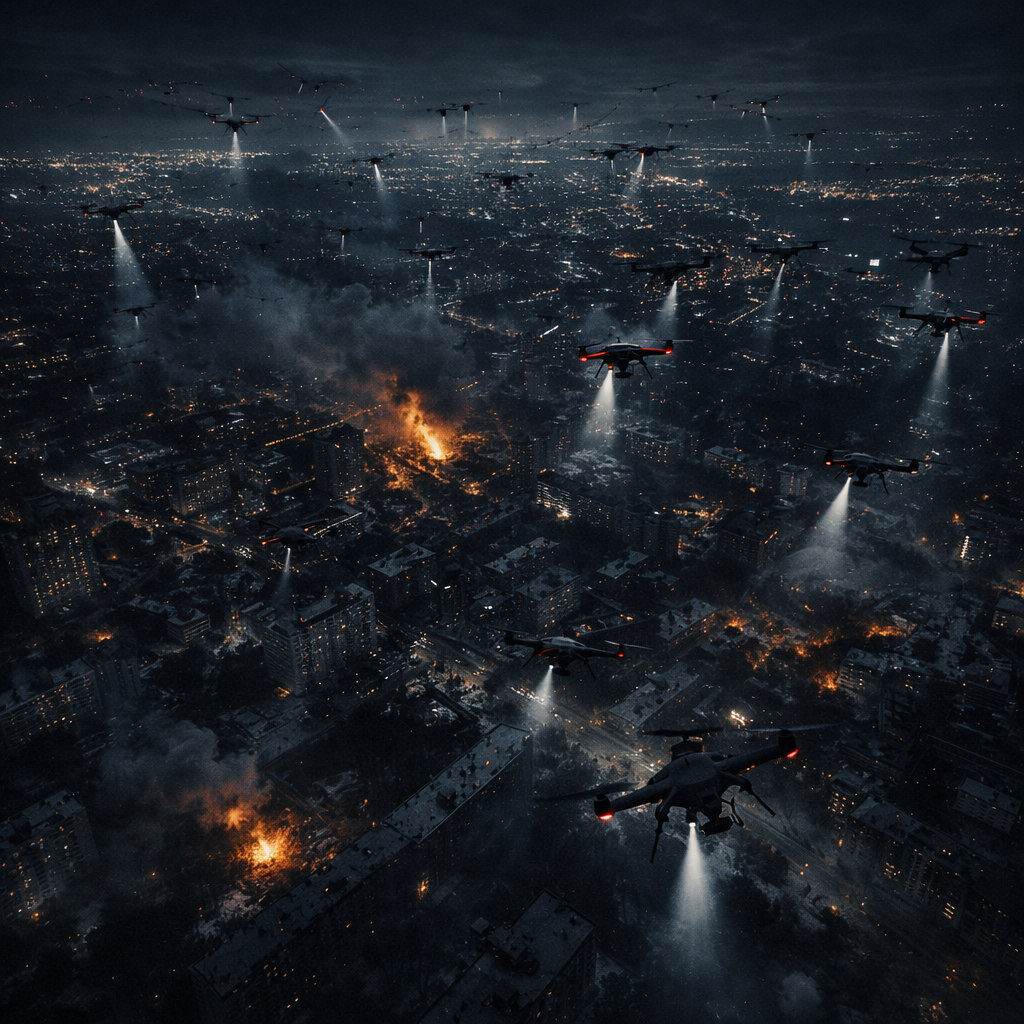
Kryvyi Rih Blackout Drone Attack: 45,000 Homes Dark and the Winter Attrition Strategy
Russian drones struck infrastructure in Kryvyi Rih, triggering emergency power blackouts affecting more than 45,000 customers and disrupting heat supply across the city. Local officials urged residents to charge devices and store water as crews assessed damage and tried to stabilise services.
This was not just another overnight hit. In winter, electricity is not a convenience layer. It is the control system for heat, water pressure, transport, medical care, and basic public order. When the grid wobbles, everything else wobbles with it.
One overlooked hinge matters early: a “blackout number” can reflect protective grid shedding as much as physical destruction, meaning a relatively focused strike can still produce city-wide disruption when operators cut load to prevent a larger collapse.
The story turns on whether Ukraine can keep restoring critical services faster than recurring drone waves can unsettle them.
Key Points
Kryvyi Rih suffered emergency power cuts after drone strikes hit infrastructure, leaving over 45,000 customers without electricity and disrupting heat delivery.
Heat disruption is the real winter multiplier: power loss cascades into boiler houses, pumps, water supply, and indoor safety in days, not weeks.
The operational logic looks like attrition, not a single “decisive” strike: repeat disruption so repairs never reach a stable baseline.
Air defenses can blunt raids but not eliminate the problem, especially with massed drones designed to saturate coverage and force hard choices.
Repair is a race against time and parts: switchgear, transformers, boiler systems, skilled crews, and safe working windows are the bottlenecks.
The next month likely hinges on how quickly Ukraine can harden chokepoints, expand mobile backup, and keep the grid stable under recurring stress.
Background
Kryvyi Rih sits in central Ukraine and is a large, stretched city where infrastructure has to serve long distances. In that geometry, damage at a few nodes can spill across wide areas.
The strike reported on January 14 was attributed to Shahed-type drones used in repeated waves. These drones are relatively cheap compared with missiles and are often used to pressure air defense systems and exhaust interceptor stocks.
Ukraine has endured a sustained campaign against its energy system across the war. In winter, the same pattern carries extra leverage because demand rises and the margin for error shrinks. A hit that might be manageable in milder months becomes a crisis when indoor temperatures drop and heating networks depend on powered pumps and controls.
“Emergency blackouts” typically means operators are shedding load quickly to protect grid frequency and prevent cascading failures. It can be driven by direct physical damage, but also by precaution when the system becomes unstable.
Analysis
Political and Geopolitical Dimensions
The strategic purpose of winter infrastructure strikes is rarely about a single night’s damage. It is about civilian endurance and governance pressure: turning daily life into a sequence of interruptions that drain attention, money, morale, and municipal capacity.
For Kyiv, the imperative is to keep services credible: even partial restoration signals resilience. For Moscow, the incentive is to make restoration feel temporary and fragile, so each repair is psychologically discounted by the expectation of the next wave.
Plausible scenarios:
Sustained winter attrition: repeated drone waves keep cities in rolling disruptions.
Signposts: frequent public warnings to charge devices and store water; repeated emergency cut notices; visible strain on municipal services.
Localized hardening success: Ukraine reduces the blast radius of hits by hardening and redundancies at key nodes.
Signposts: faster restoration times after similar attacks; fewer heat-network failures even when power cuts occur.
Escalation to larger combined raids: drones plus missiles target harder-to-repair components.
Signposts: more simultaneous multi-region outages; reports of damage to high-voltage equipment or major thermal generation assets.
Economic and Market Impact
A city-level blackout is an economic event even when it lasts hours. Retail loses transactions. Industry loses shifts. Cold-chain logistics become a gamble. Small firms with thin cash buffers take the hit immediately, and the costs compound through repairs, replacement stock, and lost contracts.
The bigger economic story is the repair economy under attack. Every wave consumes:
spare parts that are not infinitely stocked,
technician hours that cannot be doubled overnight,
safe access windows for crews working under threat,
and fuel for generators and transport.
If strikes keep arriving before systems stabilise, a city can slide from “repair” to “operate in degraded mode,” which is a different and more expensive equilibrium.
Plausible scenarios:
Generator surge and informal resilience: more businesses and buildings self-provision with backup power.
Signposts: increased generator use and fuel constraints; more micro-retail around charging points and heat shelters.
Concentrated protection of “economic arteries”: priority circuits for hospitals, water, logistics, and key employers.
Signposts: more explicit rationing plans; public schedules of which districts get priority.
Repair bottleneck crisis: parts shortages and crew fatigue lengthen outages.
Signposts: restoration timelines slipping from hours to days; repeated failures after partial power returns.
Social and Cultural Fallout
In winter, the impact turns intimate fast. Power loss becomes heat loss. Heat loss becomes sleep disruption, illness risk, and fear in high-rise buildings where elevators stop and water pressure drops.
Disruption also changes behavior. People cluster in warm places, charge devices wherever they can, and re-plan life around power windows. That adaptive rhythm helps survival, but it is also the point of attrition: a city spends its attention budget on basic continuity.
Plausible scenarios:
Normalization of disruption: communities adapt, but public fatigue rises.
Signposts: more communal warming points; widespread use of battery packs; routine “prepare tonight” messaging.
Pressure on municipal legitimacy: frustration shifts from the attacker to local capacity if outages feel unmanaged.
Signposts: more public criticism of local planning; increased demand for transparent restoration schedules.
Hardened civic routines: structured preparedness reduces panic and increases continuity.
Signposts: standardized building-level contingency plans; faster reopening of schools and clinics after outages.
Technological and Security Implications
Air defense is not a single shield. It is a layered system constrained by geography, interceptor availability, radar coverage, and the attacker’s ability to mass cheap drones. Drones can be used to force defenders into exhausting choices: spend interceptors on drones, or accept damage.
On the grid side, resilience comes from making hits less consequential:
segmentation (so a failure does not cascade),
redundancy (alternate routing),
mobile substations and backup boilers,
and faster switching and protection schemes.
But there are limits. High-value components are heavy, scarce, and slow to install. And every repair activity is exposed.
Plausible scenarios:
Defense saturation becomes the dominant risk: raids designed to overwhelm local coverage.
Signposts: higher proportion of drones reaching targets; more simultaneous hits per night.
Rapid repair innovation: quicker modular replacements and smarter load management.
Signposts: shorter emergency blackout durations; fewer secondary failures after power restoration.
Targeting shifts to harder nodes: attacks focus on equipment that cannot be swapped quickly.
Signposts: outages tied to specific substations or heat plants; longer repair windows cited by officials.
What Most Coverage Misses
A headline number like “45,000 without power” reads like pure destruction. In reality, it often includes something more strategic: operators deliberately cutting power to keep the wider grid from failing. That is not a footnote. It is the mechanism that makes attrition work.
If a strike destabilises frequency or damages a node that threatens imbalance, the safest action can be rapid load shedding. That turns a focused attack into a broader outage without the attacker needing to physically destroy everything. The result is a multiplier: the attacker hits a chokepoint, the defender spreads the pain to save the system.
This also changes what “success” looks like for defense and repair. It is not only about preventing hits. It is about reducing how much protective shedding is needed when hits occur—through segmentation, redundancy, and faster switching—so the city does not pay the price of stability every time a drone gets through.
Why This Matters
In the short term (next 24–72 hours and coming weeks), the highest-risk impacts are:
heat disruption in buildings reliant on central systems,
water supply instability where pumps and pressure controls depend on power,
and service continuity for hospitals, transport, and emergency response.
In the longer term (the next months), the stakes are:
whether recurring attacks lock cities into a degraded operating mode,
whether parts and skilled labor become the binding constraints,
and whether sustained disruption reshapes population movement and economic activity.
Upcoming decision points are operational rather than ceremonial:
how much backup heat and power can be mobilised,
which circuits and districts are prioritised,
and whether hardening investments can be pushed to the front of the winter calendar.
This event also sits inside a broader trend: the use of relatively cheap systems to force expensive defensive responses, while civilian infrastructure becomes the arena where endurance is tested.
Real-World Impact
A mid-rise apartment block wakes up to cold radiators. Elevators stop. Residents carry water upstairs and rotate phones between a shared power bank and a supermarket charging point.
A small grocery loses refrigeration overnight. It discounts stock, then spends the next day sourcing replacements in a disrupted supply chain while customers focus on essentials, not variety.
A clinic runs on generator power and limits services to urgent care. Routine appointments slide, not because doctors are unavailable, but because power stability is.
A logistics depot delays dispatch because scanning systems, lighting, and safety processes rely on stable power. The delay ripples into deliveries, payroll, and contract performance.
The Next Repair Race
Kryvyi Rih’s blackout after drone strikes is a snapshot of winter warfare where the goal is not a single spectacular blow. It is repeated interruption: break the rhythm of recovery so normal life never fully returns.
The fork in the road is practical. Either restoration becomes faster, more modular, and more resilient than the next wave—or cities spend winter living between outages, rationing stability in hours at a time.
Watch for three signposts: shortening restoration times, fewer heat-network failures after power returns, and shifts in targeting toward harder-to-replace nodes. If those trend the wrong way, the historical meaning of this moment hardens into something blunt: winter becomes a weapon not because it is cold, but because it makes every small failure compound.
