

Pentagon Signals Iran War Is Still Active Despite Ceasefire As Strait Of Hormuz Becomes Global Flashpoint
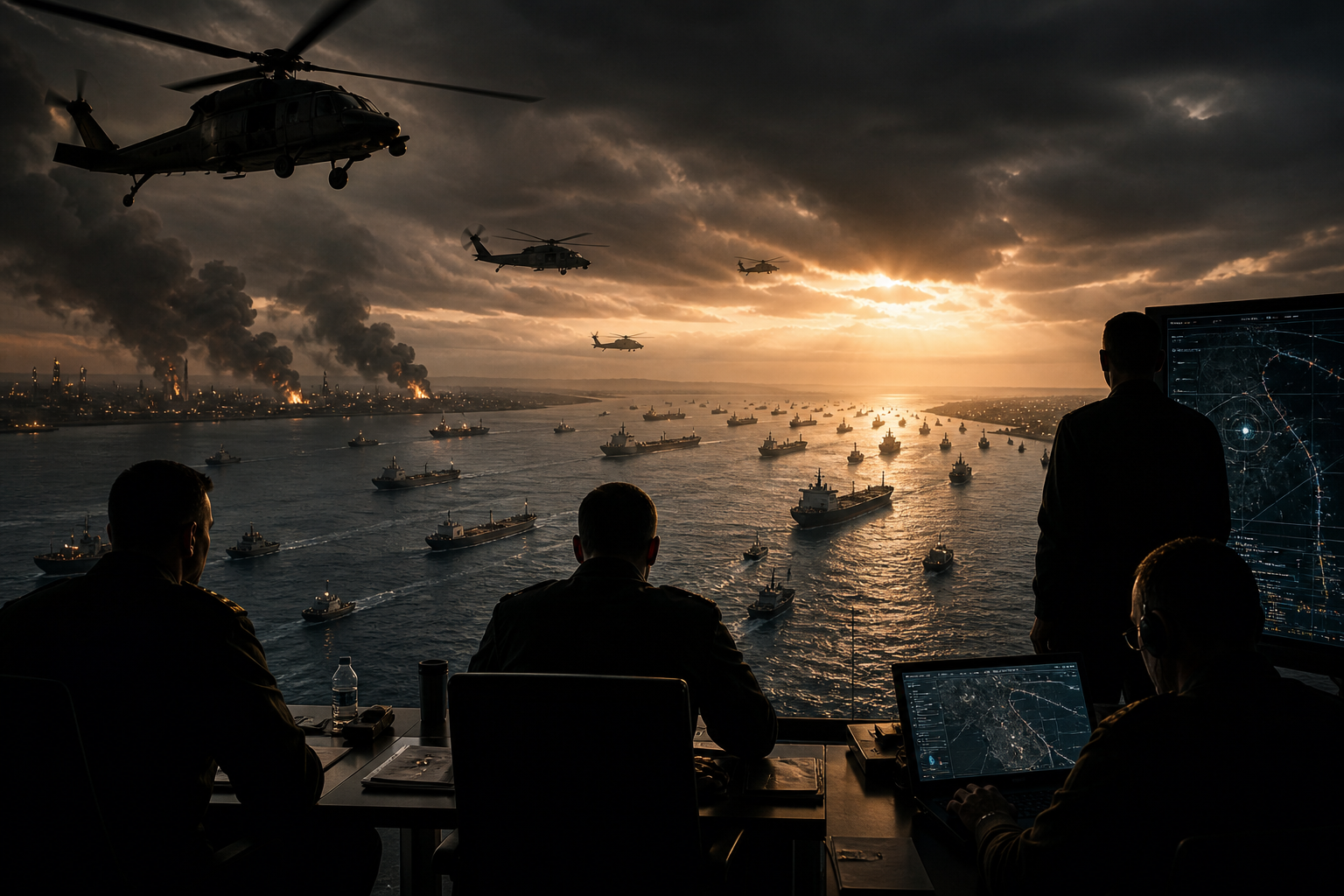
Pentagon Briefing Reveals Iran Conflict Still Escalating Beneath “Ceasefire”
The Ceasefire Holds On Paper—But The War Is Still Moving
The Pentagon is sending a message that cuts through the noise: the Iran war has not ended—it has simply changed form.
In a high-stakes briefing, US defense officials confirmed that while a ceasefire technically remains in place, military activity in the region continues at a level that looks, feels, and operates like an active conflict. The distinction is no longer between peace and war. It is between visible war and managed escalation.
At the center of this reality is the Strait of Hormuz, a narrow stretch of water that has quietly become the most dangerous place on Earth.
A War That Never Fully Stopped
US Defense Secretary Pete Hegseth made it clear: the ceasefire is “not over,” but neither is the fighting.
That contradiction defines the current moment.
Since the ceasefire began, there have been repeated attacks on US forces and commercial shipping. Iranian drones, missiles, and fast attack boats have been intercepted or destroyed, while US forces have responded with targeted strikes, including sinking multiple Iranian vessels.
The key detail is not that these incidents are happening—it is how they are being classified. Officials insist they remain “below the threshold” of full-scale war.
This creates a strategic grey zone:
Too violent to be peace
Too contained to be declared war
And that ambiguity is intentional.
The Strait Of Hormuz: Where Everything Converges
The entire situation now revolves around one chokepoint.
The Strait of Hormuz handles a massive share of global oil and gas flows, making it one of the most economically sensitive locations in the world.
When Iran effectively restricted access, it didn’t just escalate a regional conflict—it triggered a global risk.
Right now:
Over 1,500 commercial ships are waiting to pass
Tens of thousands of crew members are effectively stuck
Global energy markets are watching every movement
In response, the US launched a military operation—framed as defensive—designed to escort ships and reopen the waterway.
That operation has already involved:
Naval escorts for commercial vessels
Air support from attack helicopters
Interceptions of Iranian drones and missiles
This is not a symbolic presence. It is an active military campaign with global economic stakes.
“Project Freedom” And The Optics Of Control
The US operation—referred to as “Project Freedom”—is being presented as a humanitarian effort to restore safe passage.
But the framing matters as much as the action.
By calling it temporary and defensive, US officials are trying to achieve three things simultaneously:
Avoid triggering formal war escalation rules
Maintain international legitimacy
Keep pressure on Iran without committing to full-scale conflict
At the same time, Iran is pushing its narrative, accusing the US of violating the ceasefire and asserting control over the region.
This creates a dual reality: both sides claim restraint while actively engaging in conflict.
The Hidden Logic Of “Below Threshold” Warfare
The most important detail in the Pentagon briefing is not the number of attacks or ships escorted. It is the concept of “threshold.”
Modern warfare is no longer binary.
Instead of crossing a clear line into open war, states now operate just beneath it—applying pressure without triggering full retaliation.
In this case:
Iran tests limits through targeted strikes and disruption
The US responds with force, but within defined bounds
Both sides avoid actions that would force a total escalation
This is deliberate containment, not accidental restraint.
It allows both sides to:
Signal strength domestically
Maintain strategic leverage
Avoid the political and economic cost of full war
But it also creates constant instability.
Why This Moment Is More Dangerous Than It Looks
At first glance, the situation might appear controlled.
Officials are calm.
The ceasefire is technically intact.
Ships are beginning to move again.
But the underlying conditions are volatile.
There have already been:
Multiple attacks on US forces
Seizures of commercial vessels
Missile and drone exchanges across the region
Each of these incidents carries escalation risk.
The system only works if both sides continue to interpret events as “below threshold.”
The moment that interpretation breaks, the conflict changes instantly.
What Most People Miss
The real story is not whether the ceasefire holds.
It is that the definition of war has shifted.
This conflict is being fought in a controlled, continuous state where:
Engagement is constant
Escalation is managed
Resolution is deferred
The Pentagon briefing reflects this new reality.
Officials are no longer trying to convince anyone that the war is over. Instead, they are signaling that it is contained—carefully, deliberately, and temporarily.
That distinction matters.
Because containment is not stability.
It is tension with rules.
The Global Stakes
The implications go far beyond the Middle East.
Energy markets, shipping routes, and global supply chains are directly tied to what happens in the Strait of Hormuz.
Even limited disruption can:
Drive oil price volatility
Affect inflation globally
Trigger wider economic instability
And because so many countries depend on this route, the conflict is no longer just bilateral.
It is a global pressure point.
The Reality Going Forward
The Pentagon’s message is clear, even if it is carefully worded.
The war has not ended.
It has evolved.
What exists now is a controlled conflict—one that can continue indefinitely, escalate suddenly, or resolve quickly depending on decisions made in moments of pressure.
That makes it more unpredictable, not less.
Because in this kind of war, the most dangerous moment is not when fighting begins.
It is when both sides believe they are still holding back.This operation is
