

Putin Defies Trump: Russia Promises “Uninterrupted” Fuel Supplies to India
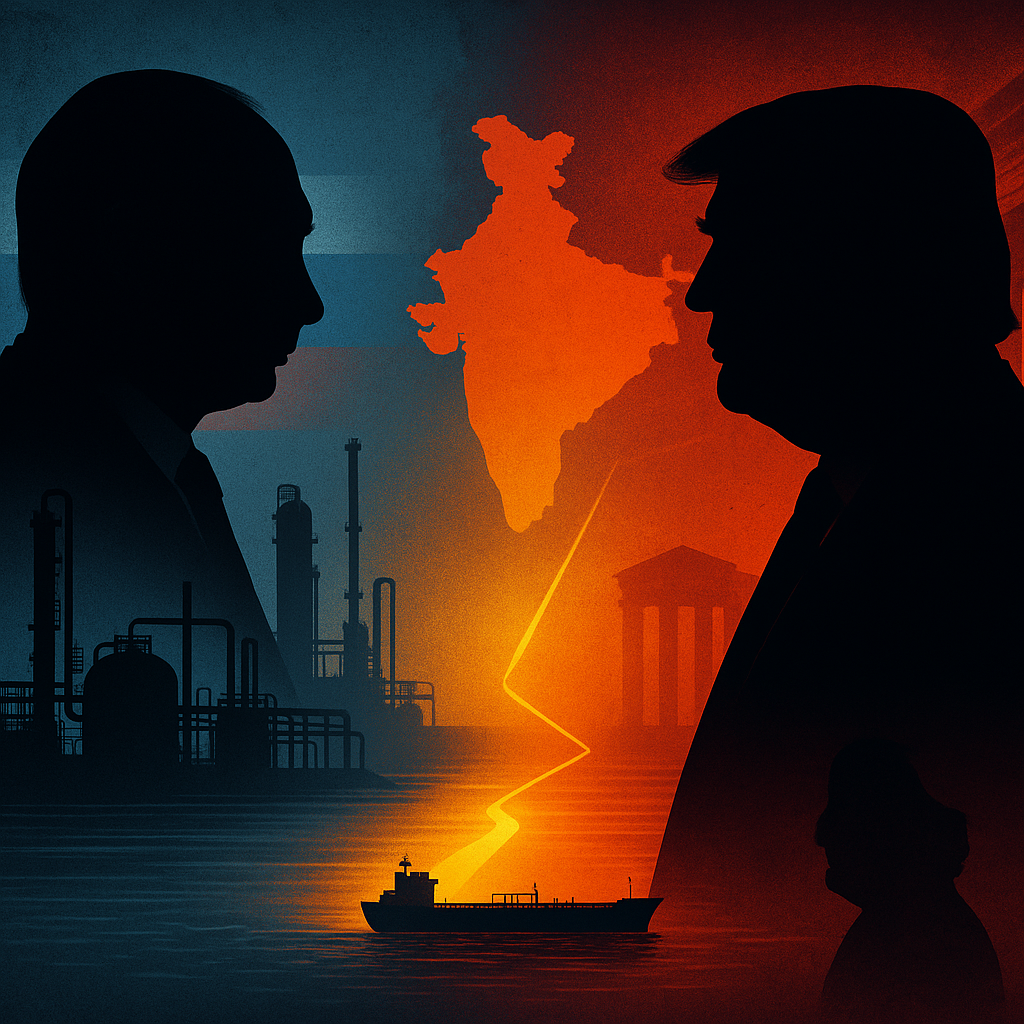
Russia has openly backed India’s energy needs, promising to keep the oil, gas and nuclear fuel flowing – even as Donald Trump tries to turn Russian crude into a pressure point on New Delhi.
Key Points
Vladimir Putin, in Delhi for a summit with Narendra Modi, has promised “uninterrupted” fuel shipments to India, covering oil, gas, coal and nuclear fuel.
The pledge comes after Donald Trump slapped extra tariffs on India and urged New Delhi to halt Russian oil imports, arguing they help fund the war in Ukraine.
India has quietly pushed back, stressing that its energy policy is guided by national interest – and continues to buy Russian crude despite U.S. pressure.
Putin has accused Trump of hypocrisy, pointing out that the U.S. itself still purchases Russian nuclear fuel while telling India to stop buying Russian energy.
The row highlights a bigger shift: India is leaning into a “multi-aligned” foreign policy, buying cheap Russian energy while trying to remain close to both Washington and European partners.
Background: India’s Russian Energy Lifeline
How India became one of Russia’s most important energy customers
Since Russia’s full-scale invasion of Ukraine in 2022, Western sanctions and price caps have pushed Moscow to redirect its oil exports away from Europe towards Asia. India – the world’s third-largest oil importer – has taken full advantage of heavy discounts on Russian crude.
Russian oil has, at times, become India’s single largest source of crude imports.
Cheaper barrels have helped New Delhi cushion domestic fuel prices and inflation for a population of 1.4 billion.
For Russia, India’s purchases have been a financial lifeline, offsetting lost European revenues and helping keep the Kremlin’s war economy afloat.
Enter Donald Trump – and a tariff shock
In 2025, relations between Washington and New Delhi soured sharply as Donald Trump’s administration moved from gentle pressure to outright economic punishment:
The U.S. imposed a 25% “reciprocal” tariff on Indian exports.
On top of that, Trump added a further 25% penalty explicitly linked to India’s continued imports of Russian oil – bringing the effective tariff burden on some Indian exports to 50%.
Trump has publicly claimed – somewhat prematurely – that India had agreed to stop buying Russian oil, calling it a “good step”, even as Indian officials insisted there had been no such policy change.
Against this backdrop of tariffs, sanctions and public arm-twisting, Putin’s visit to New Delhi – and his choice of language – takes on much wider significance.
What Has Just Happened? Putin’s “Uninterrupted Fuel” Pledge
A red-carpet summit in Delhi
On a two-day state visit to India, Putin and Modi held their 23rd annual bilateral summit, complete with full ceremonial honours and a heavy focus on trade, defence and energy.
The two sides:
Agreed an economic cooperation roadmap through 2030.
Set an ambition to push annual bilateral trade towards $100 billion.
Highlighted collaboration on projects such as the Kudankulam nuclear power plant, the International North-South Transport Corridor and the Northern Sea Route.
The line that matters: “uninterrupted shipments”
At the heart of the story is Putin’s promise that Russia is ready to provide uninterrupted fuel to India to meet its growing economic needs.
In practice, that means:
Continuing large-scale crude oil flows to Indian refiners.
Ongoing supplies of coal and gas.
Long-term nuclear fuel support for India’s reactor fleet, including Kudankulam.
A pointed jab at Trump
Putin hasn’t just promised energy – he has framed it as a question of fairness and hypocrisy:
He has argued that if the U.S. has the right to buy Russian nuclear fuel, India should have the same right to buy Russian oil and other energy.
He has stressed that American utilities still import Russian uranium for their nuclear power plants, even while Washington berates India for buying Russian crude.
The message is deliberately blunt: Washington cannot demand that India cut off Russian energy while continuing its own selective purchases from Moscow.
Why It Matters – And Who It Affects
For India: energy security versus strategic risk
For New Delhi, the calculation is brutally simple:
Energy security & inflation: Discounted Russian oil keeps fuel prices lower and helps manage inflation, a politically sensitive issue in a country where small shifts in pump prices can become election issues.
Growth and development: India is pushing for sustained high growth; cheap energy feeds directly into manufacturing costs, transport and broader competitiveness.
But there are risks:
Exposure to U.S. tariffs: Trump’s 50% tariff package on Indian exports is already biting certain sectors and could be escalated if Washington feels defied.
Tech and defence links: India’s access to U.S. high-tech components, defence platforms and investment could become a bargaining chip if energy tensions deepen.
For Russia: revenue, leverage and sanctions workarounds
Russia gains three key things:
Revenue: Indian purchases help stabilise Russia’s export earnings in the face of Western sanctions.
Strategic foothold in Asia: Deepening ties with India signals that Moscow is not isolated and can still strike major energy and defence deals with a U.S. partner.
Political narrative: By accusing Trump of hypocrisy, Putin seeks to undermine the moral high ground of Western sanctions and cast Russia as a “reliable supplier” unfairly targeted by the West.
For the U.S. and its allies
For Washington and European capitals, this is uncomfortable:
Sanctions credibility: If large democracies like India keep buying Russian energy despite sanctions and tariffs, it weakens the notion of a unified front against Moscow.
Indo-Pacific strategy: India is a central pillar of Western strategy in the Indo-Pacific, including the Quad grouping. A prolonged tariff war over Russian oil could spill into security cooperation and joint exercises.
Global energy markets: Efforts to squeeze Russian revenues via price caps rely on big buyers playing along. India’s continued imports complicate that picture and can incentivise Russia to expand “shadow fleet” shipping and non-Western insurance networks.
Where the UK fits in
From a UK perspective, this matters on several fronts:
Energy prices: Global oil and diesel prices are shaped by the rerouting of Russian crude. Indian refiners often re-export refined products into world markets, indirectly affecting European and UK pump prices.
Diplomacy with India: Britain is seeking a closer trade and security relationship with New Delhi. London will be wary of being dragged into a binary “with us or with Russia” narrative that could alienate a key Indo-Pacific partner.
Sanctions architecture: The UK has invested political capital in the sanctions regime on Russia. India’s stance forces British policymakers to think harder about enforcement, loopholes and how far they want to push friendly nations over Russian ties.
The Big Picture: A Test Case for a More Fragmented World
India’s “multi-alignment” in practice
For years, Indian diplomats have insisted they are not “non-aligned” in the old sense, but “multi-aligned” – working with different partners on different issues.
This episode is a textbook example:
Security cooperation and tech partnerships with the U.S., Japan, Australia and Europe.
Deepening energy, defence-industrial and nuclear ties with Russia.
A careful refusal to choose sides outright in the West–Russia confrontation.
Sanctions fatigue and parallel financial systems
Putin’s comments and the summit communiqués also point to a broader trend:
Greater use of local currencies and alternative payment mechanisms to bypass dollar-based channels vulnerable to U.S. sanctions.
Investment in new transport corridors – like the International North-South Transport Corridor linking Russia, Iran and India – that reduce reliance on Western-controlled logistical routes.
Over time, these steps could contribute to a more fragmented global economy, with parallel systems for trade, finance and energy that are less exposed to Western pressure.
Trump’s stance as a signal to others
Trump’s hard line on India is also a warning shot to other countries still buying Russian fuel:
Buyers in Asia, the Middle East and Africa can see that access to the U.S. market may be conditioned on their energy choices.
At the same time, if India rides out the pressure, others may be encouraged to test the limits of U.S. sanctions too.
What to Watch Next
1. Will India quietly rebalance its energy mix?
Even as it defends its right to buy Russian oil, India has been exploring more barrels from the U.S., the Middle East and elsewhere. Watch for:
New long-term supply deals with Gulf producers.
A gradual trimming – rather than a sudden halt – in Russian volumes if the political cost grows.
2. U.S. follow-through on tariffs and sanctions
Key questions:
Does Trump escalate tariffs further if Moscow–Delhi energy ties deepen?
Are secondary sanctions on Indian entities seriously considered or mainly used as a threat?
The answers will shape not just India–U.S. relations, but how other “swing states” weigh up their options between cheap energy and access to Western markets.
3. Russia’s capacity to keep its promise
“Uninterrupted” is a strong word. In reality, Russia faces:
Constraints from shipping, insurance and Western enforcement of sanctions.
Domestic budget pressures that may push it to renegotiate discounts.
Infrastructure and security risks, including Ukrainian drone attacks on refineries and ports.
If Moscow fails to deliver reliably, India will accelerate diversification regardless of Trump’s stance.
4. The broader strategic triangle: India–Russia–West
Over the coming months, look for signals such as:
Whether India and Russia sign fresh long-term energy contracts or new nuclear fuel deals.
How loudly – or quietly – Western leaders choose to criticise India in public.
Whether Delhi pauses or delays any high-profile defence purchases from the U.S. as a bargaining chip.
Whats Next?
Putin’s offer of “uninterrupted” fuel to India, made in full knowledge of Trump’s objections, is more than just a trade pledge. It is a statement about who gets to decide the rules of global energy – and whether U.S. pressure alone can dictate the choices of a rising power like India.
For New Delhi, the task now is to keep the lights on, keep prices down and keep its options open – all while navigating between a sanctions-hit Russia and an increasingly transactional Washington. For the rest of the world, including the UK, this is a preview of a future where energy, geopolitics and trade are even more tightly entwined – and where “uninterrupted” supply always comes with political strings attached.
