

Russia Fires Nuclear-Capable Oreshnik Missile Near NATO’s Border, Pushing Europe to the Edge
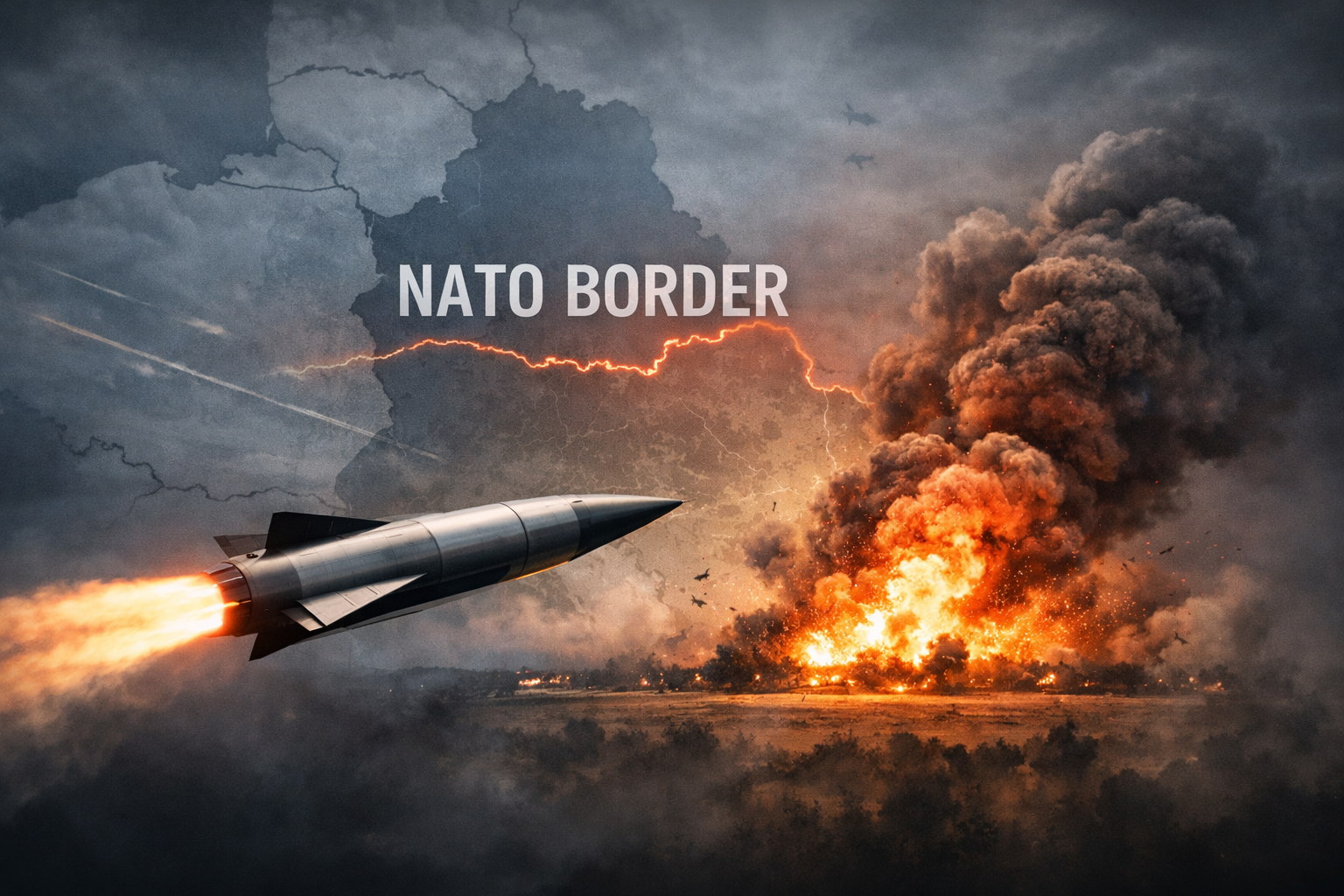
Russia Brings the War to NATO’s Doorstep With Oreshnik Hypersonic Missile Strike
Russia’s Oreshnik hypersonic missile strike near NATO’s border is a deterrence signal, not just a strike
As of January 9, 2026, Russia has launched an Oreshnik intermediate-range ballistic missile at a target in western Ukraine near the Polish border, as part of a wider overnight wave of drones and missiles.
It matters because Oreshnik is built for strategic messaging. It is fast, nuclear-capable, and designed to project reach across Europe. Firing it toward Ukraine’s western edge shrinks the psychological distance between the battlefield and NATO territory, even if the warhead is not nuclear.
This piece breaks down the operational “why here, why now,” what Moscow is trying to deter, and what the next-step triggers look like for allies—air defence, sanctions, and posture—beyond headline fear.
The story turns on whether this is a one-off intimidation shot or the start of a repeatable escalation pattern.
Key Points
Russia’s Oreshnik strike near the Polish border is a geographic warning: it is meant to make European capitals feel the war as “close,” even without crossing NATO lines.
Early indications from Ukrainian officials suggest the missile carried inert or “dummy” warheads, which points to signalling value as much as battlefield effect.
The strike came inside a larger raid that hit Kyiv and infrastructure, compounding pressure through winter disruption and saturation tactics.
“Why now” aligns with diplomacy pressure: Oreshnik use is timed to shape negotiation leverage and raise the perceived cost of continued Western support.
The most realistic allied triggers are not dramatic red-line leaps, but practical moves: more air-defence deliveries, tighter sanctions enforcement, and sharper NATO readiness along the eastern flank.
The key risk is miscalculation: proximity increases the chance that debris, navigation error, or misread intent forces a crisis response cycle.
Background
Oreshnik is an intermediate-range ballistic missile. In plain terms, that means it is designed to fly long distances at very high speed, on a ballistic trajectory, and it can be fitted with conventional or nuclear warheads. Russia has promoted it as difficult to intercept, and Ukrainian officials have described it as traveling at extreme speed.
What makes Oreshnik stand out is less the label “hypersonic” and more the strategic niche it fills. Intermediate-range systems are built to signal reach across a region. They sit between battlefield weapons and intercontinental missiles, and they are often used to communicate capability and intent.
NATO’s core deterrent promise is Article 5, which states that an armed attack against one member is considered an attack against all. Russia can strike close to NATO territory without triggering Article 5, but it can still aim to stir doubt, fear, and political friction inside allied societies.
Ukraine’s air defence has improved with Western support, but defending against a mixed wave of drones, cruise missiles, and ballistic missiles remains a numbers game. Attackers can try to overwhelm radars, drain interceptor stocks, and force hard choices about what to protect.
Analysis
Political and Geopolitical Dimensions
The simplest explanation for the target choice is messaging by geometry. Western Ukraine near Poland is not where Russia needs to prove it can strike. It is where Russia wants the strike to be felt as a European security problem, not only a Ukrainian one.
Timing matters too. Moscow framed the launch as retaliation for an alleged Ukrainian drone attempt against a residence linked to President Vladimir Putin, a claim Ukraine denies. That kind of justification is less about convincing outsiders than creating a narrative hook that says, “We are responding, not escalating.”
But the deeper logic is deterrence by ambiguity. Oreshnik is nuclear-capable. Using a nuclear-capable system with a non-nuclear payload can be intended to blur categories: it reminds audiences of the nuclear shadow without crossing the nuclear threshold. It also tests whether Western capitals treat the system itself as escalatory, even if the blast effect is limited.
This is also a bargaining tactic. If peace discussions or security-guarantee talks are active, Russia benefits from injecting a sense of urgency and danger into the political environment. The point is not that Europe will abandon Ukraine overnight. The point is to increase hesitation, add procedural friction, and widen the space for “slow down” voices.
Economic and Market Impact
The immediate economic lever in winter is infrastructure. Overnight strikes that hit energy systems can create rolling outages, disrupt heating, and force emergency repairs under harsh conditions. Even when repairs are fast, the uncertainty is cumulative: households plan around blackouts, businesses ration operating hours, and supply chains add buffers.
Western Ukraine has an additional economic layer: it is a logistics corridor for aid and trade. Strikes near the border do not need to hit a NATO state to create nervousness in transport, insurance, and cross-border movement. The goal can be to add cost and risk premium around the pipeline that keeps Ukraine supplied.
Beyond Ukraine, markets tend to react more to signs of widened war risk than to individual strike headlines. A system framed as “strategic” can be read as a signal of broader escalation appetite, even if the actual target is conventional.
Social and Cultural Fallout
In Ukraine, the psychological impact is part of the battle rhythm. A weapon presented as new, fast, and hard to stop can amplify fear, even if the physical damage is not out of proportion to other attacks. It reinforces the sense that normal life can be shattered at any hour, far from the front.
In Europe, proximity changes the emotional map. A strike near Poland is easier to imagine, easier to visualise, and easier for domestic politics to argue over. That is why Moscow chooses proximity: it makes the war more “local” to audiences that can vote.
The information environment becomes a second battleground. Expect a push to inflate the “unstoppable” narrative, to blur whether the payload was conventional, and to frame allied support as the trigger. The goal is not just fear. It is blame-shifting.
Technological and Security Implications
Operationally, the “why here” can still be conventional: Russia said it struck energy infrastructure and a facility linked to drone production. Ukrainian officials described a hit on a workshop linked to a state enterprise in the Lviv area, and local reporting has suggested gas storage infrastructure may have been among intended targets, though damage assessments can evolve.
But the method matters. Launching an intermediate-range ballistic missile from a test-range origin and advertising its speed is a demonstration as much as an attack. It signals that Russia can add a class of weapons that is harder for Ukraine to counter with current systems, and that can force allies to think about the next layer of air defence integration.
For NATO, the biggest security problem is not that this strike “almost hit Poland.” It is that repeated strikes close to the border increase the chance of a spillover incident—debris, misrouting, or a misinterpretation—especially during mass raids when radars are busy and decision time is short.
What Most Coverage Misses
Most headlines treat “hypersonic” as the story. The more important detail is that this is an intermediate-range system used in a theatre where Russia already has plenty of cheaper strike options. That choice suggests the strike is aimed at minds and governments, not only at physical targets.
The second missed element is the payload signal. If the warhead was inert or non-explosive, that is not a weakness. It is the point. A low-damage strike with a high-profile system can function like a flare: it announces capability, compresses reaction time, and dares opponents to treat the act as escalatory.
The third missed element is the escalation ladder logic. Russia is not limited to “nuclear or not.” There are many rungs: more frequent IRBM use, different target geography, coordination with diplomacy deadlines, and explicit threats against “decision” hubs. The ladder is designed to be climbed gradually while keeping opponents uncertain about where the true red lines sit.
Why This Matters
For Ukraine, the short-term stakes are survival through winter: keeping power, heat, and basic services running while under repeated mass raids. The long-term stakes are deterrence credibility: whether partners can keep Ukraine supplied with air-defence interceptors and systems at a pace that matches Russia’s strike production and adaptation.
For Europe, the short-term stakes are crisis management and unity. Proximity strikes aim to widen cracks between “support Ukraine” and “avoid escalation” camps. The long-term stakes are posture: whether NATO’s eastern flank becomes more heavily defended, more permanently, because the war has normalised strategic systems operating near EU borders.
Events to watch next are concrete. Watch for accelerated air-defence packages, especially interceptor replenishment. Watch for new sanctions moves aimed at constraining missile components, drone supply chains, and financial channels. Watch for NATO air-policing, readiness steps, and messaging discipline designed to reduce miscalculation.
Real-World Impact
A family in Kyiv spends another night in a hallway, heating water on a camping stove when power drops, because winter outages arrive with little warning and repairs can take time.
A logistics firm in western Ukraine reroutes shipments and staggers departures after overnight alerts, because drivers and warehouse staff cannot reliably work normal hours under sirens and blackout risk.
A Polish border town sees an uptick in anxiety-driven “what if” talk, because the map now feels tighter: a strike in Lviv region is close enough to imagine, even if no border is crossed.
A small manufacturer in Ukraine delays orders for imported components, not because parts cannot be found, but because delivery timing is too uncertain to commit cash.
What’s Next
The strategic question is not whether Russia can strike near NATO’s border. It can, and it has. The question is whether it turns Oreshnik into a repeatable instrument of coercion tied to diplomatic moments and allied decision cycles.
There are three plausible paths. One is that this remains an occasional intimidation move, used sparingly for maximum psychological effect. Another is that it becomes a pattern: periodic IRBM shots toward western Ukraine to stress the aid corridor and keep European publics unsettled. A third is escalation by messaging rather than mass destruction: more explicit threats, more “warning” launches, and sharper framing that tries to put responsibility on Western capitals.
The signposts will be visible. If Russia repeats Oreshnik use soon, shifts targets even closer to the border, or pairs launches with hard diplomatic deadlines, it will signal a deliberate coercion campaign. If allied air-defence deliveries accelerate and NATO posture hardens without political fracture, the intimidation effect may fade. Either way, this moment marks a shift toward war being fought not only on Ukrainian territory, but inside Europe’s risk calculations.
