What Could Russell Brand Take Into His Prison Cell?
By The Time Russell Brand Heard His Sentence, He Had Already Spent Four Nights In Custody.
Russell Brand’s first night in prison was Thursday 5 November 2026. After a jury convicted him of raping one woman and sexually assaulting three others, his barrister asked for bail so he could say goodbye to his children. The judge refused. By the time Brand returned to Southwark Crown Court on Monday and received a sentence of ten years and six months, he had already spent the weekend in custody.
Reports placed Brand at HMP Wandsworth in south London. The prison’s own guidance gives a surprisingly practical answer to what his arrival would have involved. He should have been able to ring a family member, even if he arrived late. He should have been offered hot food, bedding and a chance to raise any immediate health or safety concerns. His cell allocation, whom he rang and whether officers placed him under special observation have not been publicly confirmed.
From The Court Van To The First Lock-Up
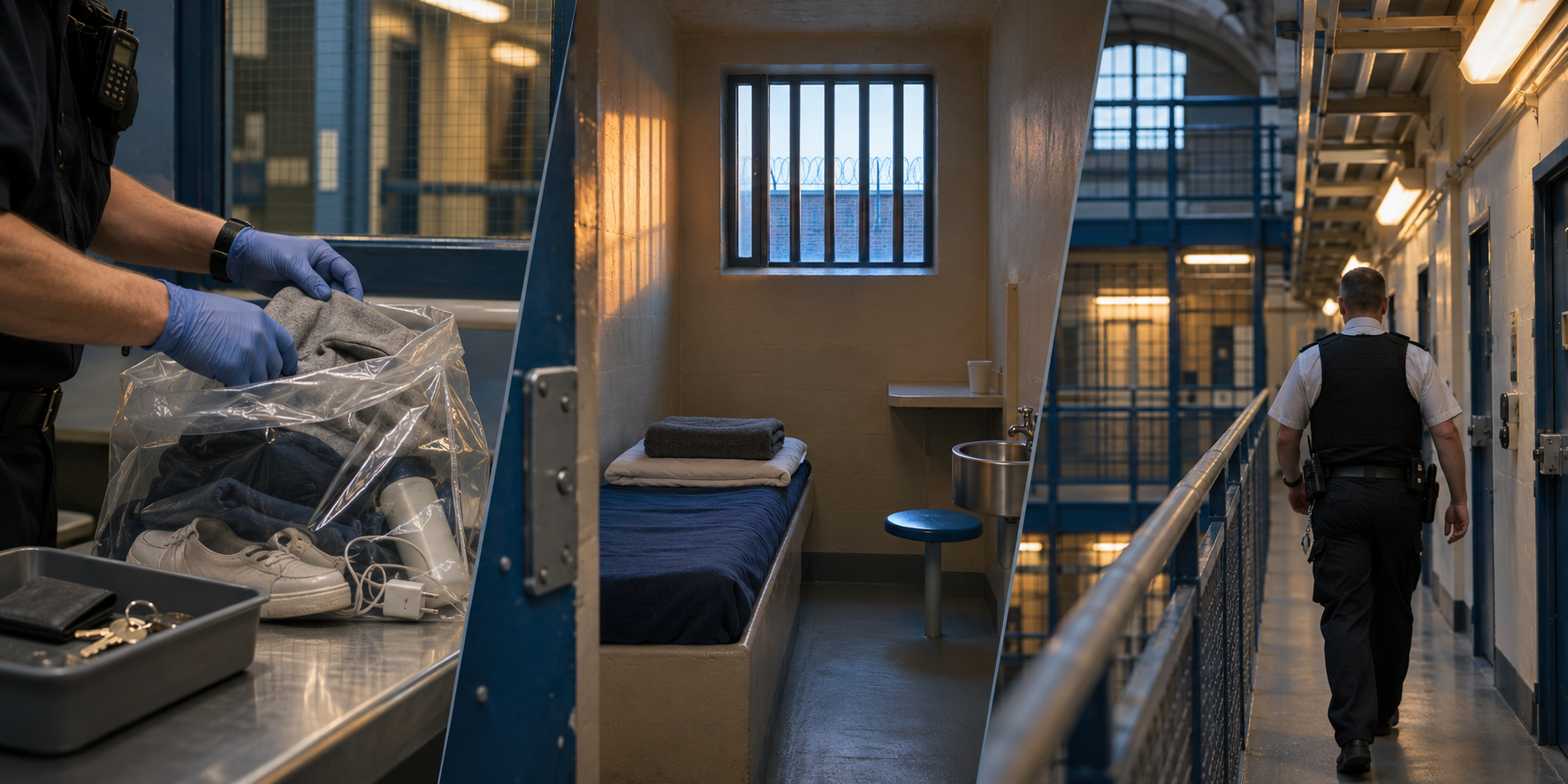
On arrival. The first stop is reception. Staff check the court paperwork, confirm the prisoner’s identity, search him and record what he has brought. That inventory determines which possessions he can take to the wing and which go into storage. A personal mobile and cash cannot go with him to his cell. For someone coming straight from court, one immediate consequence is that even telling a relative where he is now depends on access to a prison phone.
Before a cell is allocated. A new arrival speaks to staff about how he is feeling. Healthcare screening gives him a chance to identify prescribed medicines, injuries or an urgent need to see a clinician. Staff also need to know whether he fears another prisoner and whether it is safe for him to share a cell. Those questions serve different purposes. A man worried about being recognised on the wing may need protection from others. A man who tells a nurse he cannot keep himself safe needs a different response.
During the evening. A prisoner should receive hot food and a drink, including if the court journey makes him miss the evening meal. He should have the opportunity to wash and receive bedding and any clothing he needs. A reception pack can include tea, milk and sugar to tide him over until he can order supplies. Wandsworth says the first family call can take place quite late. That is the opportunity Brand should have had on Thursday. Whether he reached anyone is private.
At lock-up. Officers take the new arrival to the cell where he will sleep. One of the most important pieces of information at this point is how to summon help once the door is locked. Staff carry out welfare checks, and a particular concern can change the level of observation. There is no verified timetable for the checks on Brand that night.
What Would Have Been In His Cell?
The expected basics are a bed, mattress, pillow and bedding, a seat and somewhere to put belongings. The residential equipment list also includes a mirror, bin, toilet paper and a kettle or flask. An ordinary cell can have a toilet and washbasin inside it. At Wandsworth, showers are on the wings, so being able to wash at the basin and being able to take a shower are two different things once the door closes.
A television is possible under prison incentive rules. Some cells also have a prison telephone. Neither establishes that Brand had a television on Thursday night or that he could dial anyone he liked. A prison handset operates through the prison’s calling arrangements. His own mobile would remain out of reach.
The biggest unknown about the room is whether there was another man in it. Wandsworth has both single and shared cells. A photograph of a typical cell can show the scale of the space, but it cannot tell us whether Brand slept alone.
What Would His First Full Day Have Looked Like?
Friday 6 November was Brand’s first full day in custody. Tuesday 10 November was his first full day after sentencing. The distinction matters because Wandsworth says its induction takes about a week. On Friday, Brand was a new arrival learning how the prison worked. On Tuesday, he could already have been several days into that process.
A typical first full day follows the rhythm of the wing. In the morning, staff account for the men in their cells. Breakfast and access to washing fit around the local unlock arrangements. During the working day, a new prisoner may be called for an induction conversation or a follow-up healthcare appointment. Meals, a period of exercise or time out on the wing, and evening lock-up give the day its shape. The order and time out of cell depend on the wing and staffing. No public record establishes Brand’s wake-up time, how long he exercised or whom he saw on Friday.
Induction answers questions that suddenly have practical consequences. How does a relative book a visit? How do you get a number approved for calls? How do you tell healthcare that medication is running low? Who can you speak to if you feel unsafe telling an officer within earshot of other men? Wandsworth has a multi-faith chaplaincy and prisoners trained as confidential peer supporters known as Listeners. Both are possible sources of support during those early days.
The prison also offers education and work, including workshops and classes. Their existence tells us little about a new arrival’s first Friday. It takes time to identify suitable activities and arrange access. A course listed in the prison guide is no evidence of an appointment in Brand’s diary.
Will Russell Brand Be Isolated?
There is no reliable public confirmation that Brand is being held in solitary confinement. Reports citing unnamed sources have suggested restrictions on whom he could mix with at Wandsworth. They do not establish his wing, his cell allocation or the number of hours a day he spends alone.
Three arrangements can sound much the same from outside. A prisoner can sleep in a single cell and still mix with others during the day. He can live on a wing where men who need protection associate with one another. Or the prison can formally segregate him, placing much tighter restrictions on contact. Each would produce a different answer to the question of what happens when his door opens in the morning.
For a recognisable prisoner convicted of sexual offences, staff have a concrete safety question to resolve when deciding where he can live and whom he can safely mix with. His name and convictions alone cannot tell us what decision they reached.
Is Russell Brand On Suicide Watch?
As of 10 November 2026, there is no verified public confirmation that Russell Brand is on suicide watch. A first-night welfare interview is routine. Seeing an officer check a cell, or learning that a prisoner has spoken with a chaplain, would tell us very little about his state of mind.
Where staff identify a risk of suicide or self-harm, prisons in England and Wales use a process called Assessment, Care in Custody and Teamwork, usually shortened to ACCT. Staff assess the individual, agree what support and observations are needed, and review the plan. The words “on suicide watch” can give the impression of an officer permanently stationed outside a cell. Levels of observation vary. There is no public basis for assigning one to Brand.
What Comes After The First Week?
The next decisions concern where Brand will serve his sentence and how he will spend his days there. A reception prison can hold someone while staff assess his security category, safety and longer-term needs. A transfer is possible. Reports placing him at Wandsworth over the weekend do not establish his eventual destination or a moving date.
In the nearer term, approved telephone contacts, booked visits and a regular wing routine would make the greatest practical difference to daily life. Over a longer period, sentence planning can address work, education and offending behaviour. The choice of establishment matters because those opportunities, and the distance relatives must travel to visit, depend on where a prisoner is placed.
The judge’s decision gives that process its timescale. Court reporting says Brand is to serve two-thirds of his ten-and-a-half-year term in custody before release on licence. That works out to seven years in custody under the sentence imposed. Thursday evening’s immediate question was whether he could get through to someone at home. Monday’s hearing established how long his family would have to organise its contact with him around prison calls and visits.
Sources
The verdict, refusal of bail and sentence are recorded in ITV’s first-night report, ITV’s sentencing report and the Crown Prosecution Service statement. ITV News
The custodial portion of the sentence was reported by Reuters. reuters.com
The reported location and anonymously sourced claims about contact with other prisoners appeared in coverage of Brand’s first weekend. The prison’s published arrangements for calls, induction, accommodation and support are in the official Wandsworth guide. thesun.ie
Reception, first-night safeguards, food and permitted possessions are covered by HM Prison and Probation Service’s early custody instructions and the Prison Reform Trust’s guide for new arrivals. assets.publishing.service.gov.uk
Cell equipment and individual care plans are explained in the Prison Reform Trust guides to accommodation and living conditions and safety in prison. Prison Reform Trust
Next Reads
Russell Brand Remanded in Custody: When He Will Be Sentenced and How Long He Could Spend in Prison — The decision that put Brand in custody four days before he learned his sentence.
Could Russell Brand Appeal His Convictions or Have His Sentence Reduced? — The routes open to the defence after sentencing.
Can Russell Brand’s Victims Claim Compensation, and Could He Go Bankrupt? — The separate financial questions facing the four women after the criminal proceedings.
