

Russian Warship Fires Warning Shots Near British Yacht In The English Channel
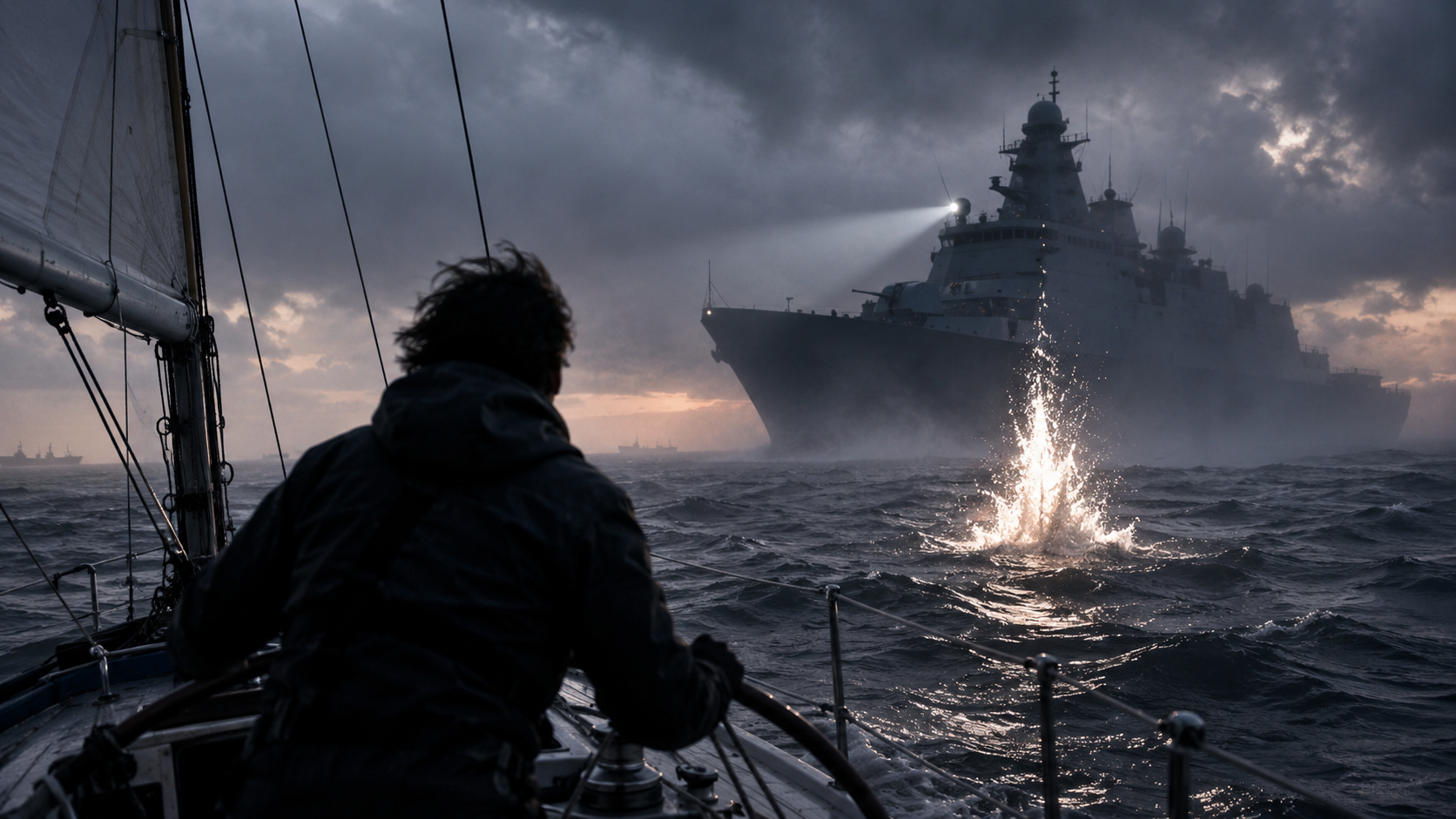
A British Couple’s Sailing Trip Turned Into A Cold-War Style Encounter
A Routine Sailing Trip Suddenly Became An International Incident
What Has Been ConfirmedA Russian Navy frigate, identified as the Admiral Grigorovich, fired warning shots near a British-registered yacht in the English Channel on 16 June. The incident occurred roughly 20 nautical miles south of the Isle of Wight, outside British territorial waters. Russian and British officials both agree that warning shots were fired, although there remains disagreement over the circumstances that led to the confrontation.
The yacht, named Bright Future, was carrying a retired British couple. No injuries were reported and the vessel continued its journey. Royal Navy assets later checked on the crew's welfare and gathered details about the incident.
How The Encounter Escalated
According to Russian officials, the yacht approached to within approximately 150 metres of the warship after multiple attempts were made to contact it using radio calls, sound signals and other warnings. Russia says warning shots were used only after those efforts failed.
The British couple aboard the yacht have presented a different account. They say they heard horn blasts and altered course, while disputing suggestions that they posed a serious collision risk. They also stated that the warning fire was not directed at them.
That disagreement may never be fully resolved. What is clear is that a civilian yacht found itself unexpectedly close to one of Russia's heavily armed naval vessels operating in one of the world's busiest shipping corridors.
Why This Incident Is So Unusual
Warning shots between military vessels and civilian craft are extremely rare in European waters during peacetime.
Warships operate with strict security procedures. When a civilian vessel approaches unexpectedly, commanders must rapidly determine whether they are dealing with a navigational mistake, mechanical failure, intelligence gathering activity, protest action, or something more dangerous.
Most incidents are resolved long before warning shots become necessary. Radio contact, horn signals and visual warnings usually prevent escalation. That is why this encounter has attracted such attention from defence analysts and government officials.
The Channel handles hundreds of commercial and civilian movements every day. An event serious enough to trigger warning fire immediately stands out.
The Bigger Geopolitical Context
The timing is difficult to ignore.
The incident occurred just days after British authorities intercepted a Russia-linked vessel associated with Moscow's so-called shadow fleet. British officials insist the two events are unrelated, but the broader backdrop is one of steadily increasing confrontation between Russia and Western countries.
Russian naval activity around Britain has increased significantly since the start of the Ukraine conflict. Royal Navy ships routinely monitor and shadow Russian vessels operating near UK waters. Earlier this year, British forces were again deployed to track Russian naval movements through the Channel.
What makes the latest incident notable is that it involved civilians rather than military forces.
That changes the public perception immediately. A confrontation between warships is expected. A confrontation involving a retired British couple on a sailing yacht feels very different.
The Real Risk Behind The Headlines
The deeper issue is not the warning shots themselves.
The real concern is how easily misunderstandings can develop when heavily armed military vessels operate close to civilian traffic during a period of geopolitical tension.
The English Channel is one of the busiest maritime routes on Earth. Commercial shipping, fishing vessels, ferries, military ships and private yachts all share relatively confined waters. Most of the time, this system works remarkably well.
But incidents like this demonstrate how quickly routine navigation can become an international story.
A few minutes of confusion, a misunderstood manoeuvre, poor visibility, radio communication problems or differing assumptions can suddenly place civilians and military personnel into an escalating situation neither side wanted.
What Happens Next
British authorities are investigating the incident, while political leaders have described it as concerning and reckless. Prime Minister Keir Starmer publicly criticised the episode while stressing the need for stability amid rising international tensions.
The most likely outcome is that the incident remains isolated. No damage was caused, nobody was injured and both sides appear keen to avoid a wider escalation.
Yet the story remains significant because it offers a glimpse into the increasingly crowded and tense operating environment around Europe.
The Channel has long been viewed as a routine commercial waterway. This incident serves as a reminder that it is also becoming a frontline space where geopolitical rivalry, military signalling and civilian life increasingly intersect.
For the couple aboard the Bright Future, it was an alarming and unusual day at sea.
For governments and military planners, it is another warning that in an era of heightened confrontation, even a small navigational incident can suddenly become a diplomatic flashpoint.
