

Seven Women Found Dead Near Johannesburg As Police Investigate Possible Links
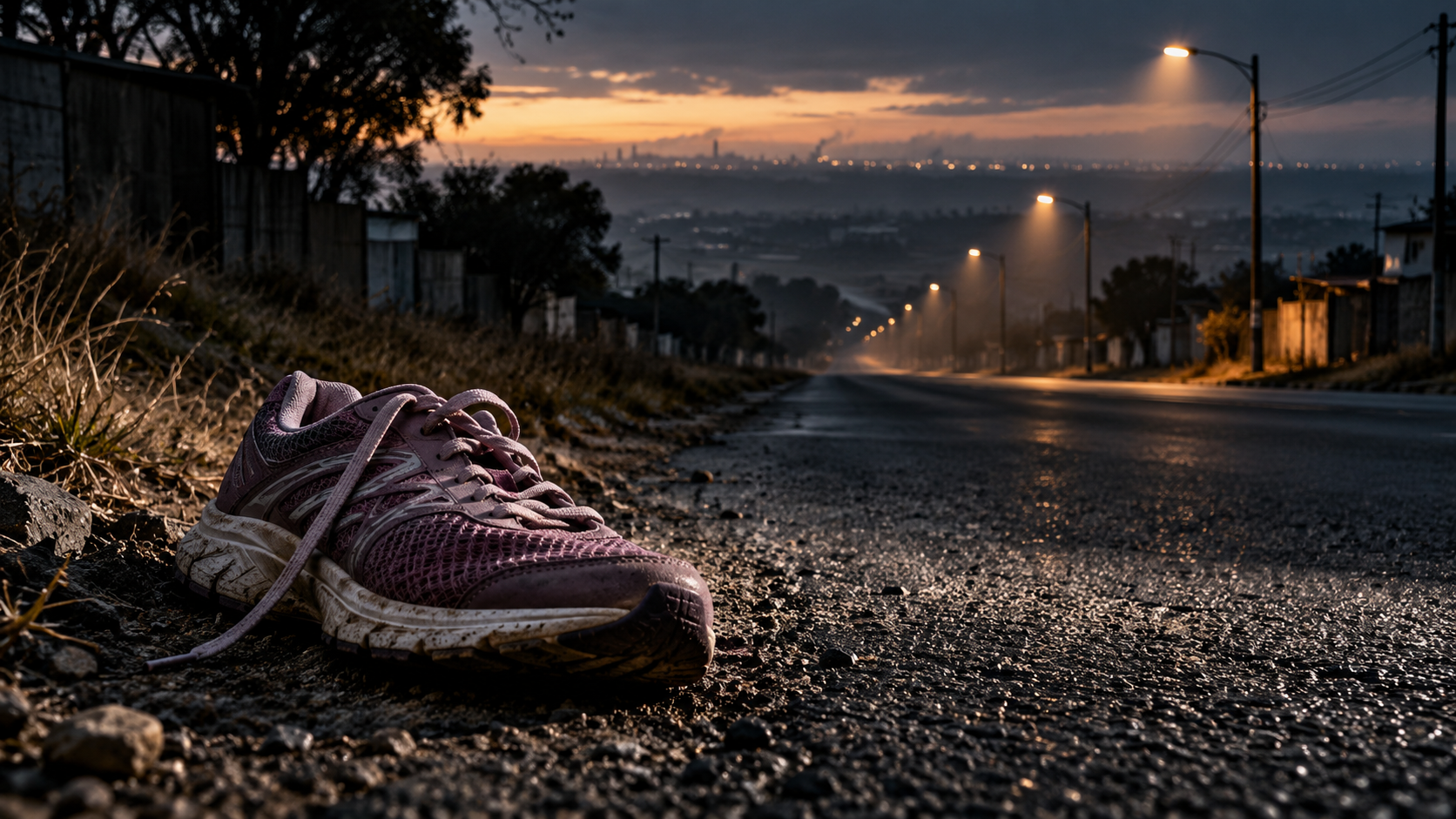
Who Killed Seven Women Near Johannesburg? Police Intensify A Disturbing Investigation
The Ekurhuleni Deaths: What Police Know And What Remains Unproven
Seven women have been found dead during a deeply disturbing series of discoveries in and around Ekurhuleni, east of Johannesburg, prompting South African police to investigate whether any of the cases are connected.
The discovery of a seventh body in Kwa-Thema on Tuesday, 15 September 2026, intensified public fears that women may be facing a continuing threat. However, investigators have not confirmed that a single offender is responsible, established a common motive or proved that every death forms part of the same criminal pattern.
That distinction is crucial. The deaths are real, the alarm is justified and the investigation is intensifying—but public speculation has moved ahead of what police have established.
What Has Happened In Ekurhuleni?
The bodies of seven women have been discovered over approximately two months in and around Ekurhuleni, a large metropolitan municipality situated east of Johannesburg in South Africa’s Gauteng province.
The victims were mostly women in their twenties and thirties. Some were reportedly discovered naked or partially clothed, while investigators found indications of sexual violence in some cases.
The latest body was found in the Kwa-Thema area and was described as being in an advanced state of decomposition. The discovery led the South African Police Service to issue a public alert and advise women in affected communities to remain vigilant.
Reuters reported that investigators are considering several possibilities: the killings could involve one perpetrator, multiple suspects or copycat criminals. Police had not established a motive when the latest information was released.
The Associated Press separately reported that the seventh victim was found in Kwa-Thema and that apparent similarities between some cases had intensified the investigation.
Those similarities have fuelled understandable fear. They do not, by themselves, prove that all seven women were killed by the same person.
Who Were The Victims?
Authorities have not publicly released a complete, independently verified account identifying all seven women or establishing precisely what happened in every case.
One publicly identified victim was Elizabeth “Tsontso” Moselakgomo, who disappeared after leaving her home for an afternoon run. Her body was subsequently discovered, turning an ordinary act—going out to exercise—into a symbol of the fear now spreading through communities around Ekurhuleni.
Her case has attracted particular attention because it embodies the vulnerability at the centre of the wider investigation. A woman left home during the day and did not return. Her disappearance ended with a family’s worst possible discovery.
Other bodies were reportedly found in different conditions and locations. Some were naked, some partially clothed and at least one was decomposing when discovered.
These details may eventually help investigators determine whether the cases share forensic or behavioural characteristics. For now, the available evidence does not support treating every death as the work of one offender.
Have Police Confirmed A Serial Killer?
No definitive public confirmation has established that a serial killer is responsible for all seven deaths.
This is the central fact that must not be lost amid the fear and rapidly spreading online claims.
Police are investigating possible links, but several explanations remain open. One offender may be responsible for multiple deaths. Different offenders may have committed separate crimes. Some perpetrators could have copied features reported in earlier cases. Alternatively, superficial similarities may ultimately conceal unrelated circumstances.
Senior South African policing figures have warned against drawing premature conclusions.
Determining whether cases are connected requires considerably more than geographical proximity or victims sharing broad characteristics. Investigators must compare forensic evidence, locations, timelines, injuries, victim movements, communications and possible contact with suspects.
They may also examine whether victims used the same transport routes, visited common locations, interacted with the same people or disappeared under comparable circumstances.
Until those connections are demonstrated, “possible serial killer” describes public fear and an investigative possibility—not an established conclusion.
Why Investigators Are Examining Possible Links
The number of bodies, the concentrated geographical area and the compressed timeline inevitably raise questions.
Investigators will look for similarities in what criminologists call the modus operandi: the practical method used to approach, control, assault, kill or move a victim.
They may separately search for a signature—behaviour that is not necessary to commit the offence but could reflect a particular offender’s psychological compulsion.
Those two concepts are not interchangeable. Criminal methods can change as an offender gains experience, encounters resistance or responds to police attention. A signature may also be misunderstood or obscured by environmental conditions.
Forensic comparisons could include DNA, fibres, soil, toxicology, phone records and evidence recovered from victims’ bodies or the places where they were found. Digital investigators may reconstruct movements using mobile-phone data, messaging accounts, security cameras and transport records.
The condition of the bodies could complicate those efforts. Decomposition may affect the evidence available to determine the cause and timing of death, although specialist forensic examinations can still recover vital information.
Ramaphosa Promises Action
South African President Cyril Ramaphosa has publicly promised that “no stone will be left unturned” in the investigation.
His intervention reflects the scale of public alarm and the wider political significance of violence against women in South Africa. The country continues to experience exceptionally high levels of violent crime, while women’s organisations have repeatedly demanded stronger prevention, faster investigations and greater protection for those facing abuse.
Official crime statistics indicate that South Africa records approximately 60 homicides per day. That national picture does not explain what happened to the seven women in Ekurhuleni, but it provides the troubling environment in which the deaths have occurred.
The investigation is also unfolding as South Africa approaches municipal elections in November, increasing pressure on political leaders to demonstrate that authorities can respond effectively.
Promises of a thorough investigation will ultimately be judged against arrests, prosecutions and whether vulnerable communities receive meaningful protection.
Communities Demand Greater Protection
The deaths have provoked condemnation from civil-society organisations, political representatives and sporting bodies.
The Gauteng Provincial Legislature’s Portfolio Committee on Community Safety previously appealed for public assistance as authorities investigated the deaths of four women in Ekurhuleni. The subsequent discoveries have made those demands increasingly urgent.
Campaigners are calling for greater police visibility, improved lighting, safety assessments and a more coordinated response across affected neighbourhoods.
The Commission for Gender Equality has reportedly called for urgent safety audits. Such assessments can identify poorly illuminated routes, abandoned spaces, transport vulnerabilities and locations where women may face heightened risks.
Greater patrols may reassure residents and deter opportunistic offending, but visible policing alone cannot solve the cases. Investigators need witnesses, reliable intelligence and forensic connections capable of identifying those responsible.
The Danger Of Unverified Claims
The fear surrounding the discoveries has produced online claims that go beyond confirmed reporting.
Some social-media posts have alleged higher victim totals or declared that a serial killer is definitely operating in the area. Those claims should not be repeated as established fact without police confirmation.
Misinformation can produce several forms of harm. It can create panic, misidentify innocent people, encourage vigilantism and overwhelm police with unreliable reports. It may also interfere with witnesses’ memories as people unconsciously absorb details circulated online.
Prematurely linking unrelated deaths can distort the investigation and cause additional suffering to families whose relatives’ cases may involve different circumstances.
The opposite danger also matters. Authorities must not dismiss reasonable concern merely because social-media speculation has become excessive. Seven women are dead, and communities deserve clear, regular information about the investigation and measures being taken to protect them.
Responsible reporting therefore requires two positions to be held simultaneously: the danger must be taken seriously, and the evidence must not be exaggerated.
What Police Need From The Public
Authorities have urged anyone with relevant information to come forward.
Potentially useful evidence may appear insignificant to the person holding it. A vehicle seen repeatedly near a location, an unusual interaction, a threatening message or a change in somebody’s behaviour could become important when combined with other evidence.
Residents may possess doorbell-camera recordings, dashboard-camera footage or mobile-phone videos showing roads and public spaces close to the relevant times.
People who knew the victims could also help reconstruct their final movements, communications and planned meetings. Investigators may need to know whether a victim mentioned feeling watched, receiving unwanted messages or arranging to meet someone.
Public assistance is valuable when it is specific and provided directly to investigators. Posting accusations or naming suspected individuals online can endanger innocent people and compromise legitimate police work.
Why Violence Against Women Remains A National Crisis
The Ekurhuleni investigation has become part of a much broader South African conversation about gender-based violence and femicide.
For years, political leaders have described the scale of violence against women as a national crisis. Campaigners argue that declarations and action plans have not consistently produced the protection, investigative capacity or conviction rates required.
Gender-based violence is not solely a policing problem. It can involve domestic abuse, sexual violence, economic dependence, unsafe transport, failures within the justice system and social attitudes that permit controlling or violent behaviour to escalate.
High-profile killings often produce an immediate wave of public attention. The harder test is whether that pressure results in lasting improvements after news coverage moves elsewhere.
The seven women at the centre of the Ekurhuleni investigation cannot be reduced to symbols or statistics. Each had a personal history, relationships and people waiting for her to return.
Establishing what happened is essential both for justice and for determining whether other women face an immediate continuing danger.
What Happens Next?
Postmortem examinations and forensic comparisons will be central to the investigation.
Police will attempt to establish causes of death, estimated timelines and any common injuries or evidence. Investigators may compare DNA profiles, analyse phone activity and reconstruct where each woman was last seen alive.
Authorities must then determine whether meaningful connections exist between the victims, locations or suspected methods.
A significant development could include:
Police confirming that particular cases are forensically connected.
The identification of a shared suspect or vehicle.
An arrest connected to one or more deaths.
Evidence linking a survivor or previous attempted abduction to the cases.
A confirmed change in the number of cases included in the investigation.
A police determination that some deaths are unrelated.
Any of those findings would materially change the public understanding of the case.
Seven Deaths And An Unanswered Question
Seven women have been found dead around Ekurhuleni, and the latest discovery has increased pressure on investigators to establish whether the cases form part of one pattern.
The available evidence supports grave concern. It does not yet support certainty about who is responsible, how many offenders may be involved or whether every death is connected.
That uncertainty should not diminish the urgency. It should sharpen it.
Families need answers. Communities need protection. Investigators need reliable evidence rather than viral speculation.
Until police determine what connects—or separates—the seven deaths, Ekurhuleni is left confronting an agonising question: are authorities investigating several terrible crimes, or one continuing threat that has not yet been stopped?
