Sylvester Stallone Opens Up About The Coldest Call Of His Life — “Sage, He’s Gone”
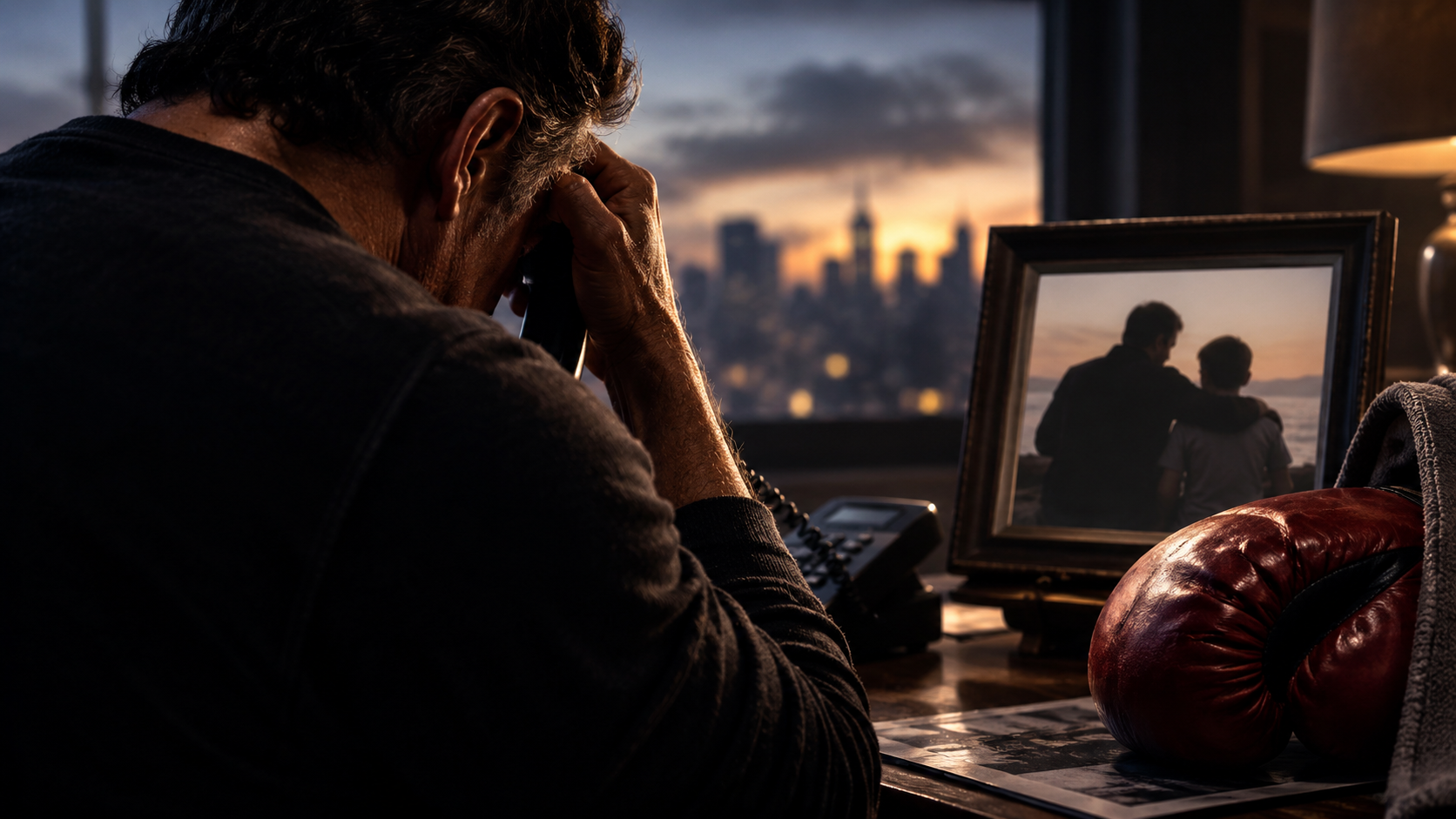
Sylvester Stallone Breaks His Silence On The Moment He Learned His Son Sage Had Died
The Phone Call Stallone Says He Will Never Forget
Sylvester Stallone has spent half a century associated with endurance. Rocky Balboa absorbs punishment and keeps standing. John Rambo survives situations designed to destroy him. Stallone himself built a career around an image of physical strength, stubbornness and the refusal to stay down.
But the moment he has now described from July 2012 required none of those things. There was no opponent to fight and nothing he could physically do. His eldest son, Sage Stallone, had died at the age of 36, and Stallone learned the news through a phone call he still remembers with painful clarity.
Stallone said the call came from his mother’s then-husband, a doctor he had never met. The message was brutally direct: Sage was gone. Stallone initially responded by asking where he had gone before understanding what those words actually meant. The conversation then ended almost immediately.
Fourteen years later, the coldness of that exchange remains central to Stallone’s memory of the day. It is not simply that his son had died. It is the speed with which an ordinary moment became the dividing line between a life in which Sage existed and one in which he did not.
Then Came The Question That Would Not Go Away
Shock was followed by something more complicated: guilt.
Stallone has described repeatedly questioning himself after Sage’s death. Could he have done something? Should he have been there? Could one different decision, one different conversation or one different turn have somehow changed what happened?
Those questions are especially painful because the official cause of Sage’s death offered no simple villain. The 36-year-old died from coronary artery disease associated with atherosclerosis. His death was classified as natural, and the toxicology findings did not support the early speculation that an overdose had killed him.
Stallone has said he did not know his son had the underlying heart problem. That knowledge makes the retrospective questions even more difficult. A parent can mentally reconstruct the past endlessly, searching for the moment when something might have been noticed, said or changed, even when there is no evidence that they possessed the information necessary to prevent the outcome.
That is one of the most striking parts of Stallone’s latest account. He is not presenting grief as a clean journey from tragedy to acceptance. He is describing a mind repeatedly returning to the same impossible alternatives.
The Grief Did Not Hit All At Once
In the immediate aftermath, there were things that had to be done.
A death creates its own brutal administration: calls, arrangements, family conversations, a funeral and the practical responsibilities that can temporarily force people to keep functioning even when their emotional world has collapsed.
Stallone has described initially continuing through that process before the full force of the loss reached him roughly a week later. Alone, he experienced an involuntary cry unlike anything he says he had heard from himself before or since — an eruption of grief, pain and guilt after the shock could no longer contain it.
For an actor whose public mythology has been built around controlled displays of suffering, the image is powerful precisely because there is nothing cinematic about it. There is no triumphant recovery montage. No music. No final bell. Just a father alone with something he could not fix.
Taylor Tailored has previously explored how public grief can remain intensely private even when an entire family is famous, including in [the story of Steve Irwin’s children carrying their father’s legacy two decades after his death] Twenty Years Without Steve Irwin. Stallone’s story reaches the same uncomfortable truth from the opposite direction: fame may make a death public, but it does not make the grief any less personal.
Rocky V Now Carries A Painful Extra Meaning
Sage Stallone was not merely Sylvester Stallone’s son away from the cameras.
He stepped directly into his father’s most famous fictional universe when he played Rocky Balboa’s son Robert in 1990’s Rocky V. That casting has become more emotionally significant with time because the film itself revolves partly around a father becoming consumed by ambition and neglecting the child standing beside him.
Stallone has acknowledged the uncomfortable overlap between that fictional relationship and aspects of his own life. He has spoken candidly about periods when career dominated everything else and admitted that, particularly earlier in his life, he did not believe he had been the father he should have been.
That changes the emotional weight of Rocky V when viewed decades later. Scenes once treated simply as part of an uneven sequel now contain a real father and son performing versions of distance, disappointment and reconciliation while their own relationship existed outside the frame.
Stallone has previously reflected on using films to create emotionally satisfying moments that real life had not always provided. The screen could offer reconciliation on cue. Real life could not.
The Tough-Guy Image Suddenly Looks Very Different
Stallone’s latest reflections arrive at a point in his life when he appears increasingly willing to dismantle parts of the mythology built around him.
Now 80, he has spoken not only about Sage but about regret, fatherhood, anxiety, the physical extremes behind his famous body and the personal cost of spending so much of his life in what he describes as a relentless drive to conquer the next challenge.
That matters because few stars became more closely associated with a particular version of masculinity. Stallone’s heroes took blows silently. They endured. They trained harder. They absorbed pain and converted it into strength.
His account of losing Sage offers almost the inverse message.
Some pain cannot be trained away. Some questions have no opponent capable of answering them. Some losses cannot be defeated through discipline, money, fame or physical strength.
The same collision between extraordinary public success and devastating private loss can be seen in other celebrity families. Taylor Tailored explored a different form of parental grief in [Cristiano Ronaldo and Georgina Rodríguez’s story after the loss of their baby son] Cristiano Ronaldo Marries Georgina Rodríguez. The circumstances are entirely different, but the underlying divide is similar: a life that appears almost unimaginably successful from the outside can still contain a loss that permanently changes its emotional architecture.
Fourteen Years Later, Sage Is Still Part Of Stallone’s Story
Sage died on July 13, 2012.
The initial public statement from his father asked people to respect his son’s memory and described the loss as something that would remain with the family for the rest of their lives. At the time, those words could have sounded like the language of immediate bereavement. Stallone’s reflections fourteen years later make clear how literal they were.
He has continued working. He has watched his daughters grow up. He has remained one of the most recognisable actors in the world. Rocky and Rambo have survived generations of popular culture. His career eventually became long enough for Stallone himself to move from action star to Hollywood institution.
Yet Sage remains part of the story.
Stallone remembers the call. He remembers not understanding the word “gone.” He remembers wondering what he could have done differently. He remembers the grief eventually breaking through when there was nobody else in the room.
And perhaps the most revealing part of his account is that he does not offer a neat solution at the end of it.
The man who built an empire around characters who always found a way to fight back is describing something he could never beat.
He simply learned how to carry it.
