

The Cruise Ship Virus Scare That Sounds Like Covid’s Darker Cousin
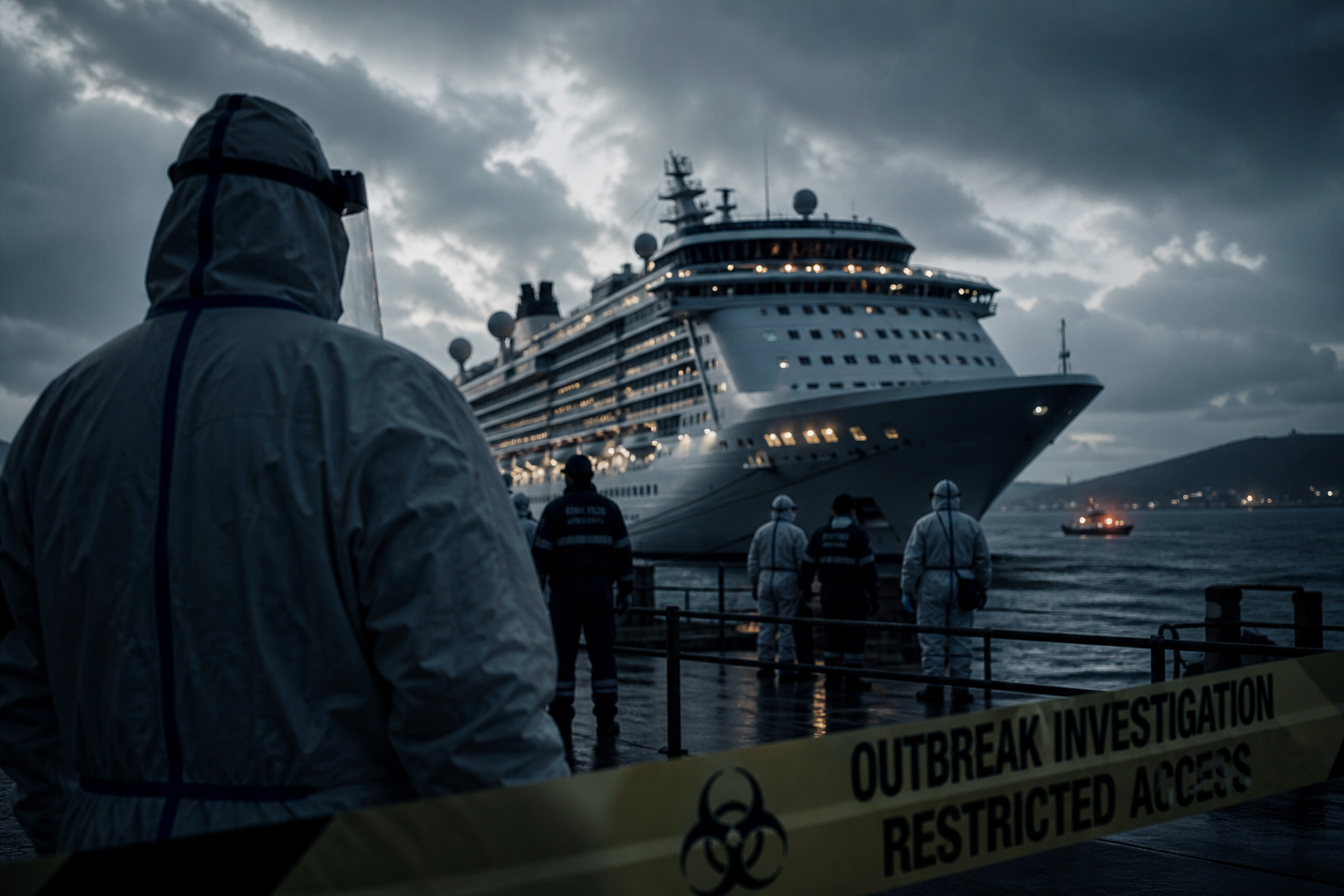
The Deadly Hantavirus Cruise Ship Scare That Has Scientists Watching Closely
A Deadly Cruise Ship Outbreak Has Triggered The Question Nobody Wants To Ask
A Rare Virus, A Confined Ship, And The Fear Of Human-To-Human Spread
A deadly respiratory outbreak on a cruise ship in the Atlantic has created the kind of headline that feels engineered to trigger pandemic memory: a rare virus, multiple deaths, passengers confined at sea, and investigators examining whether human-to-human spread may have occurred. The World Health Organization has reported a hantavirus cluster linked to cruise ship travel, with seven cases identified as of May 4, 2026, including two laboratory-confirmed infections, five suspected cases, three deaths, one critically ill patient and three people with mild symptoms.
That does not mean the world is facing another Covid. Health authorities currently assess the wider public risk as low, and hantaviruses are not normally viruses that sweep easily from person to person. But the reason this story has cut through is simple: if a rare, severe virus associated with rodents is even suspected of spreading between close contacts on a ship, it turns a contained medical incident into a darker public health question.
The vessel had 147 passengers and crew on board, had traveled through remote regions after departing Ushuaia, Argentina, and was moored off Cabo Verde while international authorities worked through testing, isolation, medical evacuation, and outbreak control. WHO says illness onset occurred between April 6 and April 28, with symptoms including fever, gastrointestinal issues, rapid progression to pneumonia, acute respiratory distress syndrome, and shock.
That combination is why the story feels so unsettling. It has the ingredients people remember from the early pandemic era: a ship, uncertainty, respiratory illness, international coordination, passengers from multiple countries, and a virus whose full route of transmission is still being investigated.
What Is Hantavirus?
Hantavirus is not a new virus, and it is not one single disease. It is a group of viruses usually carried by rodents. Human infection is typically acquired through contact with infected rodents’ urine, feces, or saliva, especially when contaminated particles are stirred into the air and inhaled. In the Americas, some hantaviruses can cause hantavirus pulmonary syndrome, a severe illness that can move from fever and general symptoms into rapid respiratory distress and shock.
This is the crucial difference from Covid: hantavirus is usually a spillover infection from animals to humans, not a highly efficient human respiratory virus moving through casual contact. Most hantaviruses do not spread easily between people. That is why ordinary hantavirus outbreaks are typically linked to environmental exposure, rodent habitats, cleaning infested spaces, rural settings, farms, forests, or poorly ventilated contaminated areas.
The exception—and the reason this cruise ship outbreak is so closely watched—is Andes virus, a specific hantavirus associated with parts of South America. WHO reports that previous Andes virus outbreaks have involved limited human-to-human transmission, usually through close and prolonged contact. ECDC also notes that most hantaviruses do not transmit from person to person, but Andes virus has been shown to spread between people, typically through close and prolonged contact.
That does not make it “the next Covid.” It makes the situation more precise and, in a contained setting, more unnerving: a severe virus that usually comes from rodent exposure is being investigated in a scenario where close human contact may have played a role.
Why The Cruise Ship Setting Changes Everything
Cruise ships are not ordinary environments. They are floating societies with shared air, shared routines, shared dining spaces, shared medical constraints, and limited escape routes once an outbreak is suspected. Even when the pathogen does not easily transmit, a ship compresses uncertainty. Every cough becomes information. Every delay becomes anxiety. Every medical evacuation becomes international logistics.
The MV Hondius case is especially striking because the voyage involved remote and ecologically diverse stops, including Antarctica, South Georgia, Nightingale Island, Tristan da Cunha, Saint Helena, and Ascension Island. WHO says the extent of passenger contact with local wildlife during the voyage, or before boarding in Ushuaia, remains undetermined.
That creates two competing possibilities. One is environmental exposure: someone may have encountered infected rodents or contaminated material before or during the trip. The other is limited spread between close contacts once the virus is already on board. Neither possibility is comforting, but they imply different levels of public health risk.
If the source is primarily environmental exposure, the outbreak may be terrifying but contained. If human-to-human transmission occurred, even in a limited way, investigators need to know who was exposed, when symptoms began, how close contacts interacted, whether medical staff were at risk, and whether any onward travel created additional contact chains.
WHO has already described a coordinated international response involving Cabo Verde, the Netherlands, Spain, South Africa, and the United Kingdom. Measures include information sharing, case isolation, care, medical evacuation discussions, laboratory testing, passenger distancing, active symptom monitoring, and additional samples being sent for testing.
That is not panic. That is containment. But containment only works when uncertainty is treated seriously before it becomes certainty.
The Symptoms Are Why This Feels So Dark
Part of the fear surrounding hantavirus comes from how severe the disease can become. WHO describes hantavirus pulmonary syndrome as starting with symptoms such as headache, dizziness, chills, fever, muscle aches, and gastrointestinal problems before sudden respiratory distress and low blood pressure. Symptoms usually appear two to four weeks after exposure but can appear as early as one week or as late as eight weeks.
That incubation window matters. On a cruise itinerary crossing oceans and remote territories, people can become infected in one place, develop symptoms later in another, and travel through multiple jurisdictions before the pattern becomes clear. A disease that looks like scattered illness at first can become an outbreak only after the timeline is reconstructed.
The reported case sequence shows why investigators are moving carefully. WHO says one adult male developed fever, headache, and mild diarrhea on April 6 and later developed respiratory distress and died on board on April 11. A close contact later went ashore at Saint Helena with gastrointestinal symptoms, deteriorated during a flight to Johannesburg, and died after arrival. Another patient was medically evacuated to South Africa and confirmed by PCR testing to have a hantavirus infection.
That is the human horror beneath the public health language. For passengers, this was not an abstract virus report. It was a voyage that turned into a medical emergency, then a death investigation, and then a global outbreak alert.
Why Officials Say The Wider Risk Is Still Low
The frightening part of this story is the setting and severity. The reassuring part is the transmission profile. ECDC says the risk to the general population in Europe is considered very low, partly because infection prevention and control measures are being implemented and hantaviruses are not easily spread between people. WHO also assesses the risk to the global population from this event as low.
That low-risk assessment matters. It means that the authorities are not treating the situation as a fast-moving pandemic threat to ordinary people on land. It also means the word “suspected” is doing important work. Investigators have not yet fully identified the precise virus species involved, the origin of infection, the extent of spread among passengers and crew, or whether person-to-person transmission occurred in this event. ECDC explicitly states those aspects remain under investigation.
The right way to read this story is as “not just new COVID confirmed.” It is a rare, potentially severe zoonotic virus that has appeared in a confined international travel setting, and one of the possible explanations includes limited transmission between close human contacts.
That is still serious. It just needs to be serious in the right way.
The “Next Covid” Fear Is Emotional—But Not Irrational
After 2020, the public no longer treats strange ship outbreaks as background noise. The collective nervous system has been rewired. A cluster of severe respiratory illnesses at sea no longer sounds like a niche travel-health story. It sounds like the opening scene of something larger.
That does not mean every outbreak is a pandemic. Most are not. The difference between a tragic contained cluster and a global emergency depends on transmissibility, incubation, severity, detection speed, contact patterns, public health response, and whether the pathogen can spread efficiently beyond the original exposure setting.
Hantavirus does not currently meet the same criteria as Covid. It is not known as a highly contagious everyday respiratory virus. It is primarily linked to rodents. Most forms do not spread between people. Even the Andes virus concern is usually about limited transmission through close and prolonged contact, not mass casual spread through ordinary public life.
But the deeper implication is still uncomfortable: the modern world keeps creating environments where rare pathogens can travel farther than they once did. Expedition tourism reaches remote ecosystems. Passengers cross continents. Ships carry multiple nationalities. Medical evacuations involve flights, ports, and hospitals. A virus does not need to become a pandemic to expose the fragility of the system around it.
What Most People Will Miss
The most important part of this story is not the cruise ship itself. It is the investigative question behind it: did everyone get exposed to the same original source, or did the virus move from one person to another on board?
That distinction changes everything. A common environmental exposure points investigators toward rodents, contaminated spaces, wildlife contact, or pre-boarding exposure. Human-to-human spread points them toward close contacts, cabin partners, care settings, timing of symptoms, and the possibility of secondary chains.
WHO has advised passengers and crew to practice frequent hand hygiene, remain vigilant for symptoms, actively monitor for 45 days, avoid risky cleaning practices such as dry sweeping, maintain ventilation, and self-isolate if symptoms develop. Those instructions reveal the dual concern: reduce environmental risk while also managing respiratory and close-contact risk if symptoms appear.
That is the shadow of the story. Not a confirmed pandemic. Not a reason for public panic. But a reminder that outbreak control begins in the fog, before sequencing is complete, before every contact is mapped and before the world knows whether the most frightening scenario is real.
The Ending Nobody Wants To Hear
The hantavirus outbreak on the cruise ship may remain a small, tragic cluster. That is still the most likely public health frame based on current official assessments. The wider risk is low, the virus is rare, and authorities are treating the situation as an investigation and containment event rather than a global emergency.
But the image is difficult to shake: a ship at sea, passengers isolating, medical teams testing, deaths already recorded, and scientists trying to determine whether a virus usually linked to rodents may have crossed the human-to-human line in a confined space.
That is why this story lands. Not because it is Covid again. Because it reminds us how quickly the old fear can return when a rare disease finds the perfect stage: a closed vessel, international passengers, severe respiratory illness, and just enough uncertainty to make the world look twice.
