The Dangerous New Twist In The Iran Crisis As Air Defences Erupt Over Tehran
The Moment The Iran Standoff Suddenly Became Much Bigger Than It Looked
Why Iran’s Sudden Air Defence Activation Has The World Watching The Strait Of Hormuz Again
Iranian air defenses lighting up near Tehran is not just another dramatic image from the Middle East. It is the latest sign that one of the world’s most dangerous geopolitical choke points is sliding back toward open confrontation after weeks of fragile calm.
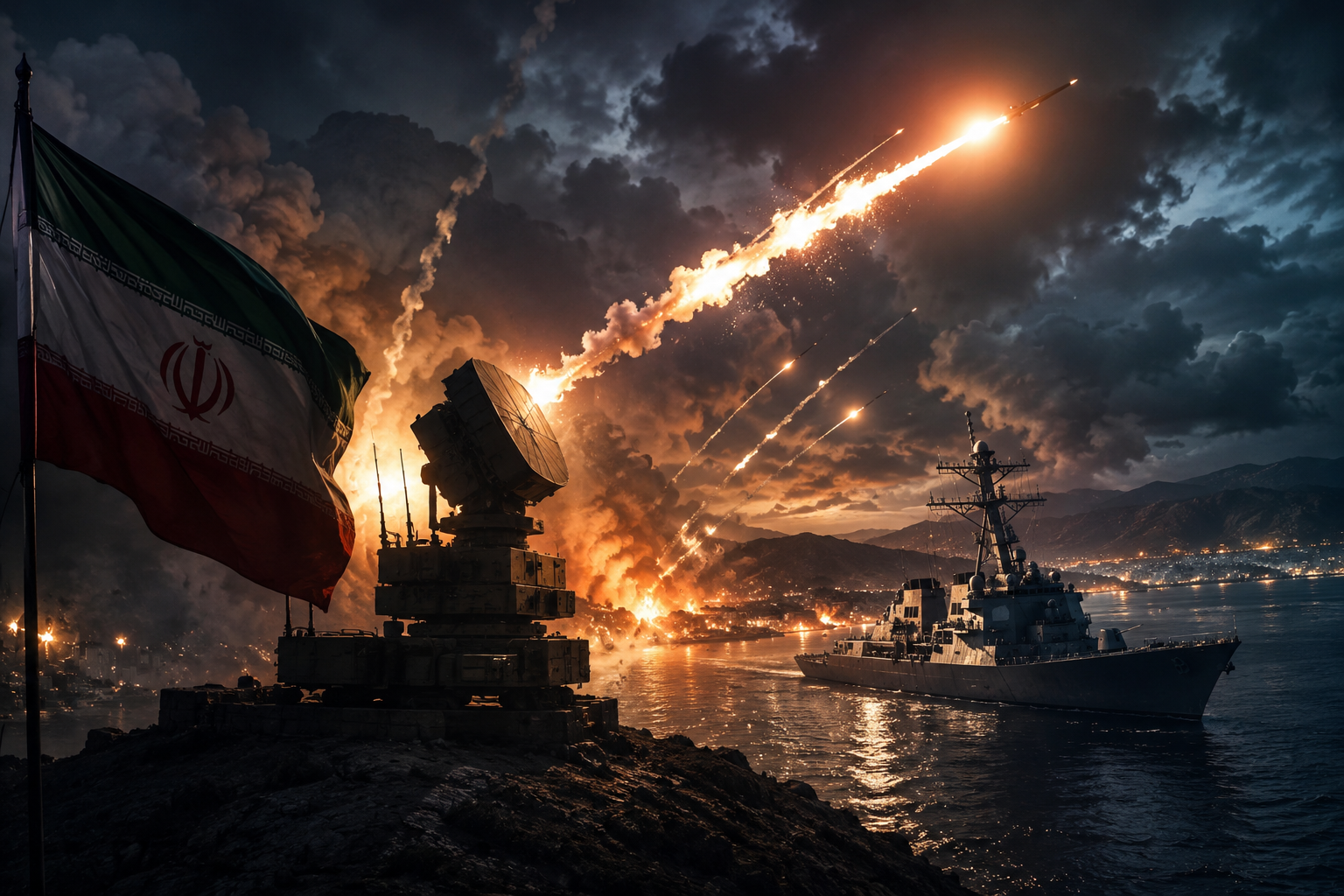
Reports emerging overnight suggested Iranian air defense systems were activated amid claims involving hostile aerial targets and escalating naval tensions connected to American destroyers operating near the Strait of Hormuz. Iranian-linked media outlets reported explosions near Bandar Abbas and Qeshm Island, while state-affiliated agencies claimed drones had been intercepted over strategic Gulf locations.
The images and headlines alone are enough to alarm markets. But the deeper story is even more serious: the ceasefire framework holding together the current US-Iran confrontation is beginning to look dangerously unstable.
The Detail That Changes The Entire Story
The most important part of the latest escalation is not simply that Iranian air defenses were activated. It is where this is happening and what it suggests about military expectations inside Iran.
Bandar Abbas and nearby Gulf islands sit near the heart of the Strait of Hormuz — the narrow maritime corridor through which a huge percentage of global oil shipments move every single day. Any sign of military confrontation there immediately raises fears about shipping disruption, energy prices, insurance costs, and wider regional retaliation.
Iranian outlets claimed “hostile drones” had been intercepted over Bandar Abbas and Qeshm while reports simultaneously emerged of attacks or attempted attacks involving US naval destroyers transiting the strait.
That combination matters because it signals something larger than symbolic posturing. It suggests both sides are operating in close proximity with heightened readiness, compressed reaction times, and growing mistrust over what counts as defensive action versus escalation.
That is how accidental wars become very real wars.
Why The Hormuz Flashpoint Terrifies Global Markets
The Strait of Hormuz is not simply another regional waterway. It is one of the most strategically important shipping lanes on Earth.
For years, Iran has used the threat of disruption in Hormuz as leverage against sanctions, military pressure, and Western naval activity. The United States, meanwhile, has repeatedly insisted freedom of navigation through the corridor is non-negotiable.
That collision of red lines has now intensified again.
Recent reports describe renewed exchanges involving Iranian missiles, drones, American destroyers, and retaliatory strikes linked to alleged attacks on naval assets.
Oil markets immediately react to this kind of instability because the implications stretch far beyond the Gulf itself. A serious interruption to shipping through Hormuz could affect the following:
Global oil prices
Aviation fuel costs
International shipping insurance
Supply chains
Inflation pressure across Western economies
That is why even limited military incidents in the region can trigger worldwide financial consequences within hours.
Readers following Taylor Tailored’s wider geopolitical coverage can see how these pressure points connect to broader instability across global energy and military systems in related reporting on Middle East escalation risks and global oil market volatility.
The Ceasefire Looks Increasingly Fragile
The current situation is especially volatile because both sides are still publicly claiming some form of ceasefire remains intact.
That contradiction is extraordinary.
American officials have described recent military action as defensive retaliation after alleged attacks on naval assets, while Iranian officials accuse Washington of violating existing agreements through strikes on ships and coastal targets.
The result is a geopolitical grey zone where
Military exchanges are happening
Air defences are activating
Drones are reportedly being intercepted
Naval vessels are under threat
Oil shipping faces disruption
Yet both sides still stop short of openly declaring full-scale war.
That ambiguity creates its own danger. It lowers political barriers to retaliation while simultaneously making strategic signaling harder to interpret correctly.
One mistake inside that environment could trigger escalation neither side initially intended.
What Most People Are Missing About Tehran’s Response
Air defense activation inside or near Tehran carries psychological weight beyond immediate military utility.
Iran understands that images of defensive systems firing into the night sky send multiple messages simultaneously:
Domestic reassurance
Regional deterrence
External warning
Proof of readiness
Political resilience
The symbolism matters almost as much as the tactical reality.
Iran’s military infrastructure has already faced sustained pressure throughout the wider 2026 confrontation, including strikes on air defense systems, naval facilities, and strategic infrastructure.
Against that backdrop, rapid defensive mobilization becomes part military necessity and part strategic theater.
But there is another layer underneath this.
Iran’s leadership knows the greatest vulnerability in the current standoff is not necessarily military defeat. It is economic strangulation combined with internal instability. Showing visible military readiness helps project continuity and control during periods of uncertainty.
The Gulf States Are Being Dragged Closer To The Pressure Zone
Another overlooked aspect of the crisis is how quickly surrounding Gulf states are becoming exposed to spillover risk.
Reports over recent days have described missile and drone interceptions involving the UAE as regional air defense systems responded to incoming threats.
That matters because Gulf states have spent years trying to avoid becoming direct battlegrounds between Washington and Tehran.
Now the conflict environment is starting to narrow around them.
The wider danger is obvious:
More military traffic
More drone activity
More interception attempts
More pressure on shipping lanes
Greater risk of miscalculation
Even countries that attempt diplomatic balancing may find themselves pulled deeper into the confrontation simply because of geography.
Why This Story Suddenly Feels Bigger Than It Did Yesterday
What makes this moment different is not necessarily the scale of the reported exchanges. It is the pattern emerging underneath them.
For weeks, tensions appeared trapped inside a cycle of controlled escalation. Aggressive rhetoric continued, but both sides seemed careful not to push beyond certain thresholds.
That calculation may now be changing.
The combination of:
Reported destroyer targeting
Iranian missile and drone claims
Air defence activation
Explosions near strategic Gulf locations
Ceasefire accusations
Shipping disruption fears
creates a much more combustible atmosphere than the one seen only days ago.
And once military systems remain on high alert for extended periods, the risk environment changes entirely. Pilots, radar operators, naval commanders, and missile crews begin operating under sustained pressure where seconds matter and uncertainty dominates.
History shows that this is when regional crises become hardest to control.
The Question Hanging Over The Entire Region
The biggest unanswered question is whether both sides still genuinely want containment.
Official statements continue to leave room for diplomacy. Reports suggest negotiations and indirect contacts remain active behind the scenes.
But military realities are moving faster than diplomatic language.
Every intercepted drone, every naval encounter, every retaliatory strike, and every air defense activation narrows the political space for restraint. The danger is no longer theoretical. The infrastructure of escalation is already active across the Gulf.
And once the Strait of Hormuz becomes the center of military brinkmanship again, the consequences stop being regional very quickly.
The world does not need a formal declaration of war for the global economic shockwaves to begin.
