The Ebola Case That Crossed Provinces: Why Health Officials Are Racing To Trace Contacts
The Journey That Raised The Alarm
Ebola Has Reached A New Congo Province — And The Contact Chain Is The Real Fear
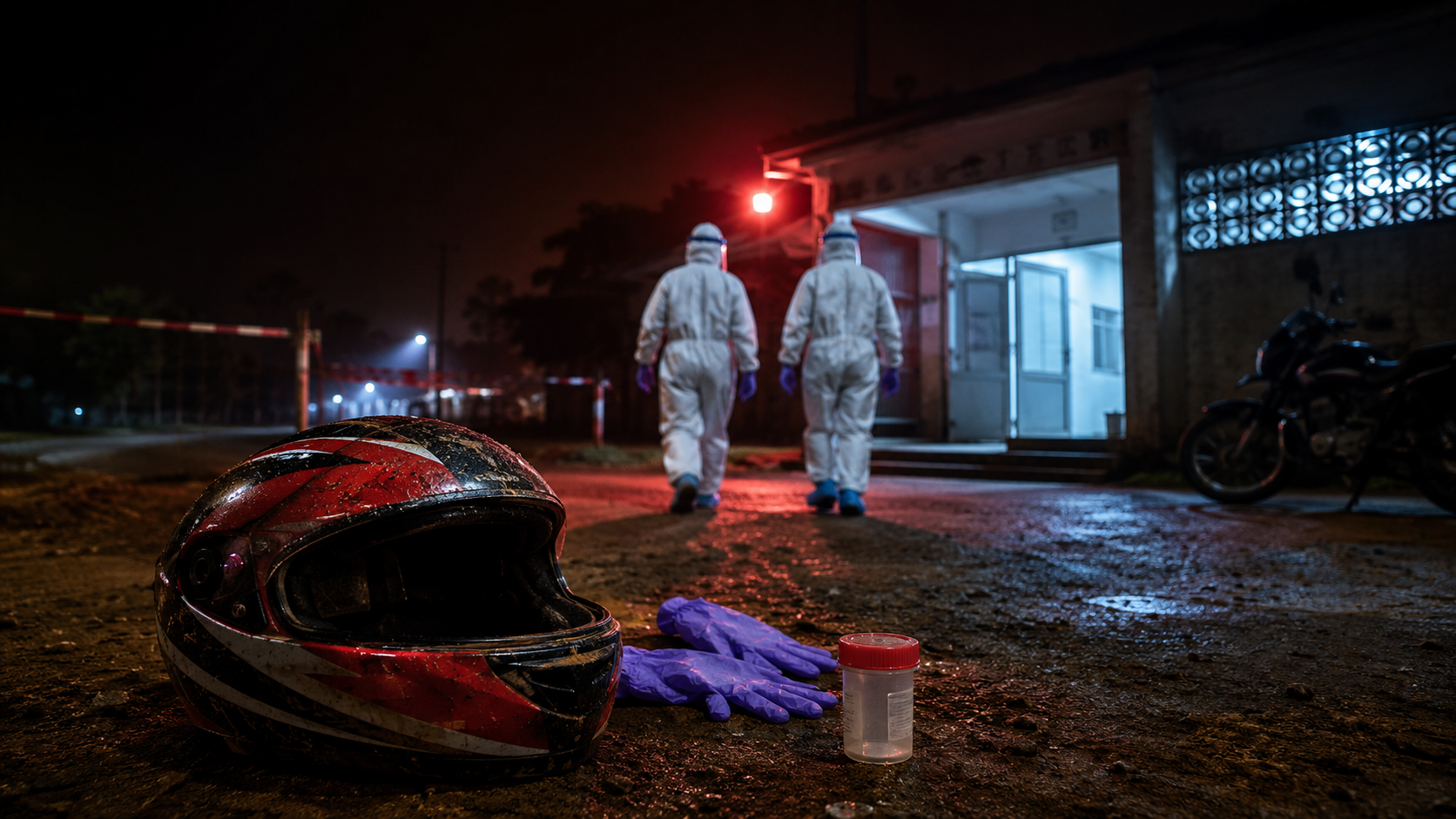
A motorcycle taxi driver travelled from an Ebola-affected area of the Democratic Republic of the Congo into Bas-Uele, a province not previously affected by the current outbreak. He developed symptoms consistent with Ebola, visited several health facilities, died in the provincial capital Buta and tested positive after his death. Now health officials face the most dangerous question in any Ebola emergency: who did he meet before anyone knew what they were dealing with?
The case does not yet mean Bas-Uele has established local transmission. But it is a serious breach in an outbreak already moving faster than the response can comfortably contain, with thousands infected, more than two thousand confirmed deaths and contact tracing still below the level authorities say is needed.
A New Province, A Dangerous Window
The driver had travelled from Haut-Uele, one of the provinces already affected by the outbreak. Authorities say he went to multiple health facilities before dying, creating possible exposure risks for relatives, fellow passengers, health workers and anyone who came into direct contact with him or contaminated materials.
The concern intensified after fellow motorcycle taxi drivers reportedly tried to recover his body before police intervened. Ebola can be highly infectious after death because the virus is transmitted through direct contact with infected blood and bodily fluids. A single unprotected funeral, hospital visit or attempt to move a body can create several new chains of infection.
Bas-Uele will only formally be counted as an affected province if local transmission is confirmed. That distinction matters. An imported case can be contained if contacts are found, monitored for 21 days, tested quickly when symptoms appear and isolated before they infect others. The danger begins when even one infected contact disappears into ordinary travel, family care, informal clinics or burial rituals before that system catches up.
Why This Outbreak Is Moving So Fast
This is not Ebola spreading through the air like measles or Covid. It is spreading through close, direct contact with body fluids and contaminated objects, especially when people care for sick relatives at home, move between clinics, use informal health services or take part in unsafe burials.
That may sound easier to stop than an airborne disease. In principle, it is. In reality, the virus is exploiting exactly the places where people need help most: crowded homes, overstretched clinics, long-distance travel routes, informal work networks and areas where fear or mistrust delays treatment.
The current outbreak is caused by the Bundibugyo virus, a type of Ebola virus for which there is no approved specific vaccine or treatment. Early supportive care can improve survival, but the response has been working against delayed detection, insecurity, poor road access, shortages of equipment, pressure on treatment centres and gaps in community trust.
The outbreak’s scale shows how quickly that combination can become deadly. Government data published on 11 August recorded 4,449 confirmed cases and 2,061 confirmed deaths across five provinces. Two days later, authorities reported 4,566 cases and 2,128 deaths. The raw numbers are alarming, but they do not prove that the virus itself has suddenly become biologically more transmissible; they also reflect wider testing, improved reporting and the discovery of cases that were already spreading unseen.
Is The Outbreak Accelerating?
The honest answer is mixed: the outbreak remains extremely fast, but the newest daily figures offered one fragile sign of slowing. Official data recorded 68 new confirmed cases in the 24 hours to 10 August, down from 99 in the comparable reporting period six days earlier.
That is not a declaration of control. Deaths remained around 50 a day, the national confirmed case fatality rate rose to 46.3%, and the outbreak had expanded across 53 health zones in five provinces. Most alarming is that 31 of the 50 deaths reported in that 24-hour period happened in the community rather than in treatment centres — a sign that too many people are still being found too late.
Contact tracing is the hinge on which the whole emergency turns. On 4 August, only 75% of identified contacts were being followed each day, against an operational target of at least 95%. By 10 August, the reported rate had improved to 82.7%, but that still left nearly one in five contacts outside daily follow-up. In an outbreak where a missed person can travel across provincial boundaries, that gap is not administrative; it is the space in which Ebola keeps moving.
Could Ebola Mutate Into Something More Dangerous?
Every virus changes over time, and scientists are sequencing this outbreak to track how it is evolving. But mutation is not a magic switch that turns Ebola into an airborne supervirus. There is no evidence that this Bundibugyo outbreak has acquired airborne spread, and Ebola has not been observed spreading through the air in humans.
The more immediate danger is not a dramatic new mutation. It is a virus behaving in the way Ebola already can when systems fail around it: spreading through direct contact, moving with people across roads and rivers, reaching health facilities before clinicians recognise it, and gaining new opportunities at home or after death.
A mutation could theoretically affect how efficiently a virus replicates, how severe illness becomes or whether existing countermeasures work as expected. That is why genomic surveillance matters. But the claim that Ebola is on the verge of mutating into an airborne disease is speculation, not a conclusion supported by current evidence.
The harsh reality is more unsettling because it is avoidable. Ebola does not need to become airborne to cause immense damage. It only needs enough delayed diagnoses, untraced contacts, unsafe care and cross-border movement to outrun the teams trying to isolate it.
How Authorities Are Trying To Stop It
The response is built around a brutal but proven logic: find every case quickly, isolate patients, trace every contact, monitor them for 21 days, test fast, support safe and dignified burials, decontaminate homes and clinics, and keep health workers protected.
Authorities and international partners are expanding laboratory testing, treatment capacity, ambulances, infection-control measures and community outreach. Screening at transport points has also intensified, with more than 216,000 travellers reportedly checked in one day across affected provinces. The latest government report said 92.7% of alerts logged in reporting provinces had been verified, showing that surveillance can move rapidly when resources reach the front line.
The weakness is that an emergency response is only as strong as its final mile. If an ambulance does not arrive, a treatment centre is full, a health worker is unpaid, a family fears isolation or a village distrusts officials, people may seek care too late. That is why the response cannot be reduced to equipment and checkpoints: it depends on trusted local leaders, clear information and care close enough for people to use it.
Could It Become A Pandemic?
The outbreak is already an international public-health emergency. It has crossed borders before, with imported cases detected in Uganda earlier in the outbreak, although Uganda brought its local outbreak to an end after completing contact follow-up. That is the strongest evidence that containment is possible.
A true global pandemic remains unlikely under the virus’s current mode of transmission. Ebola’s need for direct close contact makes it fundamentally harder to spread internationally than an airborne respiratory virus. The current risk to the wider public outside affected areas is low, and importing a case is not the same as allowing sustained spread.
But “unlikely” does not mean impossible to manage badly. The route to a far wider crisis would not be one spectacular leap. It would be a series of failures: cases missed in crowded urban centres, contacts travelling before symptoms are recognised, health facilities becoming transmission hubs, unsafe burials creating fresh clusters, underfunded treatment systems collapsing under demand and neighbouring countries failing to detect importations early.
Bas-Uele is therefore a warning, not a verdict. One imported death can still be contained. But every missed contact turns a manageable emergency into a longer, more expensive and more dangerous race against a virus that does not need to mutate to expose the consequences of delay.
