

The Entertainment Power Shift No One Can Ignore: TIME’s 2026 List Reveals Who Really Controls Culture Now
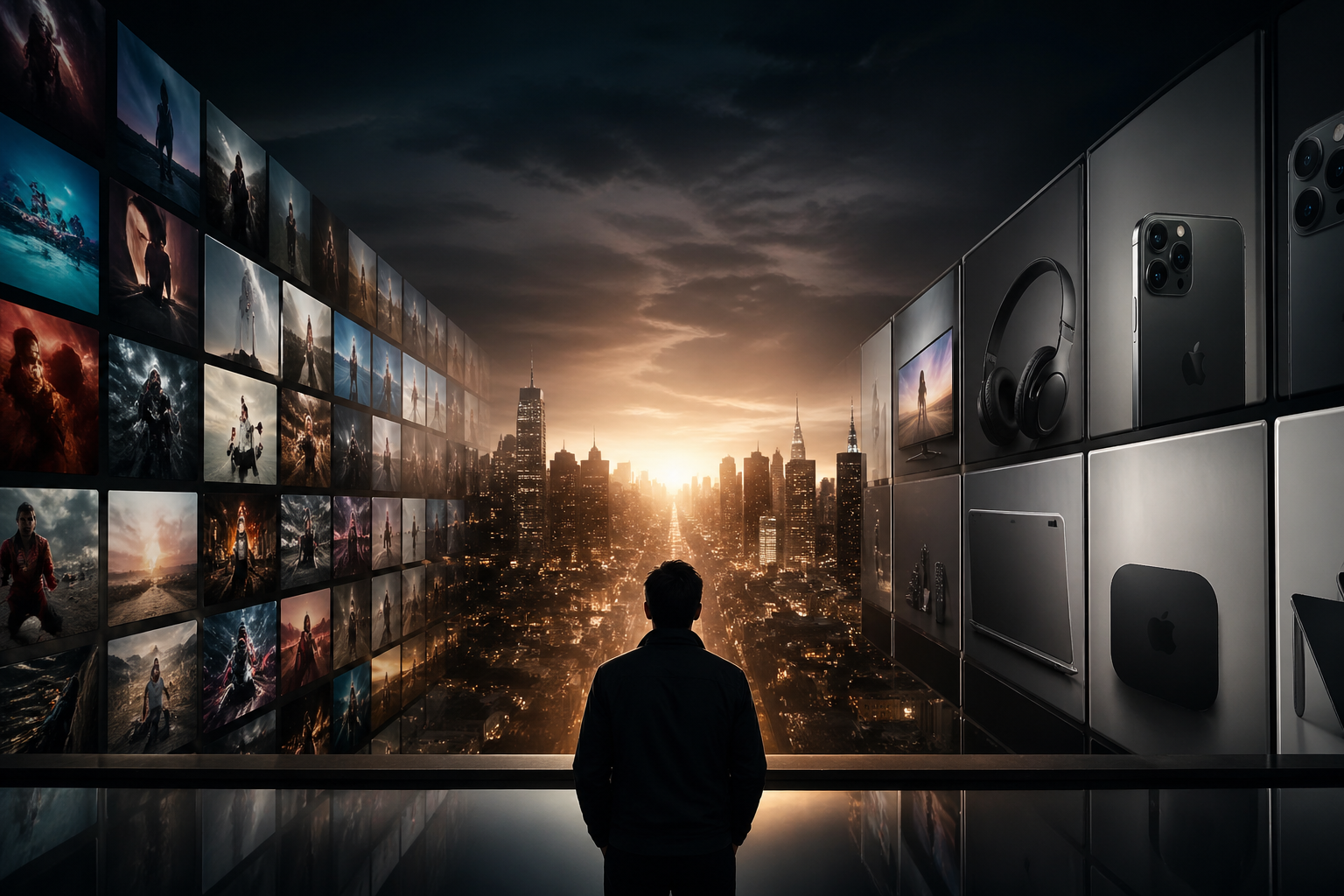
TIME’s New Rankings Expose The Real Winners Of The Streaming Era
Apple, Creators And Streaming Giants: The New Map Of Entertainment Power In 2026
The entertainment industry did not evolve in 2026. It flipped.
The latest TIME100 sector lists—now expanded into detailed industry rankings—don’t just highlight influential companies. They quietly map where cultural power actually lives. And that map looks nothing like the one most people still imagine.
Hollywood studios are no longer the center. Streaming platforms are no longer the disruptors. And creators are no longer outsiders.
They are the system.
TIME’s expanded company rankings now break influence down across sectors, including entertainment, media, AI, and software—revealing a structural shift: influence is no longer about content alone but about control of distribution, attention, and ecosystems.
What emerges is a new hierarchy—one where companies like Apple sit alongside creator empires and streaming platforms, not as competitors, but as overlapping forces shaping the same cultural reality.
The companies shaping culture are no longer just “entertainment companies””
The most important signal in the 2026 list is not who appears on it.
It’s what counts as an entertainment company at all.
Historically, influence in entertainment meant owning production: studios, networks, and record labels. That model assumed power came from creating content.
The new model is different.
Power now comes from three layers:
Distribution (platforms and ecosystems)
Attention (creators and personalities)
Infrastructure (technology companies enabling both)
TIME’s sector-based approach reflects this shift. Instead of a single list, it now identifies leaders across categories—from media and communications to AI and software—because entertainment influence is no longer contained in one industry.
This is why companies like Apple are now central to entertainment power. Not because they produce the most content, but because they control how content is experienced, monetized, and scaled.
Apple’s quiet dominance: the ecosystem is the platform
Apple’s inclusion is not surprising. But its role is often misunderstood.
Apple is not competing with streaming platforms in the traditional sense. It is shaping the conditions under which all of them operate.
Through devices, operating systems, subscription ecosystems, and services like Apple TV+, Apple sits upstream of the entertainment economy. It controls:
The screen people watch on
The payment infrastructure behind subscriptions
The app ecosystem where content lives
The data layer influencing discovery
That combination creates something more powerful than a studio or a streamer.
It creates dependency.
In a fragmented media landscape, Apple’s strength is not volume—it is integration. It doesn’t need to dominate content if it dominates the environment content flows through.
That is a fundamentally different type of influence.
Creator empires are no longer “alternative media””
If Apple represents infrastructure, creators represent the most disruptive force in the system.
The rise of figures like Jimmy Donaldson—better known as MrBeast—illustrates how far this shift has gone.
At the 2026 TIME100 Summit, Donaldson described building a media company that operates outside traditional entertainment frameworks, scaling to hundreds of employees while expanding into products, finance, and services.
This is not a YouTuber.
This is a vertically integrated entertainment business.
Creator-led companies now:
Produce content at global scale
Control their own distribution channels
Monetise across multiple industries (ads, products, subscriptions)
Build direct relationships with audiences
TIME’s recognition of creators within its broader ecosystem—including earlier expansions like the TIME100 Creators initiative—signals something important: influence is no longer measured by institutional backing but by audience control.
Creators are not replacing studios.
They are bypassing them.
Streaming is no longer the disruptor — ’s the battlefield
Streaming platforms once represented the future of entertainment.
Now they represent competition under pressure.
Companies like Netflix transformed how audiences consume content, shifting behavior from scheduled viewing to on-demand ecosystems. But the model is no longer uncontested.
Streaming now sits between two pressures:
Upstream: tech platforms controlling distribution (Apple, device ecosystems)
Downstream: creators capturing attention directly (YouTube, TikTok, independent media)
Netflix itself is evolving in response, investing in new technologies, partnerships, and production models—including AI-driven filmmaking initiatives.
The implication is clear:
Streaming is no longer redefining entertainment.
It is defending its position within a system that has already changed.
What most people miss: influence has become layered, not owned
The old model of entertainment influence was simple: whoever owned the content owned the audience.
That model is gone.
The new system is layered:
Tech companies control access
Platforms control discovery
Creators control attention
Studios control premium production
No single player dominates all four.
That creates a more complex—and more fragile—power structure.
It also explains why TIME’s new rankings feel broader and less intuitive. Influence is no longer concentrated. It is distributed across interconnected systems.
This is why a company like Apple, a creator like MrBeast, and a platform like Netflix can all be “most influential” at the same time.
They are operating on different layers of the same machine.
The cultural shift is already complete
The biggest misconception about entertainment right now is timing.
Most people think the industry is in transition.
It isn’t.
The transition has already happened.
Audiences now:
Discover content through algorithms, not schedules
Follow creators, not networks
Consume across devices, not channels
Expect constant output, not release cycles
The companies highlighted in TIME’s 2026 lists are not predicting this future.
They are the result of it.
Why this matters beyond entertainment
This shift is not just about media.
It is about influence itself.
The same dynamics shaping entertainment—platform control, creator-led distribution, and ecosystem dominance—are now visible across the following:
News
Politics
Education
Commerce
Entertainment has become the testing ground for a broader transformation in how attention is captured and monetized.
Whoever understands this model early does not just win in media.
They win everywhere attention matters.
The new hierarchy of power
The TIME100 entertainment rankings don’t just list companies.
They expose a new hierarchy:
Ecosystem owners (Apple, platform infrastructure)
Attention leaders (creators and creator-led companies)
Distribution platforms (streaming, social media)
Content producers (studios and legacy players)
This is not a temporary phase.
It is the structure of modern culture.
Final thought
The entertainment industry did not lose control.
It was redefined out from under itself.
And the companies recognized in TIME’s 2026 lists are not just influential.
They are the ones who understood the shift before everyone else did.
