The Nord Stream Case Just Put Ukraine’s War Story On Trial
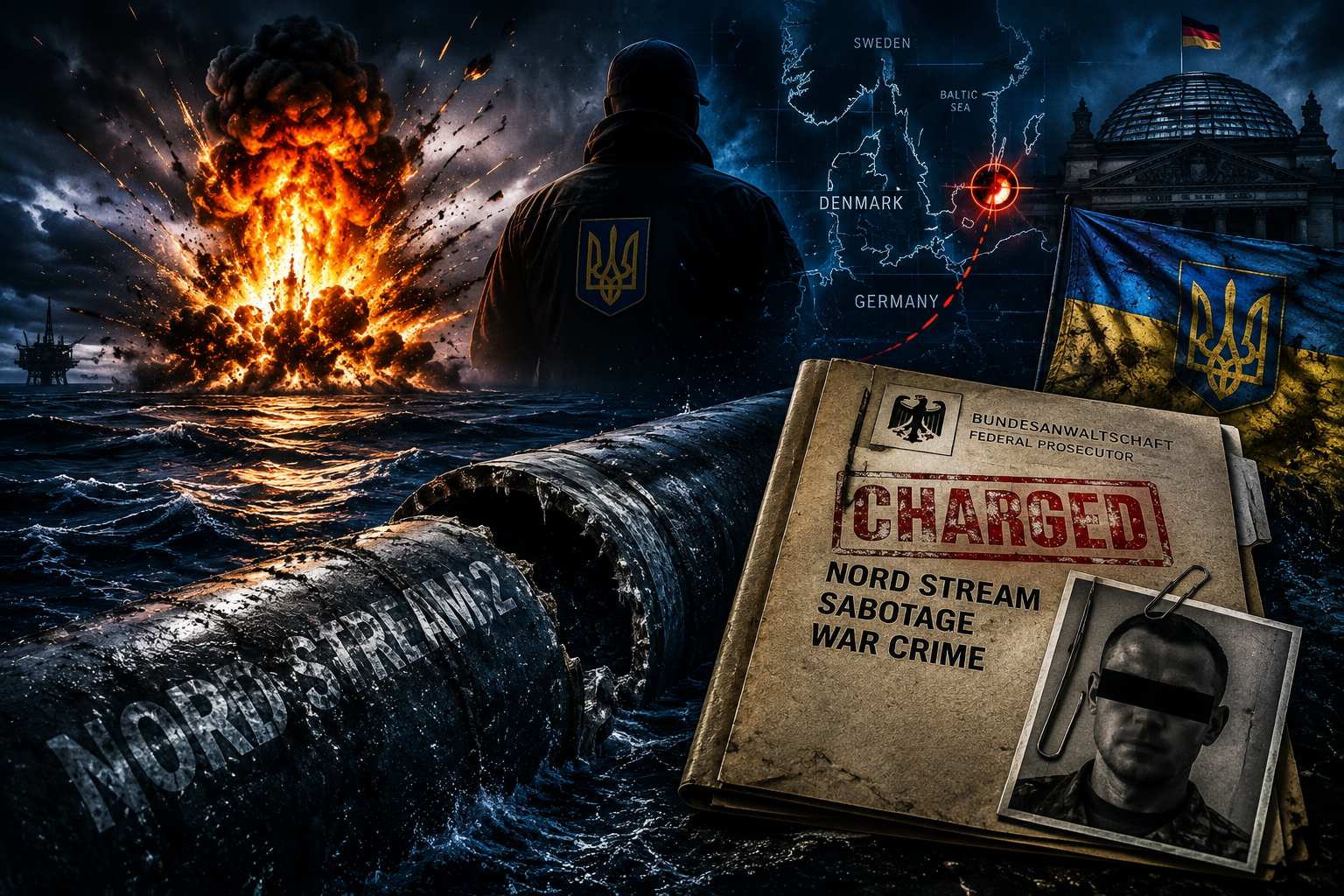
Germany’s Nord Stream Case Just Became A Political Bomb
Germany’s Nord Stream Charge Turns A Pipeline Mystery Into A Political Bomb
German prosecutors have charged a Ukrainian suspect over the Nord Stream pipeline explosions, and the case now carries far more weight than one man in a courtroom. The accused, identified as Serhii K., is alleged to have helped lead the 2022 sabotage operation that damaged the Nord Stream 1 and Nord Stream 2 gas pipelines in the Baltic Sea.
The political force of the case is the accusation behind the charge. German prosecutors allege the operation targeted civilian energy infrastructure, involved a yacht, divers, forged documents and explosives, and was carried out on behalf of Ukrainian state entities.
Germany’s Case Is No Longer Just About Sabotage
The Nord Stream explosions were never an ordinary criminal case. They struck one of Europe’s most sensitive energy links months after Russia’s full-scale invasion of Ukraine, damaging pipelines built to carry Russian gas to Germany and deepening a European energy crisis that had already become political, financial and strategic.
According to prosecutors, Serhii K. was a former Ukrainian army officer who led a team that included divers, a skipper and an explosives expert. The group allegedly entered Germany using forged documents, rented the sailing yacht Andromeda, transported military-grade explosives and placed them on the pipelines near Denmark’s Bornholm island.
Serhii K. denies involvement. That matters because the legal case is still an allegation, not a conviction, and the trial will have to test whether prosecutors can prove the chain from suspect to operation to state-linked purpose.
The Accusation Now Reaches Into Wartime Politics
The most explosive part of the case is not the yacht. It is the claim that the attack was linked to Ukrainian state entities, because Germany has been one of Kyiv’s most important European backers since Russia’s invasion.
That creates an ugly contradiction for Berlin. Germany has helped arm and finance Ukraine against Russian aggression, but its own prosecutors are now alleging that a Ukrainian-linked operation struck infrastructure that affected German national energy security.
President Volodymyr Zelenskyy has said Ukraine needs more information before giving a full response. That caution is understandable, but it will not make the case disappear, because a public trial could force details into the open that European governments have spent years avoiding.
Europe Must Now Face The Cost Of Its Own Energy Shock
Nord Stream was already politically toxic before the explosions. The pipelines symbolised Europe’s long reliance on Russian gas, Germany’s strategic mistake in trusting Moscow, and the speed with which the continent had to scramble after the war made that model impossible to defend.
The explosions turned that dependency into wreckage. Three of the four pipeline strings were damaged, methane poured into the Baltic Sea, and Europe was left with a mystery that fed accusations, conspiracy claims and diplomatic suspicion from Washington to Moscow.
The German charge now pulls the story out of speculation and into court. It does not settle every question, but it does make one thing unavoidable: Europe’s most dramatic energy sabotage case is no longer only about Russia, gas or the Baltic seabed.
It is about whether a country fighting for survival may also have crossed a line against the infrastructure of one of its strongest supporters. If German prosecutors prove that case, Nord Stream will not just be remembered as an act of sabotage. It will become one of the most politically dangerous trials of the Ukraine war.
