

The Social Media Ban That Could Leave Britain’s Youngest Generation Behind
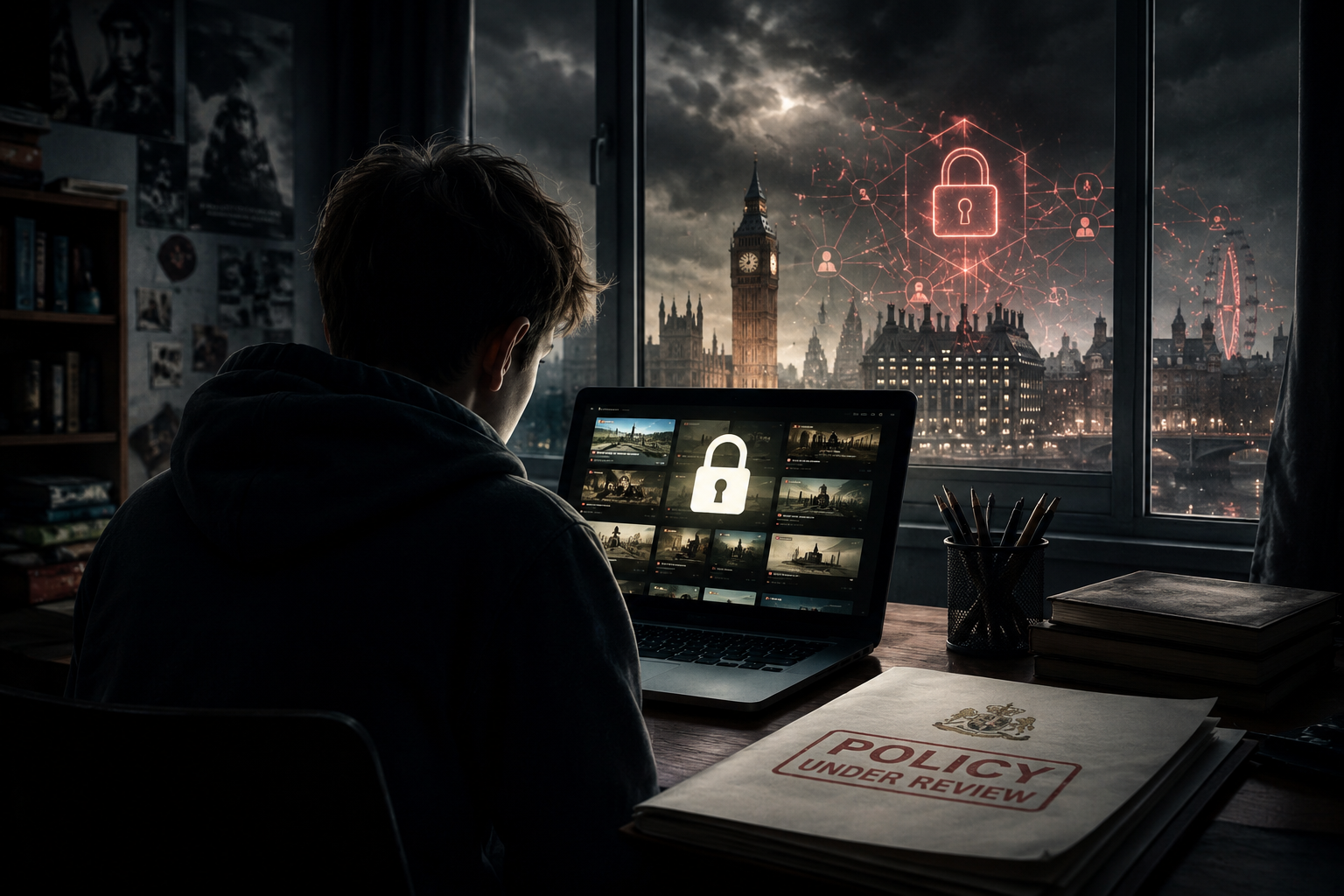
The Hidden Cost Of Starmer’s Social Media Crackdown
Why Britain’s Under-16 Social Media Ban Could Backfire Spectacularly
The UK government has announced plans for an Australia-style ban preventing under-16s from accessing major social media platforms, including YouTube, TikTok, Instagram, Snapchat, Facebook and X. The policy is being presented as a child-safety measure designed to reduce exposure to harmful content, addictive platform design and unwanted contact from strangers. The proposal is expected to form part of a wider digital safety crackdown.
Yet there is a contradiction sitting at the heart of the policy that many people cannot ignore. Politicians constantly tell young people they need digital skills, AI literacy and technological confidence to succeed in the modern economy. At the same time, they are considering restrictions on some of the very platforms where those skills are increasingly learned.
That contradiction becomes even harder to explain when educational platforms such as YouTube are included while newer platforms with significantly smaller educational ecosystems remain accessible under different classifications and exemptions.
Why YouTube Is Different
For millions of young people, YouTube is not simply entertainment.
It is the largest free educational platform in human history.
Students learn mathematics, coding, engineering, science, languages, business skills, investing, history, music production and AI development through YouTube every single day. Entire careers have been built from knowledge first discovered there.
Many of today's software engineers learned through online tutorials. Many entrepreneurs learned through free educational content. Many young people interested in artificial intelligence consume hours of educational content explaining machine learning, prompting, coding and emerging technologies.
The government's argument is that YouTube also contains addictive recommendation systems and harmful content. That concern is not entirely unreasonable. However, treating YouTube primarily as a social media platform rather than an educational platform creates a policy dilemma.
If Britain wants to become an AI superpower, restricting access to one of the world's largest learning resources appears difficult to reconcile with that ambition.
Why Young People May Simply Use VPNs
One of the biggest criticisms of these bans is practical rather than ideological.
Can they actually work?
Australia introduced its own under-16 social media ban in December 2025. Authorities reported that millions of accounts were removed or restricted after implementation.
However, evidence emerging since implementation suggests many young people continue accessing platforms despite the restrictions. Critics argue that determined teenagers quickly learn methods to bypass controls, including VPNs, alternative platforms and workarounds.
The result could be the creation of what some observers are already calling a "VPN generation."
Instead of removing young people from social media, governments may unintentionally teach them how to circumvent digital restrictions.
That creates an entirely different question.
Is it realistic to believe that a generation raised on technology will simply accept internet restrictions when tools to bypass them are widely available?
History suggests otherwise.
Has Australia Actually Proven The Model Works?
The honest answer is that nobody really knows yet.
Supporters of Australia's ban argue it has already reduced access, removed millions of accounts and increased awareness of online harms. Early polling suggests many adults believe the policy is moving in the right direction.
Critics point to a different set of findings.
Some surveys suggest large numbers of under-16s continue using restricted platforms despite the ban. Others highlight movement toward alternative services that may be less regulated and potentially less safe.
Six months into the Australian experiment, there is still no overwhelming body of evidence proving dramatic improvements in educational outcomes, mental health outcomes or long-term social wellbeing. Supporters see promising signs. Critics see unresolved questions.
Britain therefore appears ready to adopt a model whose long-term effectiveness remains uncertain.
The Political Risk For Labour
There is another dimension to this debate.
Politics.
Young voters have traditionally been one of Labour's strongest demographics. Younger generations are more digitally native than any generation before them. Many live substantial portions of their social, educational and cultural lives online.
That creates a fascinating political tension.
Governments want young people engaged in democracy. They want young people voting. They want young people participating in public life.
Yet simultaneously restricting access to platforms where many young people spend their time risks creating resentment rather than engagement.
Whether that resentment becomes politically meaningful remains unknown. However, there is a genuine possibility that some young voters will see these measures less as protection and more as paternalism.
The danger for Labour is that policies intended to protect young people may instead convince some of them that politicians fundamentally misunderstand how modern life works.
The AI Race Nobody Is Talking About
The most important question may not be about social media at all.
It may be about artificial intelligence.
The global economy is rapidly entering an AI era. Countries are competing for talent, innovation and technological leadership. The winners of the next twenty years will likely be nations that produce digitally capable populations comfortable with technology.
Much of that learning currently happens online.
Young people are discovering ChatGPT, coding tools, AI video generation, machine learning concepts and entrepreneurial opportunities through internet platforms long before they enter universities.
A policy that reduces harmful online experiences could deliver benefits.
A policy that unintentionally reduces exposure to digital skills could create costs.
The challenge is that those costs may not become visible for years.
By the time policymakers realise a generation has become less digitally capable than international competitors, the damage may already be done.
The Bigger Question Behind The Ban
This debate is ultimately bigger than Keir Starmer.
It is about whether governments should respond to technological disruption by restricting access or by teaching resilience.
Everyone agrees there are genuine online harms. Cyberbullying exists. Exploitation exists. Addiction exists. Harmful content exists.
The real disagreement concerns the solution.
One vision says children should be protected through stronger restrictions and tighter controls.
The other says children should be educated, empowered and taught how to navigate the digital world safely because the digital world is not going away.
The UK appears to be moving firmly toward the first approach.
The unanswered question is whether the countries that thrive during the AI revolution will be those that restrict access to technology, or those that teach young people how to master it. That question may ultimately matter far more than any individual social media platform ever could.
