Toxic Wildfire Haze Spreads From Indonesia Into Malaysia and Philippines as Air Turns Hazardous
When Wildfire Smoke Crosses Nations
Southeast Asia Under Smoke
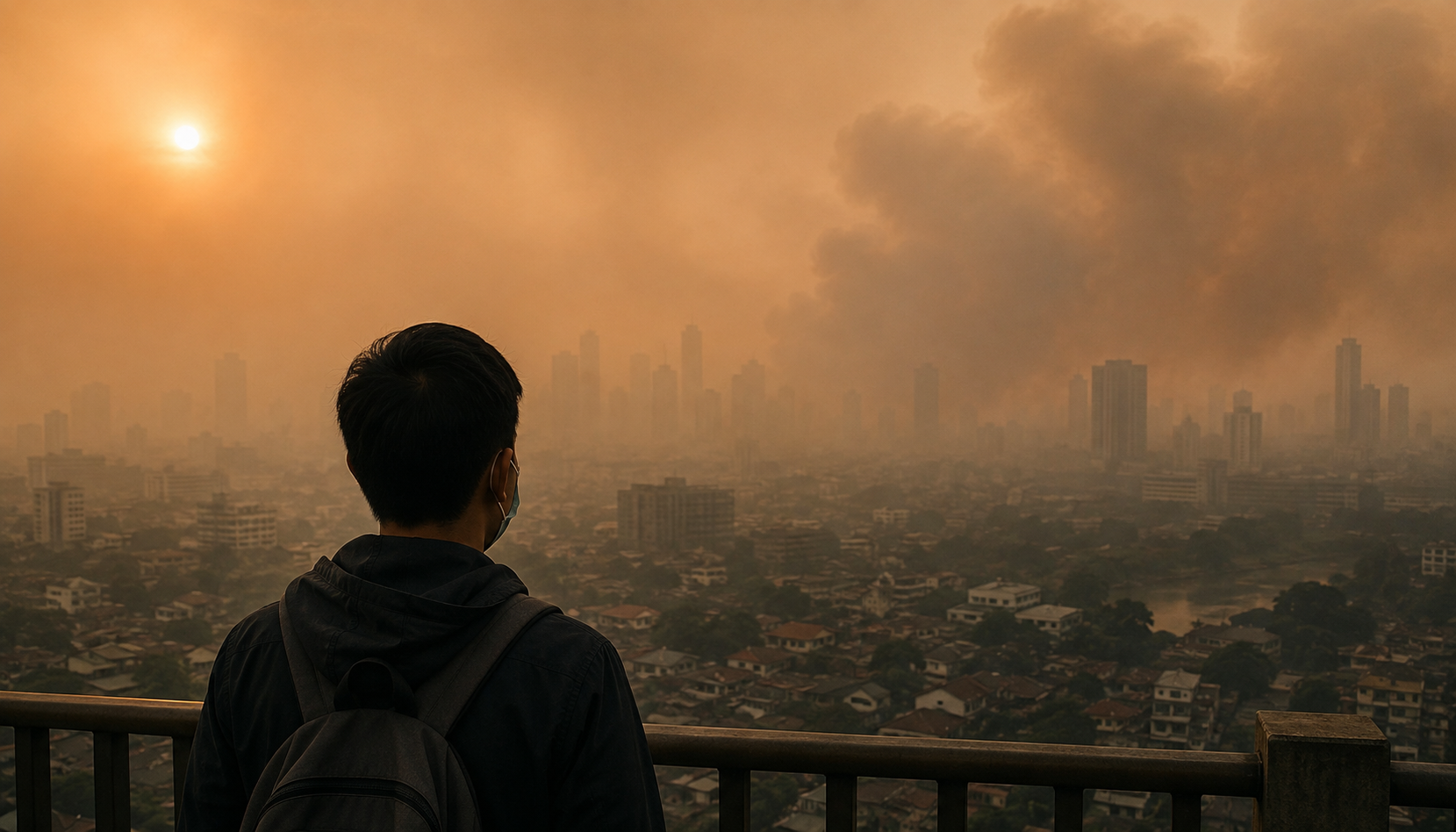
A vast smoke haze generated by fires across Indonesia has spread into Malaysia and the Philippines, turning a domestic wildfire emergency into a regional air-pollution crisis. Parts of Borneo have recorded unhealthy to hazardous air while smoke has reached areas of the Philippines hundreds of kilometres from the main fire zones.
The ASEAN Specialised Meteorological Centre has activated Alert Level 3 for the southern ASEAN region, its most serious stage of regional monitoring. The centre says moderate to dense transboundary smoke haze is covering northern Borneo and extending into southwestern, western and central parts of the Philippines, while further smoke plumes continue to rise from fire clusters in Kalimantan and Sumatra.
A Wildfire Emergency Has Become a Regional Haze Crisis
The geographical scale is what makes the current episode so serious. Fires burning across Indonesia are not simply degrading air quality immediately around the flames: prevailing winds are carrying fine particles across seas and international borders, exposing communities that may be hundreds or even thousands of kilometres from the original source.
ASEAN monitoring shows widespread hotspot activity across Kalimantan and Sumatra, while air-quality stations in northern and western Borneo and parts of southern Sumatra have reported readings ranging from unhealthy to hazardous. Conditions are particularly concerning because the region is deep inside its dry season, meaning smoke can continue accumulating when substantial rain fails to arrive.
Malaysia's Borneo states have been among the hardest areas hit outside Indonesia. Air-pollution readings in parts of Sarawak have reached hazardous territory, while Sabah has also experienced unhealthy conditions as smoke crosses the border from Indonesian Kalimantan.
The Philippines demonstrates just how far that pollution can travel. Smoke has reached Metro Manila and other western and central areas, with elevated concentrations of fine airborne particles prompting warnings to reduce exposure and, in affected communities, disruption to normal schooling.
El Niño Is Loading the Conditions for More Fire
The immediate cause of the haze is fire, but the force multiplying it is weather.
El Niño conditions are now present and are expected to strengthen over the coming months. Across southern Southeast Asia, that generally raises the probability of hotter and drier weather, reducing moisture in vegetation and peat and allowing fires to start more easily, spread faster and continue burning for longer.
The ASEAN seasonal outlook for August to October predicts below-normal rainfall across much of the southern region alongside above-normal temperatures. It explicitly warns that the combination of El Niño and persistent dry conditions could escalate hotspot activity and increase the risk of transboundary haze.
That makes September particularly dangerous. Indonesia's forestry minister has warned that suppressing the fires will become especially challenging as El Niño reaches its peak, while authorities continue fighting outbreaks across vast and difficult terrain.
The crucial distinction is that El Niño does not necessarily start the fires. Indonesian authorities say human activity remains responsible for much of the destruction. What the climate pattern does is create an environment in which ignition becomes far harder to contain.
Indonesia Is Investigating What Is Burning
The crisis is therefore becoming an enforcement issue as well as an environmental one.
Indonesian authorities are inspecting 19 companies after fires were identified within concession areas covering more than 11,000 hectares. Satellite monitoring had identified dozens of companies associated with areas considered at high fire risk, although the presence of fire inside a concession does not by itself establish how the fire began or who caused it.
That distinction matters. Authorities are investigating whether individual fires were deliberate or accidental rather than assuming responsibility from satellite imagery alone. Indonesia has nevertheless adopted strong liability rules around fires occurring within commercial concessions, reflecting the enormous regional consequences land burning can create.
Fire crews are now confronting outbreaks across a huge geographical area. Tens of thousands of personnel have been mobilised, aircraft are carrying out water-bombing operations and Indonesia has authorised foreign aircraft to help with the response. Thick smoke and shortages of readily accessible water can make those operations significantly harder.
Indonesia's disaster agency was still recording new forest and land fires on September 3, demonstrating that the emergency has not been reduced to a handful of residual hotspots. Fire and drought remain among the principal disasters demanding national and local emergency resources.
Peat Can Keep Burning Beneath the Surface
One of the most difficult features of Indonesian wildfire seasons is peat.
Peatlands contain large quantities of partially decomposed organic material. When sufficiently dry, fire can move into this carbon-rich ground and continue smouldering beneath the visible surface, making conventional firefighting far more difficult than extinguishing an ordinary vegetation fire.
That allows smoke production to persist even when flames are less dramatic. Fires can also re-emerge after appearing to have been controlled, particularly when dry conditions continue and water tables remain low.
This is one reason the regional haze problem cannot be understood simply by counting visible fires. A relatively concentrated cluster of persistent peat fires can produce enormous amounts of smoke, while wind direction determines which populations eventually breathe it.
The same dynamic helps explain why Southeast Asian haze emergencies can suddenly become international. The border may stop firefighters and regulators from operating freely across jurisdictions, but it does nothing to stop airborne pollution.
Schools Are Already Paying the Price
The consequences are now extending deep into ordinary life.
Around 1.4 million Indonesian students across six provinces had been moved to remote learning by September 2 because of dangerous air quality linked to the forest and land fires. The scale shows how rapidly a wildfire emergency can become an education and public-health emergency even for families nowhere near an advancing wall of flame.
Quezon City in the Philippines also cancelled in-person public-school classes as haze affected the capital region. Philippine environmental authorities advised people to limit prolonged outdoor activity, particularly those more vulnerable to air pollution, and encouraged residents in affected areas to remain indoors where possible and use masks outdoors.
The microscopic particles contained in wildfire smoke are especially important. PM2.5 particles are small enough to penetrate deep into the lungs, meaning the most dangerous aspect of a distant wildfire may not be heat or flame but pollution that cannot necessarily be seen clearly once dispersed through a city.
The pressure extends beyond health. Poor visibility can interfere with aviation and transport, outdoor businesses lose customers, schools may close and workers can face difficult decisions about remaining outdoors when air quality deteriorates.
Southeast Asia Was Warned This Could Happen
This crisis did not arrive without warning.
Months before the current deterioration, the risk of severe transboundary haze during the second half of 2026 had already been judged unusually high. August and September were identified as the peak danger period as El Niño, dry conditions and pressure on fire-management resources converged.
The current outbreak is effectively testing whether the systems strengthened after Southeast Asia's previous catastrophic haze seasons are capable of stopping another one.
Indonesia has expanded fire prevention, peat restoration, enforcement and emergency coordination over the past decade. ASEAN has also developed regional monitoring and a dedicated coordinating centre for transboundary haze pollution.
Yet the uncomfortable reality remains that prevention has to succeed locally while the consequences of failure spread internationally.
Once enough land is burning, every additional week of dry weather increases the burden on firefighters. Every persistent hotspot can add smoke to the regional atmosphere. Every change in wind direction can move that pollution towards another city or another country.
The Wind Will Decide Who Breathes the Smoke Next
For now, meteorology offers little certainty of a rapid end.
ASEAN forecasters expect much of the southern region to remain dry in the coming days, although showers are possible across northern Sumatra, northern Peninsular Malaysia and northeastern Borneo. With prolonged dry conditions continuing across fire-prone territory, the regional centre warns that hotspot activity and smoke haze could remain elevated and that the risk of severe transboundary haze will continue.
Prevailing winds across the southern ASEAN region are expected to blow mainly from the southeast to south. That makes wind direction almost as important as the number of fires themselves: the same burning landscape can produce radically different pollution emergencies depending on where its smoke is carried.
There is also a larger climate consequence. Indonesia's fires release carbon that had been stored in forests and peat, meaning extreme fire seasons can simultaneously damage ecosystems, worsen local air pollution and send millions of tonnes of additional greenhouse gases into the atmosphere.
The next decisive variable is rain. Sustained rainfall could suppress fires, wet vegetation and peat and begin clearing accumulated pollution. If the dry spell persists instead, September could become a prolonged test of Indonesia's firefighting capacity and Southeast Asia's ability to contain a pollution crisis that no national border can hold back.
The smoke now hanging across Indonesia, Malaysia and the Philippines is therefore more than a seasonal inconvenience. It is the visible consequence of thousands of individual fires interacting with drought, peat, human land use and regional weather — and until that combination breaks, millions of people may remain downwind.
