Trump Didn’t Use Taxpayer Money—So Why Is His White House Ballroom So Controversial?
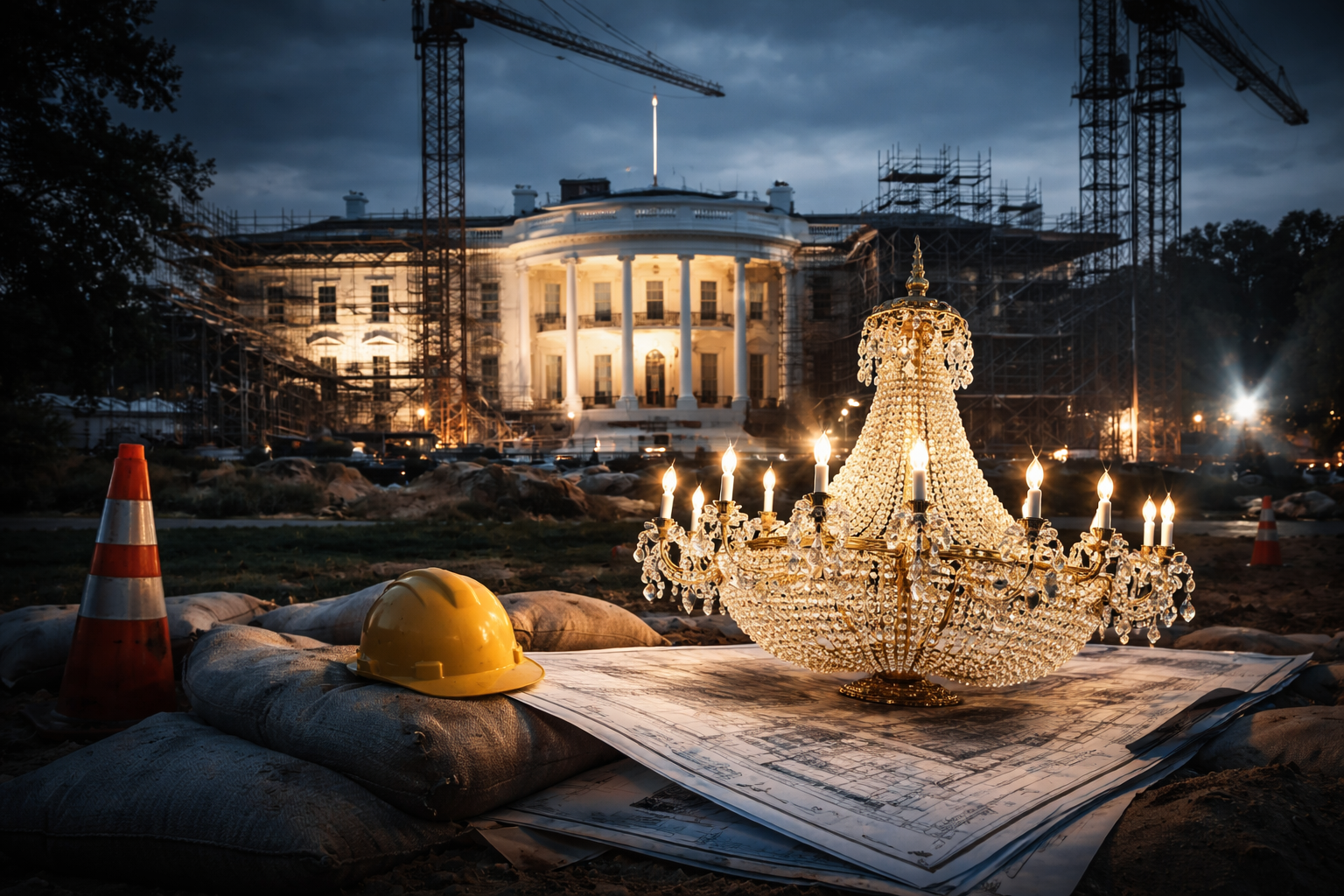
Trump’s self-funded White House ballroom still sparked backlash. The fight is about process, influence, and precedent—not price.
Trump’s Self-Funded White House Ballroom Still Triggered a Backlash. Why?
President Donald Trump’s plan to build a large new White House ballroom—framed by the administration as privately financed—has continued to draw legal, political, and cultural blowback.
At first glance, the “why” seems puzzling: if taxpayers aren’t paying, why the outrage? But the funding line doesn’t answer the deeper questions critics are actually arguing about. This fight is less about the checkbook and more about power, process, and precedent—who gets to reshape a national symbol, under what rules, and with which private interests hovering nearby.
One overlooked hinge sits underneath the headlines: private funding can reduce one kind of scrutiny (budget politics) while intensifying another (influence, compliance, and legitimacy).
The story turns on whether a self-funded project on public property can bypass the same oversight and review that would apply to any other major federal change.
Key Points
The “self-funded” claim hasn’t ended controversy because the project is still a major alteration to a highly protected public site with strict legal and procedural expectations.
Critics argue the backlash is fundamentally about process: required reviews, public input, and congressional involvement—not simply cost.
Private donations create a second controversy: potential influence by donors who may have business before the federal government.
The dispute has moved into court, with preservationists seeking to halt construction pending further review and approval.
The administration has argued the project is lawful and has raised national security and operational concerns about stopping work midstream.
The scale and symbolism matter: altering the White House is never just architecture; it is a statement about what the presidency is for.
Background
The proposal involves replacing the East Wing area with a much larger event space intended to host major official functions—particularly those that currently require tents or off-site venues for bigger guest lists.
The White House has emphasized that Trump and private donors, not congressional appropriations, would fund the construction. Trump has also presented the project as a practical upgrade: a permanent space designed for large-scale official entertaining, built to match the visual language of the existing complex.
Opponents, including historic preservation voices and political adversaries, have framed it differently: a dramatic redesign of an iconic public building, advanced at speed, with disputed aesthetics and a process that—critics argue—does not reflect the normal safeguards for nationally significant federal sites.
Analysis
The “self-funded” argument doesn’t answer the governance question
Self-funding is a financial claim, not a governance permission slip.
Even if not one taxpayer dollar is used, the White House is still a public asset on federal land, tied to layers of oversight expectations that exist precisely because the building is bigger than any one president. Critics are not only asking, “Who pays?” They are asking: who decides, who reviews, who gets a say, and what stops the next administration from treating the complex like a personal canvas?
That’s why backlash persists even when the administration insists the project is privately financed. The funding source is not the most durable controversy. The question is whether the project's implementation undermines the standard accountability framework for federal construction and protected public sites.
Process is the real battlefield: reviews, approvals, and timing
Major changes to federal sites typically run through formal review pathways—design scrutiny, environmental analysis, consultation, and opportunities for public input. Critics argue the ballroom project effectively moved faster than that tradition, with construction activity and demolition coming before the public had a meaningful chance to weigh in.
That sequencing matters. Once demolition happens, the “choice set” narrows. The debate stops being “Should the demolition happen?” and becomes “What’s the least-bad version we can live with?” Opponents see that as a tactic: make reversal politically and practically difficult, then negotiate details from a position of sunk costs.
This strategy is also why the conflict has landed in court. Preservationists are attempting to compel a temporary halt to reestablish the standard process, as once sufficient concrete has been poured, "review" turns into a formality.
Private donors shift the ethics debate from cost to influence
Even if the project is genuinely off-budget, private funding introduces a different sensitivity: influence.
A donor-funded addition to the White House is not like a private gift to a museum. This is an investment in a dynamic position of power, where policy decisions, procurement, regulation, and enforcement have the power to influence markets and significantly impact companies.
That dynamic is why transparency questions keep coming up: who the donors are, what they gave, and what, if anything, they might want in return. The mere perception of a “pay-to-impress” channel—access, attention, goodwill—can be enough to trigger backlash, especially in a polarized climate where motives are interpreted through partisan lenses.
In other words, the scandal risk isn’t that the ballroom is expensive. It’s that a privately financed presidential project could look like a prestige upgrade sponsored by interests that have something to gain from a sympathetic White House.
Symbolism: the White House serves as a national emblem, not as a developer’s plot.
There is also a cultural argument that has nothing to do with statutes.
For many Americans, the White House isn’t just an office building. It is a civic icon. Altering it in a bold, signature way is inherently controversial because it can feel like one leader is reshaping a shared national object to reflect personal taste and brand.
That’s why aesthetic criticism has teeth here. People may disagree about what looks appealing, but they understand what it means when a president seeks a grander, more opulent venue: it reads as a message about power, hierarchy, and the “court” feel of modern politics.
Add the broader context—economic stress, distrust in institutions, and permanent culture war—and the ballroom becomes a proxy fight over what kind of country people think they’re living in.
National security and operational arguments complicate any attempt to halt it
The administration has argued that stopping construction could create its own risks: an unfinished site, operational disruption, and potential security concerns around halting work midstream.
This argument plays well with audiences who view the White House as an operational compound first and a historic artifact second. Opponents face a dilemma: despite their belief in stopping the project, they run the risk of seeming indifferent to security and continuity.
That tension helps explain why the backlash has not produced a clean political outcome. It is easier to criticize the project than to propose a remedy that doesn’t carry its own risk.
What Most Coverage Misses
The hinge is that “self-funded” can make a project feel less accountable, not more, because it swaps democratic budget oversight for private-influence risk on public property.
The mechanism is simple: when Congress isn’t appropriating funds, traditional leverage points weaken. But the project still changes a national asset, still consumes public operational attention, and still creates a new arena where wealthy interests can claim proximity to the presidency—through donations tied to the most symbolically powerful address in America.
What would confirm these findings in the coming weeks is not another argument about taste. It is paper: clearer donor terms, clearer review documentation, and clearer judicial guidance on what approvals are required. A second signpost is whether the administration publishes more detailed design, security, and procurement information voluntarily—or keeps it tight until forced.
What Happens Next
In the short term, the next meaningful developments are likely to be procedural: court decisions, injunction requests, and any additional formal reviews or public forums that shape whether construction proceeds uninterrupted.
In the longer term, the real stakes are institutional. Should a president be able to significantly alter the White House complex through private funding while restricting traditional review, this precedent could potentially influence future administrations. This is due to the clear incentive: if one can solidify their legacy without the need for congressional votes, why not?
This issue matters because the White House is not just architecture. It is a governance signal. The more its physical form becomes a partisan battlefield, the harder it is for any administration to claim stewardship on behalf of the entire country.
Real-World Impact
A federal employee’s day becomes a rerouted commute and new security checkpoints because construction changes access patterns around a working compound.
A high-profile project benefits a contractor and subcontractors, but it exposes them politically and poses reputational risk based on public mood and legal outcomes.
A civic group that normally focuses on museums and landmarks gets pulled into a national fight because the project tests whether preservation rules have real teeth.
A donor class gains a new channel for status signaling—supporting a marquee presidential project—while critics worry the same channel blurs the line between philanthropy and influence.
The Real Question the Ballroom Forces
If we disregard the aesthetics and slogans, the ballroom controversy raises a straightforward question: who is the rightful owner of America's symbols during a president's temporary occupation?
If the project is ultimately blessed by the courts and the required processes, the backlash may fade into the familiar rhythm of “every White House renovation causes drama.” If it proceeds without clear compliance and transparency, the ballroom could become a template—proof that a president can rework the public sphere through private money and sheer momentum.
Either way, this moment will be remembered less for chandeliers and floor plans than for what it taught future leaders about how far power can physically remake the state.
