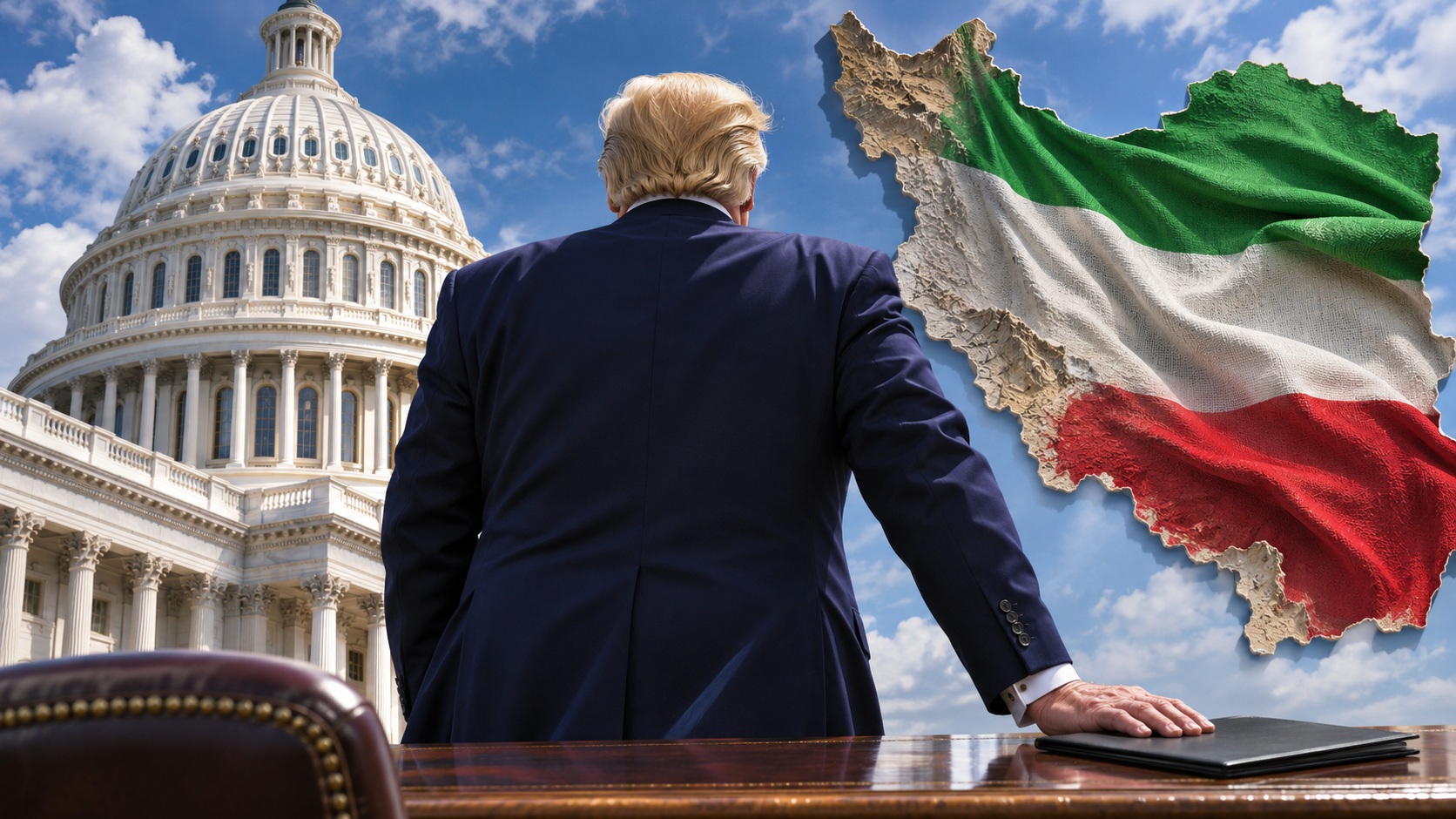
Can Congress Stop Trump?
The Power He Loses, the Power He Keeps
Democratic victories change who controls legislation, appointments and investigations, while leaving Trump with consequential choices over Iran.
Donald Trump has lost the prospect of governing with Republican majorities in Congress for the remainder of his second term. By the morning of 4 November 2026, election reporting had established Democratic victories in both the House of Representatives and the Senate, although counting continued in individual races.
That result makes major new domestic legislation harder, exposes his administration to more aggressive investigations and gives Democrats the ability to obstruct senior appointments. It does not remove him from office, cancel existing laws or transfer command of American forces to Congress.
For the Iran war, the distinction is consequential. Trump will face stronger political pressure and an incoming legislature with powerful ways to challenge his policy. But a midterm defeat does not itself stop an air strike, withdraw a warship or produce a peace agreement.
The next two years will depend on which powers each side can actually use, and whether either is willing to accept the cost of confrontation.
What Changes Now—and What Waits Until January?
An American midterm election is not a parliamentary vote of confidence. Trump does not have to resign because his party has lost Congress, and Democrats do not take over the presidency by winning more congressional seats.
The political consequences begin immediately. The results damage Republican claims that the administration’s direction commands broad electoral support. Incoming Democratic leaders can start setting priorities, while Republicans must decide which parts of Trump’s programme they still want to defend.
The formal transfer of congressional power comes later. Under the Twentieth Amendment, the new congressional terms begin at noon on 3 January 2027. Until then, the outgoing House and Senate retain their authority.
That creates a transition period in which an electorally weakened president still works with the existing Congress. Republicans may seek to complete unfinished business before losing their majorities. Whether they succeed depends on the votes available, legislative procedures and how members interpret the defeat.
It is therefore too early to describe Democrats as already controlling every committee or blocking every nomination. Their electoral victory establishes the coming change; it does not move the constitutional calendar forward.
The Domestic Agenda Now Needs Opposition Votes
Trump’s largest practical loss is a more favourable route from presidential demand to federal law.
With Democrats controlling both chambers, Republican proposals cannot ordinarily become law through Republican votes alone. The administration will have to negotiate, persuade Democrats to support selected measures, or accept that substantial parts of its programme cannot advance.
This matters most where Trump wants Congress to change the law: major tax legislation, new spending programmes, statutory immigration changes or alterations to federal benefits. Announcing a policy will not supply the votes needed to enact it.
Democrats gain considerable influence over which proposals receive attention. Their leaders and committee chairs can prioritise their own bills, decline to advance White House priorities and attach conditions to legislation the administration wants.
But legislation already enacted does not expire because its supporters lose an election. Repealing it requires a lawful process, and a president can resist that process through his veto.
The likely result is selective bargaining alongside prolonged deadlock. Measures with shared political benefits may still pass. Measures central to the ideological dispute between the parties face a much narrower path.
That is a substantial constraint on Trump’s ambitions, but it is different from undoing everything his administration has already done.
Losing the Senate Changes the Appointments Battle
The Senate result adds a restriction that losing the House alone would not create.
Many senior executive appointments and federal judicial nominations require Senate confirmation. An opposition majority can reject a nominee or prevent the nomination from reaching a successful vote.
Trump can still nominate people. What he loses is the expectation that his party will control the chamber deciding whether they take office. The practical pressure will be to choose candidates who can attract support beyond his most reliable allies.
This becomes particularly consequential if important vacancies arise. A contested appointment can leave an administration unable to install its preferred permanent leadership or fill a judicial seat on its preferred terms.
Temporary appointments are not a universal escape route. Different offices have different rules, and acting service does not erase the legal conditions governing vacancies.
Nor does the election remove judges already appointed or automatically dismiss existing officials. Its strongest effect is on the decisions still ahead. The question becomes whether Trump accepts compromise candidates, tolerates vacancies or tests the limits of alternative appointment arrangements.
Investigations Become Harder to Avoid
Congressional control also changes who can turn a political allegation into an organised investigation.
An individual opposition politician can demand answers. A committee exercising delegated authority has a different institutional position: it can hold hearings, seek records and use investigative procedures in pursuit of legitimate congressional purposes.
Democratic control makes it more likely that disputes the White House would prefer to move past receive sustained attention. For Iran, that could include the legal basis for operations, the administration’s objectives and its explanations of costs or civilian harm.
A hearing cannot itself reverse a military decision. Its significance is that officials may have to defend a policy in detail, and the evidence gathered can inform later legislation or funding decisions.
The distinction matters when assessing presidential influence. Trump may still command public attention, but he will have less control over which questions senior members of his administration must answer publicly.
Investigation is not proof of wrongdoing, and launching an inquiry does not guarantee that Congress will obtain every document it wants. The practical result depends on the evidence, the legal disputes and how persistently the relevant committees pursue their work.
Can Democrats Remove Trump?
Democratic control creates a clearer political route to impeachment, but impeachment and removal are different constitutional steps.
The House can approve articles of impeachment by a simple majority. The Senate then conducts a trial, and conviction requires two-thirds of the senators present. If all 100 senators participate, that means 67 votes.
A Senate majority is therefore not the same as a removal majority. The election outcome alone establishes neither an impeachable offence nor the votes necessary to convict.
Any serious assessment must ask what conduct is alleged, what evidence supports the allegation and whether enough senators would vote for removal. Treating the midterm result as an automatic end to Trump’s presidency skips every one of those questions.
Even without removal, an impeachment process could consume attention and intensify political conflict. But it would be misleading to present that possibility as a settled programme for the incoming Congress or a foregone conclusion about Trump’s remaining term.
Trump Still Has the Veto
The president retains a powerful means of stopping the opposition’s agenda: refusing to sign legislation.
Congress can override a presidential veto only with two-thirds majorities in both chambers. Winning ordinary majorities does not automatically provide those numbers.
This creates mutual dependence. Democrats can obstruct legislation Trump wants, while Trump can obstruct legislation Democrats want. Neither side acquires the other’s constitutional role.
The practical bargaining question is what each side values enough to compromise over. A president might accept one provision to secure another. Congressional leaders might narrow a bill to make a veto politically harder to defend.
There is also a difference between blocking an unwelcome change and achieving a new objective. The veto is effective at preserving an existing position. It cannot, on its own, create a new programme or supply money Congress has not provided.
Trump’s remaining power may consequently become more defensive: protecting decisions already made, resisting Democratic proposals and demanding concessions before approving legislation.
Executive Orders Remain Powerful—and Limited
Trump can continue directing the executive branch within the authority available to him. Losing Congress does not remove the ability to issue executive orders.
However, an executive order needs a valid legal foundation, whether in the Constitution or authority Congress has delegated. It cannot make every blocked legislative proposal lawful simply by changing the document on which the president signs it.
Courts can review executive action, and Congress can change relevant statutory authority through legislation. The availability of funding also matters. An instruction to an agency does not necessarily provide the resources or legal permissions needed to carry it out.
This is why an increase in executive activity can coexist with a weaker presidency. The president may issue more directives precisely because his legislative route has narrowed, while each directive faces questions about its scope and durability.
For businesses, officials and foreign governments, the useful distinction is between an announced intention and an action that has a sound legal basis, funding and a workable implementation process. The number of announcements alone tells us little about how much policy will survive.
His Influence Over Republicans Faces a Different Test
Political influence is less straightforward than formal authority. There is no constitutional rule saying that a defeated president loses a fixed percentage of his hold over his party.
The election nevertheless changes the incentives facing Republicans. Those preparing for future contests have reason to ask whether close identification with Trump helps them win the voters they need. A politician in a competitive constituency may answer differently from one whose main vulnerability is an internal party challenge.
That does not establish that Republicans will abandon him. Some may conclude that the party needs a different message; others may favour a stronger version of the existing one. The evidence will be their choices over legislation, appointments, leadership and public criticism.
The succession question adds pressure. The Twenty-Second Amendment bars a person from being elected president more than twice. Trump has already won two presidential elections, so the party must prepare for a different nominee under the existing constitutional rules.
Potential successors therefore have reasons to cultivate their own identities. Yet breaking with a powerful figure can carry costs as well as benefits. Trump's influence will erode only to the extent that other Republicans judge independence safer or more rewarding than continued alignment.
Clinton Shows That Defeat Can Produce Compromise
Bill Clinton’s experience after the 1994 midterms demonstrates that losing Congress need not end consequential domestic policymaking.
Republicans won the House, and Clinton later signed the 1996 welfare reform legislation. His signing statement acknowledged objections to parts of the measure and described changes made after earlier vetoes.
Whatever judgement one makes about that law, the institutional lesson is clear. A president and an opposition Congress can produce a major change when their priorities overlap enough to sustain an agreement.
For Trump, that route would require accepting that Democrats are participants in shaping the result. A negotiation is unlikely to succeed if one side expects the other to provide votes without influencing the policy.
Clinton’s example does not predict that Trump will adopt the same approach. It shows what would make a productive period possible: a shared objective, an acceptable division of political credit and a willingness to concede something material.
Bush Shows Why Losing Congress Does Not Stop a War
George W. Bush offers the more sobering comparison for Iran.
Democrats won control of Congress in the 2006 elections. In January 2007, Bush nevertheless announced a new Iraq strategy that included a surge of additional American forces.
That sequence is enough to disprove the claim that an opposition victory necessarily forces immediate military retrenchment. A president can respond to political defeat by changing or intensifying a campaign rather than abandoning it.
The comparison has limits. The Iraq conflict had its own authorisations, military circumstances and political disputes. Bush’s actions do not establish the legality or strategic wisdom of any particular operation Trump might order against Iran.
What they demonstrate is the gap between an electoral rebuke and an enforceable change of policy. Congress must decide which tools to use, assemble the necessary support and confront the consequences of using them. The result at the ballot box starts that process rather than completing it.
Obama and Trump Show That Foreign Deals Remain Possible
Barack Obama announced the Iran nuclear agreement in July 2015, during a period of Republican control of Congress. His administration’s diplomatic work continued despite that adverse political setting.
That precedent matters because the presidency retains the capacity to negotiate. However, reaching an international understanding and securing every domestic measure needed to implement it are separate tasks. The legal form of an agreement and the sanctions or funding involved affect what Congress must do.
Trump’s own first term supplies another example. Democrats won the House in 2018, but he signed the legislation implementing the United States–Mexico–Canada Agreement in January 2020.
These cases offer a practical alternative to assuming two years of total paralysis. An opposition Congress can resist a president fiercely while still agreeing to a particular international or economic arrangement.
For Iran, the relevant question is whether a proposal can attract enough support on its actual terms. The identity of the president and the congressional majority matters, but neither alone determines whether an agreement can proceed.
What Congress Can Actually Do About Iran
Congress has several ways to influence the conflict, each with a different purpose.
Funding decisions can enable operations, limit the purposes for which money is used or attach conditions. Oversight can test the administration’s account of its objectives and conduct. Legislation can address military authorisation, sanctions or arms transfers.
The Congressional Research Service’s recent assessment of the Iran conflict identifies those areas as practical choices for lawmakers. An incoming Democratic majority gains the ability to pursue them more systematically, but every proposed restriction still needs to be examined for its legal effect.
Refusing future funding is also different from instantly cancelling resources already available. The relevant questions include what Congress has previously appropriated, what restrictions apply and when further legislation is required.
A dispute over money can impose costs on both sides. Lawmakers may support limiting a campaign while resisting a measure they believe could endanger deployed personnel. The administration may seek to portray restrictive conditions as interference with military operations.
That makes the wording crucial. A proposal limiting money for a new offensive is different from one affecting protection of forces already deployed. Predicting Congress’s effectiveness requires reading the measure, not just counting politicians who say they oppose the war.
War Powers Are Not an Automatic Off Switch
The War Powers Resolution provides a framework for consultation, reporting and limits on unauthorised hostilities. In relevant circumstances, it requires a report within 48 hours and termination within 60 days unless specified conditions are met. A limited additional withdrawal period is available under statutory conditions.
Those provisions do not amount to a general permission for any president to wage any war for 60 days. Nor does the existence of the law mean that disputes about its application resolve themselves.
The meaning of hostilities, the authority relied upon and the legal significance of pauses in fighting can become contested. Assertions made by an administration must be distinguished from an agreed legal conclusion.
Congress can pursue a bill or joint resolution directing withdrawal, but that route is subject to presidential veto. Concurrent resolutions raise a different constitutional problem because they are not presented to the president for signature.
The useful question is therefore what binding restriction Congress can enact and enforce. A prominent vote can demonstrate opposition without producing the same result as an effective statutory prohibition or funding limitation.
Why the Election Does Not Guarantee Peace
Before the vote, Trump had ruled out fresh attacks before the midterms. That commitment concerned a particular period. It was not an undertaking never to resume attacks afterwards.
The election now creates competing incentives. Political damage can strengthen the case for reducing the conflict’s costs and seeking a settlement. Equally, the end of the campaign removes the immediate prospect of voters responding to a new decision at that election.
Neither mechanism tells us what Trump has decided. A claim that he will inevitably escalate out of anger is speculation; so is a claim that defeat forces him to make peace.
For Tehran, the danger is assuming that a president weakened at home has lost the ability to act abroad. The uncertainty surrounding Iran’s reported electoral calculation remains relevant: waiting for a more constrained opponent does not guarantee a more accommodating one.
There is a further difficulty for negotiations. If a settlement requires durable changes to American law, Iran will need to consider whether Trump can deliver congressional support. A weaker president may face pressure to compromise while having less freedom to guarantee the concessions the other side wants.
The Decisions That Will Reveal the Next Presidency
Three developments will make the outlook clearer than speculation about Trump’s mood.
The first is the actual legislation proposed on Iran. Its scope, exceptions, funding provisions and support across party lines will reveal whether Congress is pursuing a practical constraint or chiefly expressing opposition.
The second is the administration’s conduct during the transition. Diplomatic proposals, military orders and requests for resources will show which objectives Trump is prioritising before the new Congress begins work.
The third is Republican behaviour. Criticism becomes more consequential when it changes a vote that the White House needs. A sustained willingness to support restrictions would matter more than isolated expressions of disappointment.
The midterms have changed who can challenge Trump and how credibly they can do it. Whether that produces compromise, stalemate or a sharper confrontation will depend on the decisions that follow. For the Iran war, the decisive evidence will be a change in orders, enforceable limits or an agreement the parties can implement—not the election result standing alone.
Sources
Sky News — US Midterms Latest: America Rejects Trump’s Republicans as ‘Blue Tsunami’ Secures Democrats Control of Congress — Election reporting checked on 4 November 2026; establishes the reported change in control of both chambers, rather than a final certified seat tally.
National Archives — The Constitution of the United States: A Transcription — Legislative powers, the presidential veto, appointments and the division of executive and congressional authority.
National Archives — The Constitution: Amendments 11–27 — The January transition and the presidential election limit.
US Senate — About Nominations — Senate confirmation responsibilities; the accessible indexed extract was used.
US Senate — About Impeachment — The distinct House and Senate roles and the threshold for conviction.
US House of Representatives — The Power of the Purse — Congressional control of federal appropriations.
US Department of Justice, Office of Legal Counsel — Authority of Individual Members of Congress to Conduct Oversight of the Executive Branch — The executive branch’s account of the distinction between individual requests and institutionally authorised oversight.
Congressional Research Service — Executive Orders: An Introduction — Legal foundations and limits of presidential directives.
US House of Representatives — Majority Changes in the House of Representatives, 1856 to Present — Historical changes in House control.
US Government Publishing Office — Clinton’s Statement on Signing the Personal Responsibility and Work Opportunity Reconciliation Act of 1996 — The 1996 welfare agreement and Clinton’s stated objections and concessions.
Congressional Research Service — Operation Iraqi Freedom: Strategies, Approaches, Results, and Issues for Congress — Bush’s January 2007 strategy and troop surge; archived CRS report.
Obama White House Archives — The Iran Deal — The July 2015 diplomatic agreement and Obama’s stated position on congressional opposition.
Trump White House Archives — Bill Announcement, 29 January 2020 — Signing of the USMCA implementing legislation.
Congressional Research Service — U.S. Conflict with Iran — Congressional options on appropriations, authorisation, sanctions, arms sales and oversight; archived CRS report.
US Government Publishing Office — War Powers Resolution, Title 50, Chapter 33 — Statutory consultation, reporting and termination provisions.
Congressional Research Service — War Powers Resolution: Expedited Procedures in the House and Senate — Legislative procedures, presidential veto and the constitutional issue with concurrent resolutions.
Next Reads
Trump Rules Out Iran Strikes Before US Midterms — But Leaves Door Open To New War After Election — The scope and limits of Trump’s pre-election commitment.
Iran Is Delaying US Talks to Weaken Trump Before Midterms, Officials Say — The attributed account of Iran’s negotiating calculation and its risks.
Trump Aides Reportedly Want Iran War Kept ‘Quiet’ Until Midterms as Republican Fears Grow — Earlier reporting on the interaction between the campaign and the conflict; historical context, not a current situation report.
