Trump Just Won A Supreme Court Immigration Battle That Exposes America’s Broken Asylum Machine
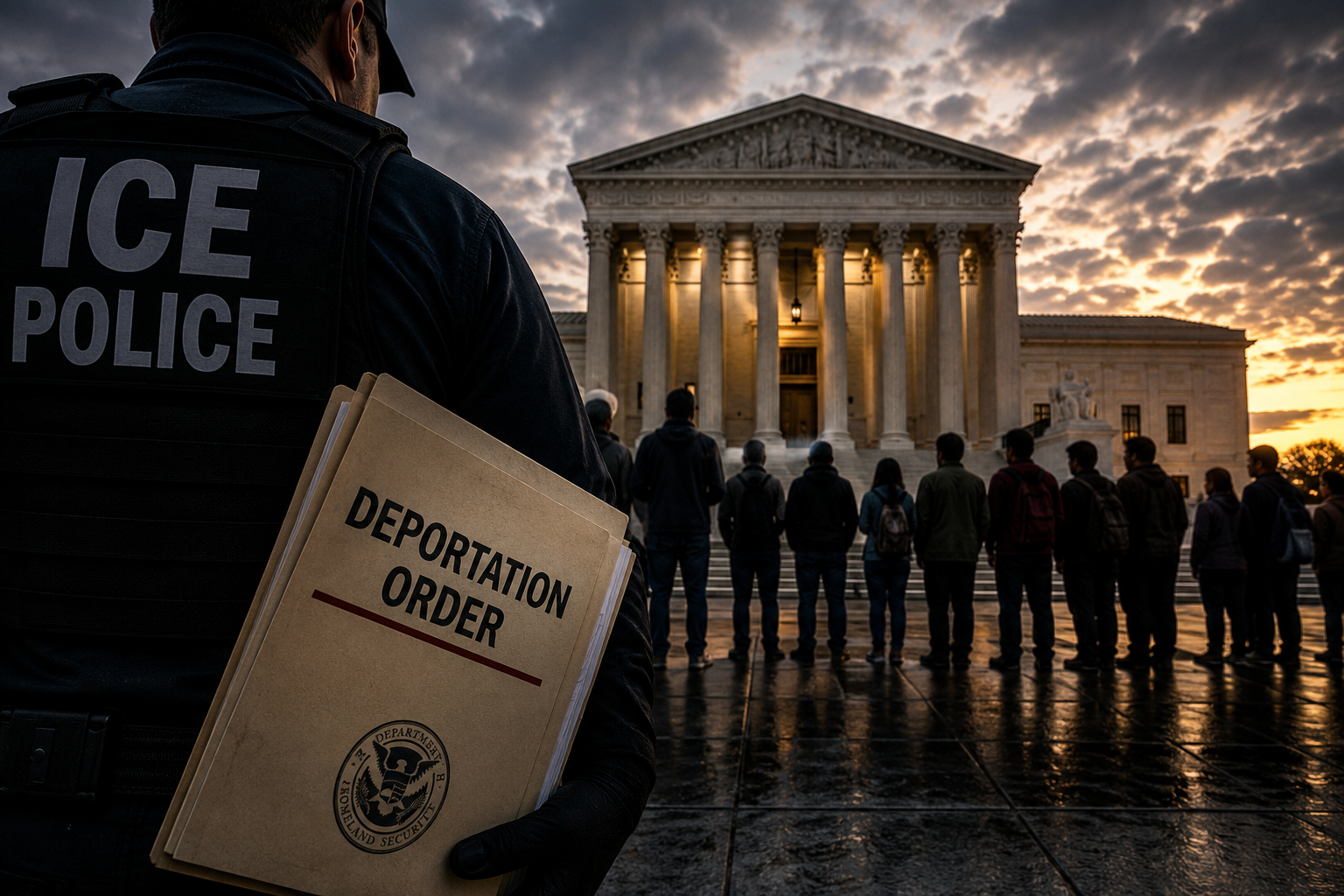
Trump’s Supreme Court Win Puts Temporary Protected Status Back On The Clock
The Supreme Court Just Handed Trump A Major Immigration Victory Over Protected Status
What Has Actually ChangedThe United States Supreme Court has allowed the Trump administration to end Temporary Protected Status for Haitians and Syrians, removing a legal shield that had protected many from deportation while their cases moved through the courts. The case, formally tied to Haiti and Syria TPS designations, was argued in April 2026 and decided on June 25, 2026.
The immediate issue was not whether Haiti or Syria are pleasant, stable, or easy places to return to. The legal question was whether courts could keep blocking the administration’s termination decisions while litigation continued. The Supreme Court’s answer gives the administration room to proceed.
That is why this matters far beyond one immigration category. Temporary Protected Status was created for emergency protection when people cannot safely return home because of war, disaster, or extraordinary temporary conditions. In practice, some designations have lasted for years, even decades, creating the political contradiction at the heart of the case.
Trump’s Core Argument Has Always Been Simple
The Trump position on immigration has never really been hard to understand. A country either controls who stays, or it gradually loses the ability to decide what its own laws mean. Temporary protection may be compassionate at the point of crisis, but if temporary status becomes a rolling substitute for permanent immigration reform, the system stops being honest.
That is the strongest pro-Trump reading of this ruling. It does not require pretending the human consequences are easy. It simply says the executive branch must be able to end a temporary programme when it decides the legal conditions no longer justify it, rather than being trapped indefinitely by litigation and political pressure.
The administration argued that the statute restricts judicial review of TPS designation and termination decisions. During oral argument, the government’s position was that the relevant provision “means what it says” and bars review of the Secretary’s decision to terminate TPS designations for Syria and Haiti.
The Real Fight Is Over Who Governs Immigration
This case is not only about Haitians and Syrians. It is about whether immigration policy is set by elected government, administrative judgment, or litigation that freezes policy in place. That is the deeper power struggle beneath the legal language.
Supporters of the ruling will see it as a necessary correction. They will argue that courts should not turn temporary humanitarian categories into semi-permanent settlement routes simply because the consequences of ending them are politically difficult. In that view, the Supreme Court has restored the government’s ability to govern.
Critics will see something much darker. They will argue that the ruling exposes vulnerable people to deportation into danger, breaks families, and gives too much deference to an administration determined to shrink humanitarian protections. That objection is serious, but it does not erase the core constitutional problem: policy cannot be endlessly suspended because every enforcement decision creates hardship.
The Human Stakes Are Real
The uncomfortable truth is that both things can be true at once. Trump can be right that temporary protection cannot become permanent by inertia, while opponents can be right that many people affected have built lives, families, jobs, and communities in America.
The Supreme Court material shows Haiti received TPS after the 2010 earthquake, while Syria received TPS in 2012 because of extraordinary and temporary conditions linked to the Assad regime. The same record shows legal challenges were brought by Haitian and Syrian TPS holders after the government moved to terminate those designations.
That is what makes the politics so explosive. These are not abstract entries in a spreadsheet. They are people who may have lived legally in America for years, worked legally, paid taxes, raised children, and trusted that repeated extensions meant some level of stability. But emotional reality does not automatically answer the legal question.
Why This Is A Major Trump Victory
For Trump, the ruling strengthens one of the central promises of his political project: that immigration law will be enforced rather than endlessly softened by exceptions. It also sends a signal that the courts may not be willing to preserve every inherited protection simply because dismantling it creates immediate controversy.
That is politically powerful because Trump’s immigration message depends on clarity. His supporters do not want a system where emergency categories quietly become open-ended routes to residence. They want limits, deadlines, enforcement, and consequences. This ruling lands directly inside that demand.
The decision also gives the administration leverage across the wider TPS landscape. Previous reporting and court material indicate that the administration has pursued terminations or restrictions involving multiple country designations, meaning Haiti and Syria are part of a broader immigration reset rather than an isolated legal fight.
The Opposition’s Weakness Is Political Honesty
The weakness in the anti-Trump argument is not compassion. It is honesty about the end point. If people protected by TPS should be allowed to stay permanently because they have built lives in America, then Congress should say so directly and create a lawful route.
Instead, American politics has often used temporary programmes as a pressure valve. Politicians avoid hard votes. Administrations extend designations. Courts are asked to slow reversals. Communities become dependent on a legal status that was never designed to carry the moral weight being placed on it.
Trump’s argument cuts through that evasion. If America wants a generous permanent settlement policy, it should legislate one. If it wants emergency temporary protection, then temporary must retain meaning. The Supreme Court ruling does not make that choice pleasant, but it does make avoidance harder.
What Happens Next
The ruling does not mean every affected person disappears overnight. Immigration enforcement, individual cases, legal claims, work authorisation issues, and future administrative decisions may still create a complicated transition. The confirmed change is that the administration has gained the legal room it wanted to move forward with ending these TPS protections while litigation is no longer allowed to freeze the policy in the same way.
The political consequences may move faster than the legal machinery. Cities, employers, migrant families, immigration lawyers, and state officials will now have to plan for a reality many assumed would be delayed again. That will create pressure on Congress, pressure on the administration, and pressure on the courts as related cases continue.
But the broader message is already clear. Trump has forced America back to a question its political class has avoided for years: is temporary protection a temporary emergency tool, or has it become a shadow immigration system no one wants to admit exists?
The Bigger Pattern Behind The Ruling
This decision fits a larger Trump-era pattern: turning bureaucratic drift into direct confrontation. Whether people admire or despise that style, it is effective because it exposes systems that rely on ambiguity. Immigration is full of those systems.
TPS was built for crisis. Over time, crisis policy became settlement reality for many people. That may be understandable, even humane, but it is also unstable if the law still describes the status as temporary. The Trump administration has now won an important ruling because it challenged the gap between the label and the reality.
That is why the ruling matters. It is not just about Haiti, Syria, deportation protection, or one Supreme Court case. It is about whether democratic government can still put an end date on an emergency measure once powerful institutions, communities, and moral arguments have grown around it. Trump’s victory is that the Court has answered, at least for now, that temporary still has to mean something.
