Trump Rejected Iran’s Deal. Now the Strait of Hormuz Is the World’s Pressure Point
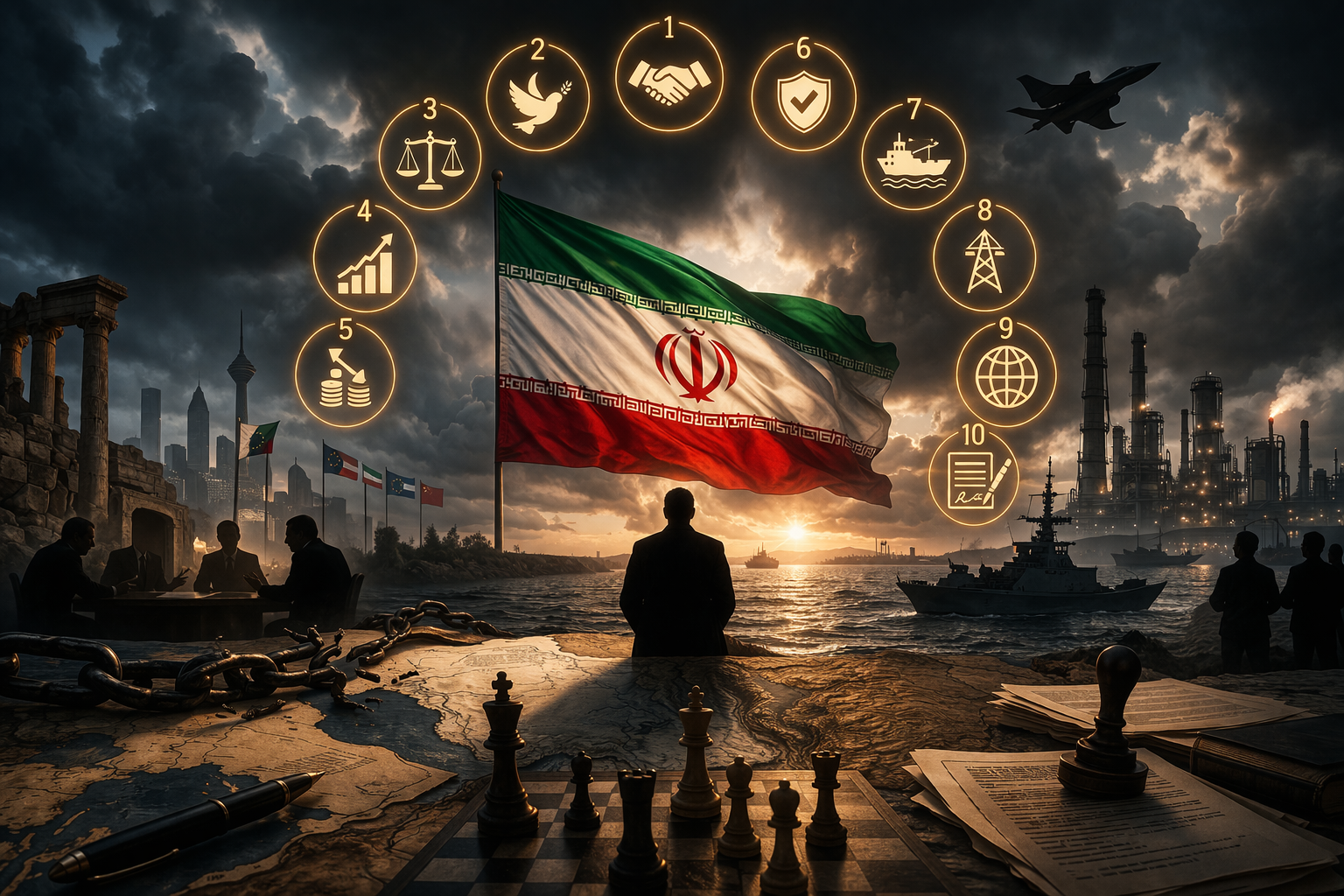
Trump’s real options after rejecting Iran’s 10-point plan
Iran’s 10-Point Plan Raises the Price of Peace and Puts Trump in a Corner
Iran has rejected a temporary ceasefire and instead pushed a broader 10-point framework that aims to trade any real de-escalation for something much larger: a permanent end to the war, protection against renewed attacks, sanctions relief, reconstruction, and a new arrangement around the Strait of Hormuz. That matters because the issue is no longer just about stopping missiles for a few weeks. It is about who gets to define the political terms of the war’s end.
The immediate search answer is this: Iran appears to be trying to convert its leverage over Hormuz into a war-termination deal, while Trump is trying to force a quicker, narrower outcome centered on reopening the waterway and preserving pressure on Tehran. Those two positions are not close.
That is why the story is bigger than a rejected truce. A temporary ceasefire would mostly relieve immediate pressure. Iran’s counterdemands, by contrast, seek to lock in strategic gains and reshape the postwar balance. Trump has already called Iran’s proposal “not good enough” and said his deadline is final, which sharply raises the odds of more coercion before any settlement.
The story turns on whether Iran can use the Strait of Hormuz as leverage for a permanent settlement before Trump decides it is cheaper to escalate than to bargain.
Key Points
Iran has formally rejected a temporary ceasefire proposal and says it wants a permanent end to the war instead.
The clauses publicly and consistently reported include an end to regional hostilities, safe-passage arrangements for the Strait of Hormuz, sanctions relief, and reconstruction.
Trump has rejected the proposal as insufficient, maintained a hard deadline tied to Hormuz, and also threatened more severe strikes.
Oil markets remain highly sensitive because Hormuz normally carries about a fifth of global oil and natural gas supply, making the strait both an economic choke point and Iran’s main bargaining chip.
The most important question now is not whether diplomacy exists, but whether either side is willing to narrow its demands fast enough to avoid a fresh round of escalation.
Some parts of the 10-point framework are not clearly explained in public reports, so the list below distinguishes between what is clearly reported and what seems to be related negotiating ideas rather than confirmed details.
What Iran Is Really Doing
Iran’s move makes sense if its leadership believes a temporary truce would help Washington and Israel more than it helps Tehran. A pause would reduce market panic, relieve diplomatic pressure, and potentially provide its opponents time to regroup. A permanent settlement, by contrast, would force the other side to pay for de-escalation with political and economic concessions.
That is why the reported clauses matter. Publicly verified reporting points to four central pillars: an end to regional conflict, a protocol for safe passage through Hormuz, sanctions relief, and reconstruction. Different reports also highlight requests for promises to prevent future attacks, compensation, and broader discussions about control over the strait and military pressure in the region. Reliable, open reporting has not fully published all ten clauses, but the overall direction remains clear.
In plain English, Iran is saying: no short pause, no free reopening of the world’s most important energy chokepoint, and no serious diplomacy unless the war ends on terms that change the strategic picture.
Ranking the 10 Points by Real Importance
Because the full verified text is not publicly available, the ranking below is based on consistently reported information and the demands that appear across overlapping coverage of Tehran’s negotiating position. That makes this a ranking of substance and leverage, not a claim about the exact order Iran wrote them in.
1. A permanent end to the war
This is the master demand. All other demands are contingent upon this. Iran does not want a breathing space. It wants a binding political shift that makes resumed attacks harder and more costly. If the demand stays non-negotiable, talks remain very hard.
2. Guarantees against renewed attacks
This provision is arguably the real heart of the package. Tehran says it will only accept a ceasefire if it is guaranteed no further attacks. That is not a rhetorical flourish. Earlier rounds of talks followed by strikes reflect deep distrust.
3. A protocol for safe passage through the Strait of Hormuz
This route is the pressure valve for the global economy. Iran is signaling that Hormuz can reopen, but only inside a larger political deal. That makes the strait less a standalone maritime question than the bargaining instrument at the center of the entire crisis.
4. Sanctions relief
This demand is one of the few demands that translates directly into long-term economic survival. Iran can endure pain, but it wants the war’s end to produce something durable. Sanctions relief is where battlefield endurance turns into material reward.
5. Reconstruction support
Reconstruction matters because wars do not only end on maps. They end in power grids, ports, industrial sites, roads, refineries, and household survival. If the conflict is inside the framework, Iran is seeking not just a ceasefire dividend but a rebuilding dividend.
6. End to conflicts across the region
The objective is broader than the bilateral fight. It suggests Iran wants any settlement to cover regional spillovers and allied theaters, not just direct U.S.-Iran exchanges. That widens the deal and makes it harder to close quickly.
7. Compensation for war damage
Compensation has appeared in overlapping reporting on Iran’s demands. Even if it proves more negotiating posture than a realistic red line, it signals Tehran wants acknowledgement that the war imposed costs that must be paid for politically or financially.
8. Sovereignty language over Hormuz and Gulf arrangements
Iran appears determined that Hormuz will not simply return to prewar normality on U.S. terms. Reported Iranian language about a “new order” in the Gulf and possible tolling plans points to an attempt to redefine control, not just reopen traffic.
9. Rejection of deadlines and ultimatum diplomacy
The approach may sound procedural, but it matters. Tehran is resisting the idea that it negotiates under Trump’s clock. In power terms, accepting the deadline would mean conceding that Washington sets the tempo. Iran is refusing that.
10. Regional military rollback themes, including pressure on U.S. bases
This appears in overlapping reporting on Tehran’s earlier demands rather than in all verified summaries of the 10-point package. Even so, it shows the wider ambition: reduce future coercive capacity around Iran, not merely stop the current round of attacks.
The Ramifications Are Bigger Than the Headline
The first ramification is obvious: diplomacy just got harder. Iran has raised the price of any agreement. Trump wants speed, deterrence, and a reopened strait. Iran wants permanence, guarantees, and economic relief. Those are different strategic objectives, not just different draft language.
The second ramification is market risk. Hormuz is not a symbolic waterway. It is a core artery for global energy flows. Even modest ambiguity around its status pushes up oil risk premiums, complicates inflation forecasts, and widens the conflict’s economic footprint far beyond the Gulf. On Monday afternoon, Brent was trading around $109.60, as reported by Reuters, highlighting the extent of geopolitical pricing already embedded.
The third ramification is military. Trump has threatened severe action if the strait is not reopened, while Iran and its allies have shown they can still impose costs across the region. That means every failed diplomatic round now carries a much higher chance of immediate punishment strikes and retaliatory escalation.
The fourth ramification is legal and political. Threats to target power plants and bridges have drawn warnings from experts and Iranian officials because civilian infrastructure raises obvious international-law questions. That does not stop escalation, but it does shape how allies, markets, and neutral states read the legitimacy of the next move.
What Most Coverage Misses
Most coverage treats the 10-point framework as if it were mainly a peace proposal. It is not. It is also a pricing document.
Iran is effectively placing a value on de-escalation. Reopening Hormuz, reducing regional risk, and cooling oil markets are not being offered for free. They are being packaged with sanctions relief, reconstruction, and security guarantees because Tehran believes it still holds enough leverage to demand payment.
That changes the interpretation of Trump’s dilemma. If he accepts too much, he looks as though coercion failed. If he accepts too little, he may get neither a reopened strait nor a stable ceasefire. The result is a classic bargaining trap: each side fears that even a tactical compromise will look like strategic weakness.
How Trump Is Likely to Respond
Trump’s immediate public response has already been clear: he sees the Iranian proposal as movement but not enough movement. He has said the deadline is final and has continued to threaten heavier strikes if Hormuz is not reopened. That makes the baseline expectation a coercive response, at least rhetorically and possibly operationally.
The most likely near-term Trump response is a three-track approach.
First, harder public pressure. Trump is likely to keep framing Iran’s proposal as proof that pressure works while insisting that Tehran still has not met core U.S. demands. That preserves his image of dominance and keeps bargaining leverage alive.
Second, a demand to separate Hormuz from the rest of the package. Washington’s preferred outcome is likely a narrower deal: reopen the strait now, talk about the rest later. Iran’s whole structure is designed to prevent exactly that.
Third, selective escalation if Iran refuses. That does not necessarily mean immediate maximal war, but it could mean more strikes on infrastructure tied to economic pressure or coercive signaling. Trump’s own language suggests he wants Iran to believe the cost of holding Hormuz shut will keep rising.
The less likely but still possible path is tactical diplomacy dressed up as victory. Trump could accept an interim mechanism on Hormuz if he can present it as a concession extracted under threat, not a bargain struck under duress. That would let him claim strength while postponing the hardest political tradeoffs.
The hardest thing for Trump to accept will be any package that looks like he traded sanctions relief and long-term guarantees simply to get the global oil artery moving again. Politically, that risks looking like Tehran found America’s pain point and priced it. Strategically, however, that may be exactly what Iran is trying to prove.
What Happens Next
The next phase will revolve around three questions.
Can mediators carve out a Hormuz mechanism without forcing Iran to abandon its broader demands?
Can Trump keep escalating rhetorically without locking himself into strikes that make a larger settlement impossible?
And can either side claim a visible win quickly enough to justify compromise at home?
That is the real fork in the road. If Hormuz is treated as a technical shipping issue, talks may still collapse because the underlying war terms remain unresolved. If it is treated as the centerpiece of a larger bargain, diplomacy has a path, but only at a much higher political and economic price. The broader significance is simple: Iran is trying to turn control of a chokepoint into control of the peace terms, and Trump now has to decide whether to buy that logic, break it, or test it by force.
