Trump’s Ceasefire Is Starting to Fracture — Oil Chokepoints, Contradictions, and the Risk of Collapse
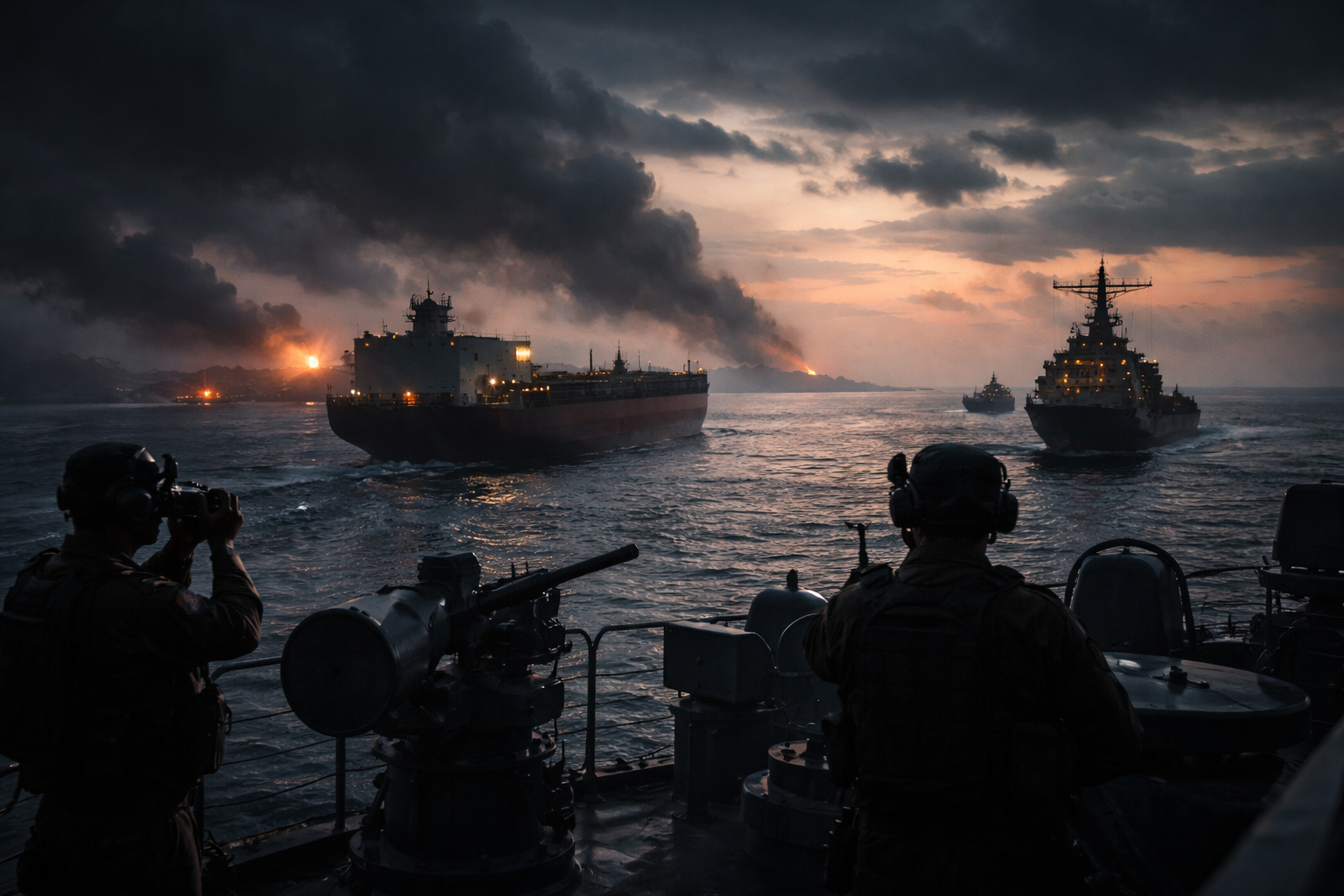
The Ceasefire Was the Easy Part — Holding It Is Where It Breaks
Trump Turns Up Pressure on Iran — But the Ceasefire Is Already Unravelling
The fragile Iran truce is being stress-tested in real time—and the cracks are showing fastest where the world can least afford them: energy, credibility, and control.
The Ceasefire Exists—But Not In The Way It Was Sold
The ceasefire between the United States and Iran was meant to pause escalation.
Instead, it has exposed how little both sides actually agree on what “pause” means.
Within days of the deal, President Donald Trump has sharply escalated his rhetoric, accusing Iran of mishandling oil flows and warning of far more severe consequences if the “real agreement” is not honored.
At the center of it all is one narrow stretch of water: the Strait of Hormuz.
Roughly a fifth of the world’s oil passes through it. And right now, it is not functioning normally.
Hundreds of ships are stalled. Access is restricted. Movement is controlled.
That single fact is enough to tell you the ceasefire is not holding in the way it needs to.
The Oil Reality Undermines The Political Narrative
On paper, the deal hinged on a simple exchange:
Iran would reopen the Strait of Hormuz
The United States would pause military escalation
But in practice, Iran has not fully reopened the route. Instead, it has:
Limited ship movement
Required coordination with its military
Imposed fees and controls on transit
Trump’s response has been direct and aggressive—warning Iran to stop interfering with global oil flows and signaling that military pressure remains on standby.
This is the key contradiction:
The ceasefire requires normal oil flow.
Normal oil flow has not resumed.
Which means the core condition of the ceasefire is already in dispute.
This Is Not Just A Military Truce—It Is A Control Battle
Most people see the situation as a ceasefire between two sides trying to avoid war.
That is not quite right.
This is a struggle over control—specifically:
Control of energy supply
Control of global pricing power
Control of strategic chokepoints
Iran’s leverage is geographic.
The U.S. leverage is military.
And the Strait of Hormuz sits exactly where those two forces collide.
By restricting access, Iran is not just negotiating.
It is demonstrating power.
What Media Misses
The story is not that the ceasefire is “fragile.”
The story is that both sides are already testing their limits—deliberately.
Trump’s escalation of rhetoric is not a breakdown of diplomacy.
It is part of the negotiation.
And Iran’s control of oil flows is not a violation in the traditional sense.
It is leverage being exercised in real time.
This is not a failed ceasefire.
It is a live bargaining phase disguised as one.
The Lebanon Factor Is Quietly Making Things Worse
While the oil dispute dominates headlines, another fault line is widening.
Israel has continued strikes in Lebanon—with deadly consequences—even though Iran and others claim Lebanon is part of the ceasefire framework.
The result:
Different parties disagree on what the ceasefire covers
Iran accuses violations
The U.S. and Israel reject those interpretations
This issue matters because it introduces a second instability into an already fragile system.
Even if the U.S. and Iran stabilize Hormuz, the wider regional conflict could still collapse the deal.
The Credibility Problem Is Getting Worse
There is a deeper issue here—one that matters more than any single tanker or threat.
Credibility.
Right now:
The U.S. says the ceasefire is holding
Iran says conditions are being violated
Data shows oil flow is still restricted
Military postures remain unchanged
Those things cannot all be true at the same time.
And when a ceasefire depends on mutual trust—or at least mutual predictability— that gap becomes dangerous.
Because it means neither side fully believes the other.
What Happens Next
Three paths are emerging.
1. Controlled Stabilisation
Iran gradually restores fuller oil flow.
Trump claims a win.
Negotiations deepen.
This is the most stable outcome—but requires concessions on both sides.
2. Managed Tension
Limited oil flow continues.
Rhetoric escalates.
Military presence stays high.
This is where things are now: unstable, but not collapsing.
3. Rapid Breakdown
A single incident—a blocked tanker, a strike, a miscalculation—triggers escalation.
Given the current contradictions, this risk is not theoretical.
It is built into the system.
The Real Meaning Of This Moment
The ceasefire was never the end of the conflict.
It was a transition point.
From open warfare
To strategic pressure
From missiles
To markets
From destruction
To leverage
The danger is that this phase is harder to control.
Because it operates in ambiguity.
Because it depends on interpretation.
Because it unfolds in real time.
And because when oil, power, and credibility intersect—small moves can have global consequences.
The ceasefire has not failed.
But it is no longer doing what people think it is doing.
And that is where the real risk begins.
