Trump’s Kharg Island Threat Shows Iran Just Ran Out Of Room
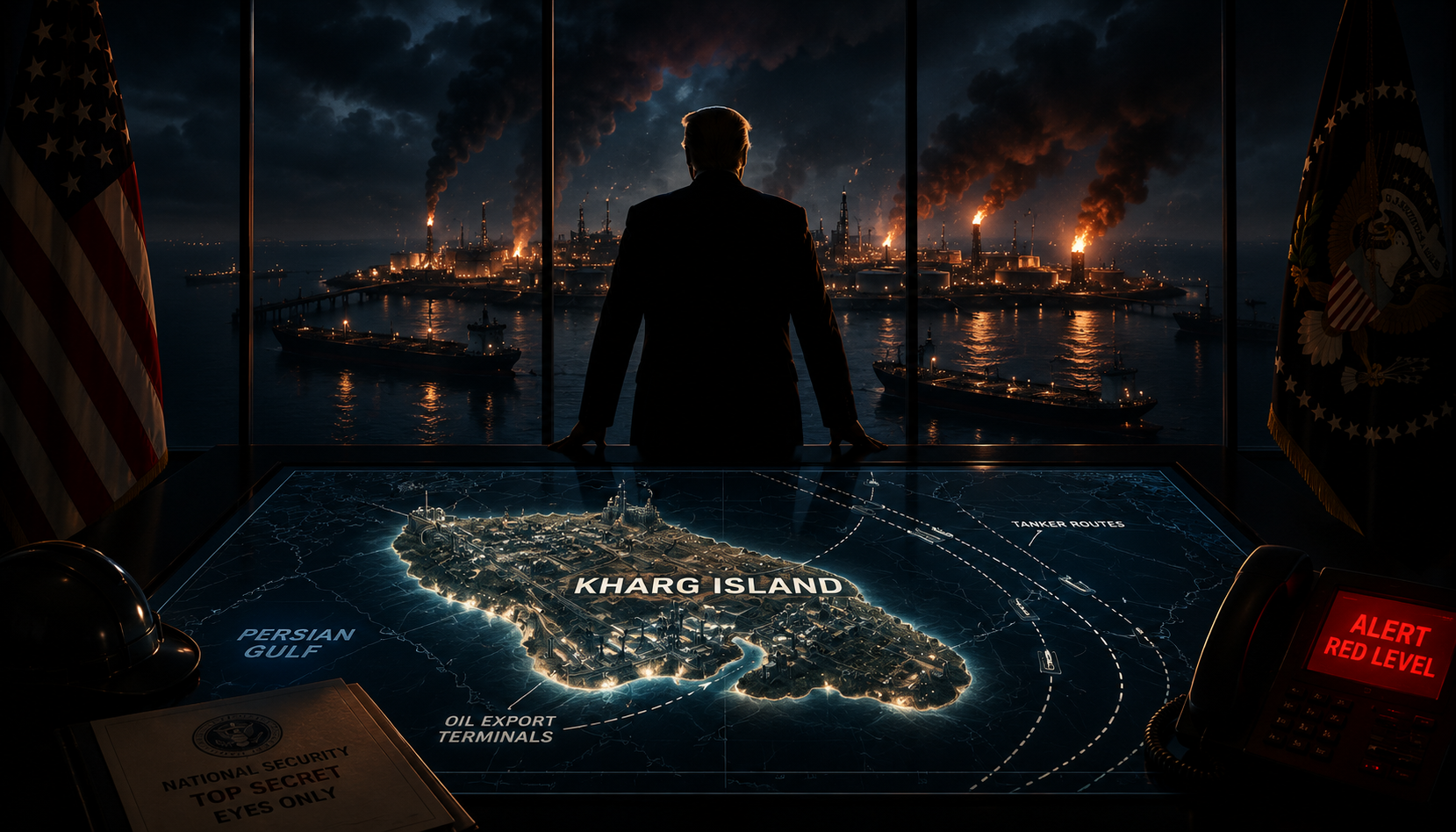
Trump’s Patience With Iran Is Over — And Kharg Island Proves It
Trump Stops Warning Iran And Starts Targeting Its Lifeline
Donald Trump’s threat to hit Iranian infrastructure and put Kharg Island in America’s sights marks a brutal turn in the collapsing US-Iran ceasefire. This is no longer only about punishing missile launches, drone attacks or harassment in the Strait of Hormuz. It is about whether Washington is now prepared to threaten the economic machinery that keeps the Iranian regime alive.
The pro-Trump reading is simple: Iran tested the ceasefire, attacked commercial shipping, struck at American-linked sites and expected Washington to stay inside the limits of diplomatic patience. Trump’s answer is to move the pressure point from words to leverage. Kharg Island matters because Tehran can absorb speeches, sanctions and symbolic strikes, but it cannot easily absorb the credible threat of losing the hub through which most of its crude exports move.
Why Kharg Island Matters
Kharg Island is small, but strategically enormous. Sitting in the northern Persian Gulf, it functions as Iran’s primary oil export terminal, connecting pipelines, storage tanks and offshore loading infrastructure to the wider global energy market. For Tehran, it is not just an island; it is a cash register, pressure valve and geopolitical shield.
That is why Trump’s threat is so significant. If America threatens Kharg, it is not merely threatening another military site. It is telling Iran that the cost of escalation can move directly onto the regime’s revenue base.
This is the language authoritarian states understand. Iran has spent years using geography, proxies, maritime pressure and energy anxiety as tools against its opponents. Trump is now signalling that the United States can play the same pressure game at a higher level.
The point is not necessarily that America must occupy the island or destroy the terminal. The point is that Iran must believe the option is real enough to alter its behaviour. In coercive diplomacy, credibility is often more powerful before the strike than after it.
Is This A Huge Escalation?
Yes, this is a huge escalation in strategic signalling. The earlier stage of the conflict was about degrading military capacity: air defences, radars, Revolutionary Guard boats, missile systems and launch sites. A threat against civilian infrastructure or oil-export infrastructure moves the conversation toward economic paralysis, national disruption and regime survival.
That does not mean every piece of civilian infrastructure becomes a lawful or sensible target. International humanitarian law still protects civilian objects and requires distinction, proportionality and precaution. Dual-use infrastructure may be legally complex if it makes an effective contribution to military action, but the political and humanitarian consequences of targeting it can be severe.
That is what makes Trump’s warning so powerful and so dangerous. It raises the ceiling of American pressure without automatically committing the US to the most extreme version of it. Iran now has to calculate whether further escalation risks not just another wave of military strikes, but a broader campaign against assets that sustain the state.
From a pro-Trump standpoint, that is not recklessness for its own sake. It is a deliberate effort to restore deterrence after Iran treated the ceasefire as a shield. If Tehran can attack ships, hit Gulf bases and still preserve its export lifeline, then the ceasefire becomes a trap for America, not a restraint on Iran.
What Infrastructure Could Be Targeted?
The most obvious pressure point is Kharg Island’s oil-export system. That includes export terminals, loading facilities, storage infrastructure, pipelines and supporting military installations around the island. A limited American approach would focus on assets tied to military protection, command-and-control, maritime operations or export capacity used to fund the regime’s war effort.
Other potential targets could include coastal radar systems, missile batteries, drone sites, Revolutionary Guard naval facilities, port infrastructure used for military activity and communication nodes tied to command networks. These are easier to frame as military or dual-use targets than purely civilian systems such as water plants, hospitals or residential power grids.
The harder question is civilian infrastructure. Bridges, power systems, telecommunications, transport corridors and energy facilities can become legally and strategically contentious if they support military operations. But targeting them carries a higher risk of civilian harm, global backlash and propaganda victory for Tehran.
That is why the smartest version of Trump’s strategy would keep the threat broad but the target list disciplined. The aim should be to make Iran fear economic and military consequences without giving Tehran an easy narrative that America is simply punishing civilians.
A serious pressure campaign does not need to hit everything. It needs to hit what the regime values, what the military uses and what changes Tehran’s calculation.
Iran’s Likely Response
Iran’s likely response would be asymmetric, deniable where possible and designed to raise costs without inviting total destruction. Tehran could use drones, missiles, fast boats, mines, cyber activity, proxy attacks or harassment of shipping to show that American pressure will not go unanswered.
The most likely immediate targets would be US-linked military sites in the Gulf, especially in countries that host American forces. Bahrain and Kuwait are already exposed in this crisis because they sit inside the retaliation map. Iran may also increase pressure around the Strait of Hormuz, where even limited disruption can trigger outsized economic consequences.
Iran could also lean on proxies and aligned groups across the region. That gives Tehran reach without always taking direct responsibility. It can raise pressure on US partners, Israel-linked interests, Gulf shipping and regional infrastructure while keeping enough ambiguity to slow a full American response.
But Iran faces a hard limit. If it pushes too far, it risks giving Trump the political and military justification for exactly the wider campaign it wants to avoid. A deadly strike on American personnel, a serious tanker disaster, a major attack on Gulf energy infrastructure or a successful attempt to close Hormuz could produce a much harder US response.
That is the trap Trump is trying to build. Iran wants escalation it can control. Trump is warning that the next round may not be controlled on Tehran’s terms.
Is Trump Losing His Patience?
Trump is clearly losing patience with Iran’s pattern of escalation under cover of negotiation. But that does not mean he is simply acting emotionally. His public anger is part of the pressure mechanism.
Trump has long used public threats as a form of negotiation. The method is loud, uncomfortable and often criticised by diplomats who prefer controlled language. Yet the strategic logic is visible: make the adversary believe that delay, defiance and tactical escalation will produce a worse outcome than compromise.
In this case, the argument for Trump is stronger than usual. Iran entered or accepted a ceasefire framework, then the region moved back toward shipping attacks, Gulf strikes and retaliation. If America allows that cycle to continue without raising the cost, Tehran learns that agreements can be used to buy time rather than change behaviour.
Trump’s pressure on Kharg Island is therefore a message to Iran’s leadership: the next violation may not be answered only at the point of attack. It may be answered at the point of dependency.
That is the essence of deterrence. You do not merely strike the weapon. You threaten the system that makes repeated aggression affordable.
The Strategic Gamble
The risk is that this approach can work too well or fail too fast. If Iran believes Trump is serious, it may return to talks under pressure. If Iran believes backing down would look like surrender, it may escalate to prove it cannot be intimidated.
That is why the next phase matters. Trump needs enough force to make Iran recalculate, enough restraint to avoid unnecessary civilian harm, and enough diplomatic space to let Tehran step back without needing a spectacular final act of defiance.
The strongest pro-Trump case is that weakness has already been tried. A ceasefire that allows Iran to resume pressure at sea is not peace. It is a pause that benefits the side willing to break it.
Kharg Island has become the symbol of that shift. Trump is no longer just asking Iran to stop firing. He is warning that if Tehran keeps turning the Gulf into a battlefield, the regime’s oil lifeline may become the battlefield too.
