

Turkey’s NATO Summit Lockdown Just Exposed The Security Fear Beneath The Alliance
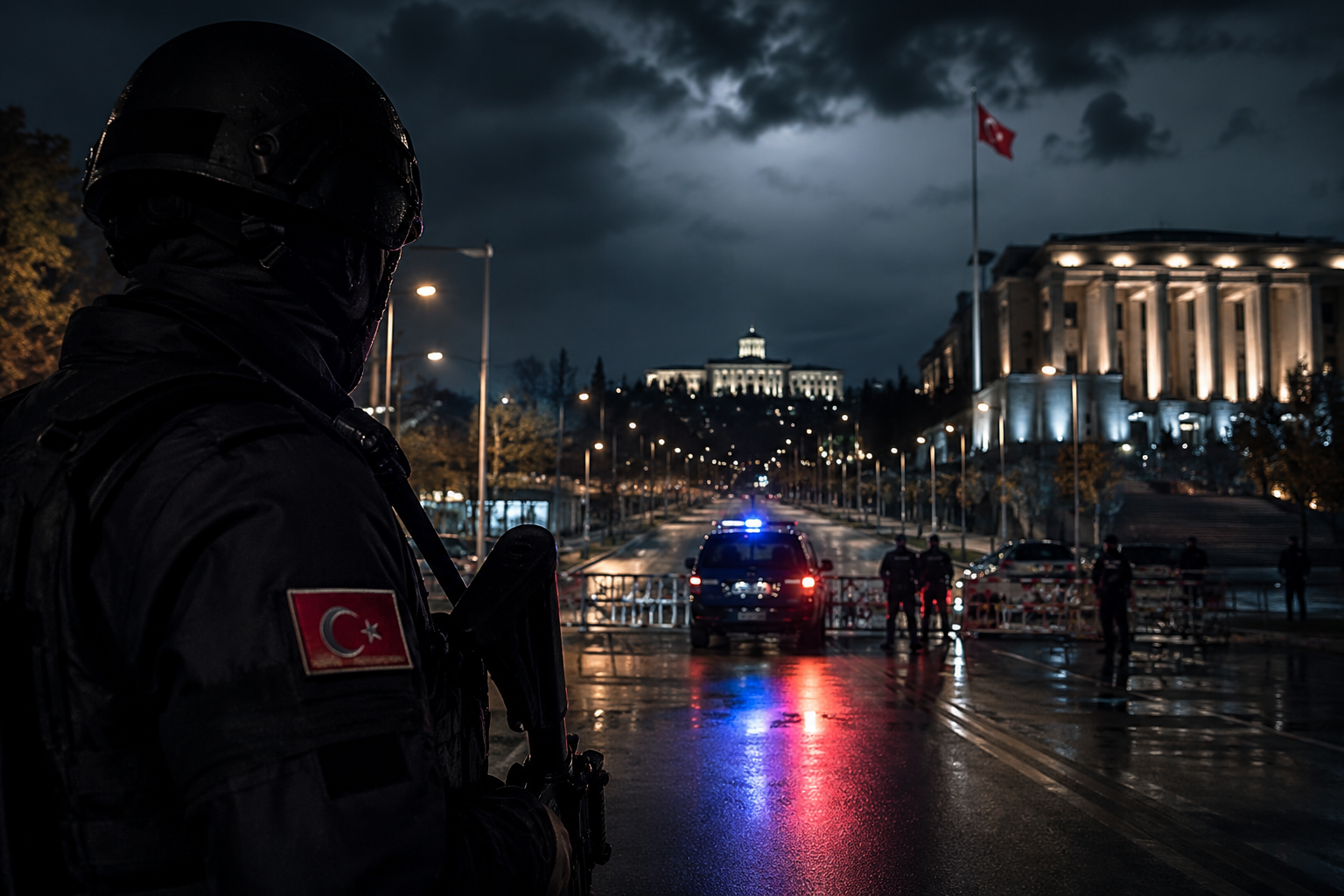
Turkey’s 209 Arrests Reveal The Hidden Pressure Behind NATO’s Ankara Summit
Turkey’s NATO Summit Lockdown Just Exposed The Security Fear Beneath The Alliance
Ankara Moves Before The Alliance ArrivesTurkey has detained 209 people in anti-terror operations in Ankara ahead of July’s NATO summit, after prosecutors issued detention orders for 241 suspects. The raids targeted individuals suspected of links to extremist organisations, including Islamic State and outlawed far-left groups, with operations still continuing for those not yet detained.
That is the confirmed surface of the story. The deeper meaning is sharper. Before the leaders of the world’s most powerful military alliance have even arrived, the host capital is already being forced to demonstrate that it can control risk, pressure, dissent, symbolism, and security theatre all at once.
The NATO summit is scheduled for July 7–8 in Ankara, with leaders from the 32-member alliance expected to attend. President Donald Trump is also expected to join other NATO leaders, making the gathering not just a diplomatic meeting but a high-value security event in one of the most strategically sensitive countries inside the alliance.
That matters because Turkey is not simply hosting another conference. It is hosting a summit at the intersection of terrorism fears, regional wars, alliance strain, Russian pressure, Middle Eastern instability, and Trump-era NATO bargaining. The raids are therefore more than a domestic policing operation. They are part of the pre-summit message: Ankara intends to own the security environment before anyone else can define it.
The Numbers Tell Their Own Story
The Ankara chief prosecutor’s office said detention orders were issued for 241 suspects, with 209 taken into custody during police and gendarmerie raids. Among those detained were 56 alleged Islamic State militants and 35 alleged members of the Revolutionary People’s Liberation Party/Front, a far-left group with a history of armed attacks and assassinations in Turkey.
Other reported figures suggest a broader mix of suspects linked to several far-left organisations designated as terrorist groups by Ankara, with dozens still being sought after the initial operation. The immediate factual point is clear: this was not framed as a small, symbolic sweep. It was presented as a major security operation in the capital days before NATO’s most visible political gathering of the year.
The timing is impossible to ignore. Ankara had already imposed restrictions on public gatherings before the summit, while Turkey is preparing strict security measures including demonstration bans, road restrictions around airport routes, and sealed-off areas near summit venues and hotels hosting delegations.
That is the real shape of the moment. Turkey is not only trying to prevent a possible attack. It is also trying to prevent the summit from being visually hijacked by protest, disruption, disorder, or any incident that could embarrass the host country in front of NATO leaders.
The Hidden Fear Is Not Just Terrorism
The obvious fear is extremist violence. Turkey has experienced deadly Islamic State attacks in the past, including the 2017 New Year’s Eve attack on an Istanbul nightclub that killed 39 people. The country has also carried out repeated operations against suspected Islamic State networks, including a nationwide sweep last month in which 324 suspected IS-linked people were detained.
But the hidden fear is wider than one organisation or one potential plot. Major summits now operate like pressure chambers. Every road closure, protest ban, detention order, police raid, convoy route, and security cordon sends a message about the state’s ability to control the symbolic space around power.
That symbolic space matters enormously. A NATO summit is not just a room full of officials. It is a stage on which allies display unity, enemies test nerves, protesters seek visibility, and host governments project competence. If anything breaks through that frame, the story can change instantly from diplomacy to humiliation.
Turkey knows this better than most. Its geography makes it one of NATO’s most important and complicated members: a Black Sea actor, a Middle Eastern power, a bridge between Russia and the West, and a country that has maintained working relationships with both Kyiv and Moscow since Russia’s full-scale invasion of Ukraine.
Turkey Is Hosting More Than A Meeting
The Ankara summit comes at a moment when NATO is already under strategic strain. Turkey has said allies should use the July summit to reset ties with President Trump and prepare for the possibility of reduced US involvement in the alliance. That turns Ankara into a stage for a much bigger argument: how much America will continue to carry, how much Europe must pay, and what role Turkey wants inside the next version of NATO.
That is why the security operation lands with extra force. Turkey is not simply protecting visiting leaders. It is also protecting its own diplomatic moment. Hosting a summit gives Ankara visibility, leverage, and prestige. It allows President Recep Tayyip Erdogan’s government to show that Turkey is indispensable to NATO’s future security architecture.
The risk is that visibility cuts both ways. The more important the summit becomes, the more valuable disruption becomes to anyone who wants attention, leverage, or symbolic impact. A successful summit strengthens Turkey’s image as a central alliance power. A security failure would do the opposite.
That is the brutal logic behind the crackdown. In the modern summit economy, control is part of diplomacy. The host must control not only physical threats but also optics, movement, protest space, and the perception that the state is ahead of events rather than reacting to them.
The Protest Question Sits Under The Security Question
Ankara’s restrictions on public gatherings add another layer to the story. Security measures ahead of a high-risk international summit are not unusual. But in Turkey, where the state already takes an aggressive approach to anti-terror enforcement and public order, the line between legitimate summit protection and political suppression is always watched closely.
Opposition voices have argued that the raids fit a broader pattern of pressure on civic freedoms and political activity. That claim cannot be treated as the same thing as the confirmed security allegations against specific suspects. But it does highlight the central tension in this story: the same security architecture that protects leaders can also shrink the public space around them.
That tension is exactly why these raids matter beyond the arrest count. NATO presents itself as an alliance built not only on military power but also on democratic values. When the alliance meets under heavy restrictions, demonstration bans, sealed zones, and mass detentions, the optics become more complicated.
The question is not whether Turkey has real security threats. It clearly does. The question is how much coercive state power becomes normal around international diplomacy, and how easily the language of counterterrorism can merge with the politics of control.
NATO’s Public Image Depends On The Host’s Control
For NATO, the worst-case scenario is not only an attack. It is the image of vulnerability. A summit built around deterrence cannot afford to look exposed. A military alliance that claims to project stability cannot allow its own gathering to become a symbol of insecurity.
That is why Ankara’s moves carry alliance-level significance. They show that modern security is increasingly pre-emptive, visual, and psychological. The aim is not only to stop threats but to remove uncertainty from the frame before cameras arrive.
This links directly to the wider NATO pressure that Taylor Tailored has tracked in The NATO Alliance Suddenly Looks Far Less Stable Than Leaders Want To Admit and Trump’s NATO Warning Exposes The $980 Billion Truth Europe Can No Longer Hide. The alliance is no longer only managing external threats. It is managing internal bargaining, public credibility, and the uncomfortable reality that the cost of protection is becoming political again.
Turkey’s raids therefore sit inside a much larger pattern. NATO is entering a period where security, money, burden-sharing, borders, migration, Russia, the Middle East, and domestic politics are no longer separate files. They now collide inside the same diplomatic rooms.
The Summit Before The Summit Has Already Begun
The most important part of this story is not what happens on July 7. It is what is happening before July 7. Turkey is already shaping the summit environment, removing risks, narrowing protest space, and sending a visible message that Ankara will not allow the event to be defined by instability.
That may reassure NATO leaders. It may alarm civil liberties groups. It may be read by Turkey’s opponents as a sign of state strength, or by critics as a warning about the cost of security politics. The same facts can carry different meanings depending on who is looking.
But one thing is already clear. The Ankara summit will not begin when the motorcades arrive. It has begun in raids, warrants, restrictions, sealed roads, and the quiet calculation that every major gathering of power now attracts its own shadow battlefield.
Turkey’s 209 detentions are the visible part of that battlefield. The deeper story is a world in which even the most powerful alliance on earth now has to prepare for its own meetings as if the symbolism of being seen together has become a target in itself.
