Two Chinese Military Veterans Arrested as Alleged Spy Routes Reach US Bases
Two Chinese Veterans Accused of Targeting the US–South Korea Military Alliance
Fighter-Jet Signals and US Weapons Data at Centre of South Korea Spy Arrests
South Korea has arrested two Chinese military veterans in separate cases that allegedly reached deep into the daily operations of the US–South Korean alliance. One man is accused of intercepting fighter-jet communications from a hotel near a joint airfield; the other of obtaining military information through a South Korean worker at the headquarters of US Forces Korea.
The allegations expose two different vulnerabilities at once: signals travelling beyond a base perimeter and people with legitimate access being cultivated for information. Yet the most consequential question remains unanswered. Police have not established publicly that the suspects worked together or acted on orders from the Chinese state.
A Radio Rig Near a Joint Airfield
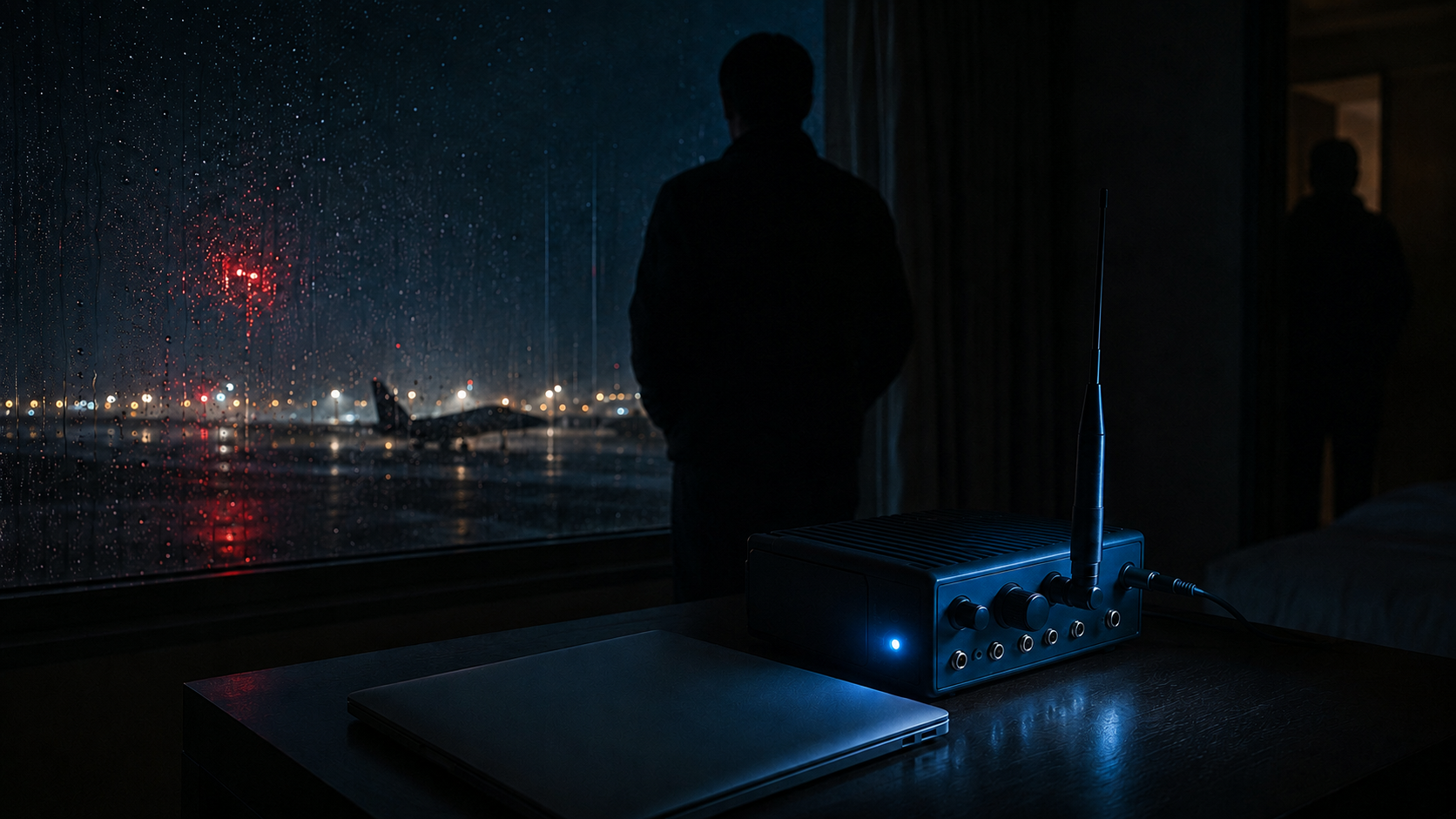
The first suspect, a Chinese national in his sixties, was arrested on 10 August on suspicion of benefiting the enemy and breaching communications-secrecy law. Police allege that he used a software-defined radio receiver, an antenna and a laptop from a hotel roughly one kilometre from Gunsan Airport, which hosts South Korean and US Air Force assets.
Investigators say he began making repeated visits to South Korea on tourist visas in January 2024, with some trips coinciding with allied air exercises. He is accused of intercepting exchanges between fighter pilots and air-traffic controllers several times, including through equipment installed at the hotel in April.
The man reportedly told investigators that monitoring aircraft communications was his hobby and that he wanted to hear military pilots as well as civilian traffic. That explanation does not settle the case, but neither does the equipment prove espionage by itself. Police are examining his laptop and other seized material to determine what he collected, whether it was retained or transmitted, and whether another person or organisation directed the activity.
An Alleged Human Source at Camp Humphreys
The second suspect is a 45-year-old ethnic Korean Chinese national who allegedly operated a military-surplus shop near Camp Humphreys from November 2021 until May 2026. Police accuse him of recruiting a South Korean woman employed at the base and providing money or other benefits in exchange for information.
The material allegedly included information connected to allied exercises, details about senior US military personnel and images linked to command changes. Investigators also suspect that the man observed weapons movements within the base and removed or traded military supplies. The woman reportedly said she believed the requests were connected to his business; police are investigating whether she should be treated as an accomplice.
The suspect has argued that he sought the information to help his military-surplus operation. As with the Gunsan case, investigators must now distinguish suspicious conduct from a provable intelligence operation. No court has convicted either man, their identities have not been released and the authorities have not shown publicly that the two cases form one network.
Why the Allegations Matter Militarily
The alleged methods are basic, but the information could still be valuable. Repeated radio monitoring can expose operating rhythms, exercise intensity, call patterns and changes in readiness. A source inside a major headquarters can add personnel movements, internal routines and visual confirmation of equipment activity.
Put together, those forms of collection resemble the building blocks of intelligence preparation: signals provide patterns while human access supplies context. That does not prove the suspects were combining their findings. It does explain why alliance counterintelligence officials will treat the two cases as more than isolated breaches of local rules.
The arrests were announced as South Korea and the United States prepared for another large annual military exercise. Around 28,500 US troops are stationed in South Korea, making the country both the front line of deterrence against North Korea and a critical American military hub in East Asia. Information about aircraft activity, weapons movements and command personnel therefore has significance beyond the Korean Peninsula.
South Korea’s Espionage-Law Gap
The cases have also arrived at an awkward legal moment. South Korea’s existing espionage offence has traditionally applied to activity for an “enemy country”, a term interpreted primarily around North Korea. That has made cases involving alleged collection for other foreign powers harder to prosecute as espionage.
Police have instead used the offence of benefiting the enemy alongside communications-secrecy and military-installation laws. A Criminal Act amendment passed in February will create a broader offence covering collection or disclosure of national secrets for a foreign state or equivalent organisation, but it does not take effect until 13 September.
The timing turns these arrests into a demonstration of the very gap lawmakers intended to close. It also leaves prosecutors with a demanding task: they must prove offences under the law that applied when the alleged conduct occurred, not rely on the tougher framework that begins next month.
The Pressure Now Falls on Seoul, Washington and Beijing
For Seoul and Washington, the immediate response is likely to focus on communications security, contractor and civilian access, relationships around base-adjacent businesses and patterns of repeated visits during exercises. The cases may also prompt tighter monitoring beyond installation fences, where commercially available equipment can be positioned without a conventional breach.
For Beijing, the diplomatic risk depends on evidence that has not yet emerged. Prior service in the People’s Liberation Army is relevant to investigators, but it is not proof that either man acted for Chinese intelligence. If forensic records reveal tasking, payments, handlers or transmission to Chinese authorities, the case could become a direct confrontation over state espionage inside a US ally.
If no such link is found, the alleged conduct would remain a serious security failure without proving a Chinese government operation. That distinction matters for South Korea, which must protect the alliance without converting suspicion of two individuals into a claim against an entire country or nationality. The next decisive facts will not come from the drama of the arrests, but from the laptops, communications, financial records and source relationships now under examination.
