Children as Young as One Will Help Test a Vaccine for the Ebola Strain With No Approved Jab
Uganda has started the first clinical trial in Africa of an mRNA vaccine against Bundibugyo, the species of Ebola virus behind the outbreak in the Democratic Republic of the Congo (DRC), and for the first time anywhere the vaccine will be given to children. The state-run Uganda Virus Research Institute (UVRI) announced the launch in a statement on Friday 27 November 2026, saying the study is being run in collaboration with Moderna, the US company that makes the vaccine. The news was reported by Reuters and AFP.
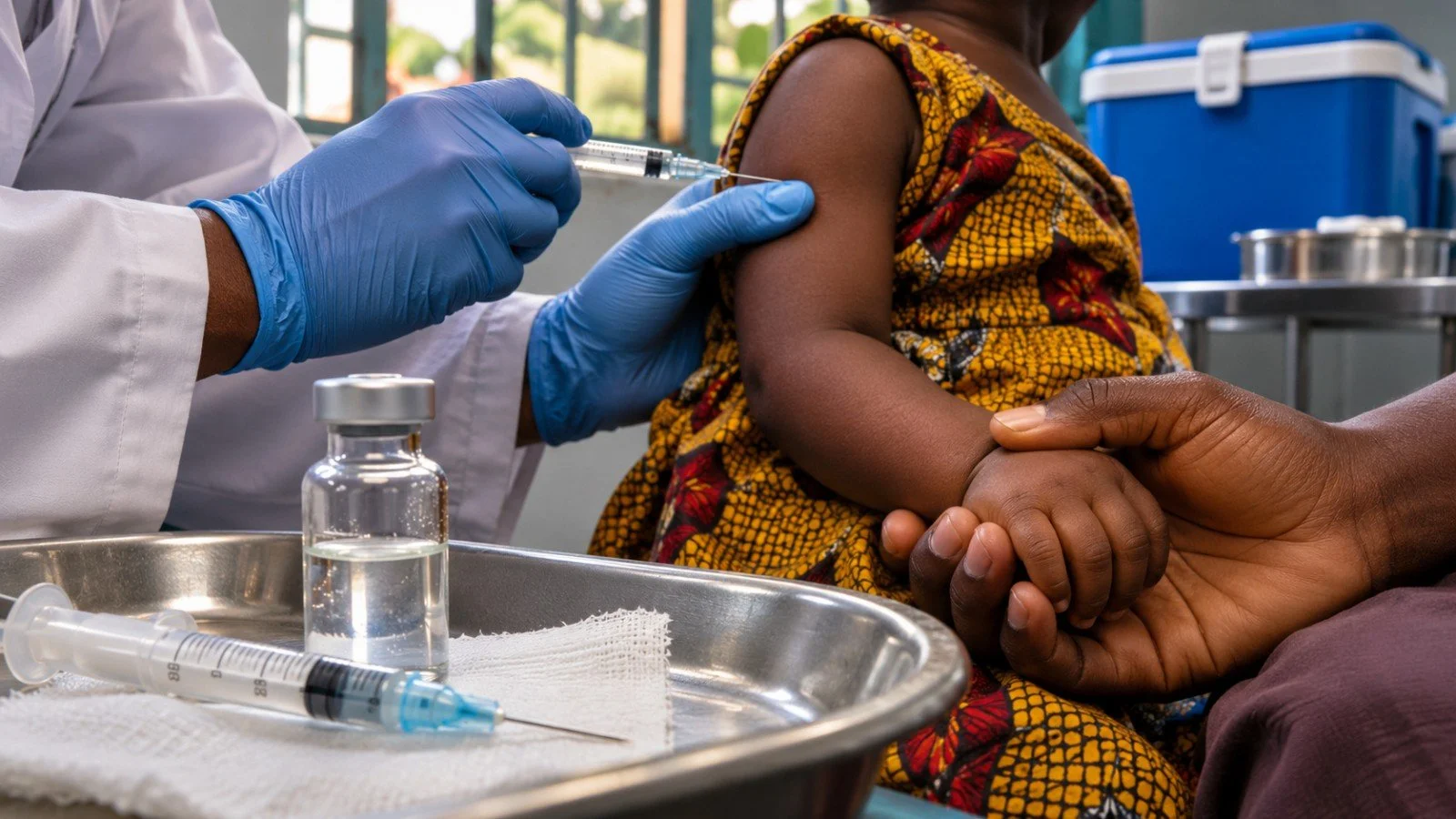
The trial is an early-stage safety study. It will not show whether the vaccine stops people catching Ebola. What it can show is whether the shot is safe in children and adults and whether it prompts the immune response scientists hope will translate into protection, evidence that will matter if the vaccine is later used in the current outbreak or a future one.
What Uganda Announced
According to UVRI, the Phase 1 trial will test the safety of Moderna's experimental vaccine, known as mRNA-1469, and its ability to trigger an immune response in children aged one year and above. The institute aims to enrol 224 volunteers. Stocktwits, reporting the UVRI statement, said the volunteers will be healthy people aged between one and 65, that enrolment is already under way, and that participants will be monitored for around a year after their injections.
This is the second trial of the vaccine. Moderna began its first human study in Canada in August, in adults aged 18 to 65, to assess safety, identify side effects and settle on dose levels. The Ugandan study extends that work to children, who were not included in the Canadian trial.
Richard Hatchett, chief executive of the Coalition for Epidemic Preparedness Innovations (CEPI), which is helping to fund the vaccine, said children "are often among those hardest hit when Ebola strikes, yet they are too often the last to benefit from new vaccines". Hamilton Bennett, an executive director of research and development at Moderna, said testing the vaccine in children would provide data to support its potential wider use in current and future outbreaks. Stocktwits reports that CEPI has committed up to $58.5 million to Moderna's Bundibugyo vaccine programme.
Why the Bundibugyo Strain Matters
Ebola disease is caused by several related viruses. The licensed vaccine most people have heard of, Merck's Ervebo, was developed against the Zaire species responsible for the 2014 to 2016 West Africa epidemic and most outbreaks in the DRC since. There is currently no approved vaccine or treatment specifically for Bundibugyo, which is why the present outbreak has been so hard to contain.
The scale is now severe. On Thursday 26 November, DRC government data showed at least 12,021 confirmed Ebola infections, including 5,904 deaths, since the outbreak began in mid-May. Reuters describes it as the second-largest Ebola outbreak on record. Scientists are also testing whether Ervebo offers any cross-protection against Bundibugyo, but that remains unproven.
Uganda has its own recent experience of the strain's spread. Its Ministry of Health declared the country's outbreak over on 28 July, after 20 infections and two deaths.
How an mRNA Ebola Vaccine Works
An mRNA vaccine does not contain the virus. It carries genetic instructions that tell the body's cells to make a harmless piece of a viral protein, which the immune system then learns to recognise. The same platform was used for Covid-19 vaccines. One practical attraction during an outbreak is speed: once a design is settled, mRNA vaccines can in principle be manufactured and adapted faster than some traditional vaccines. Whether mRNA-1469 delivers protection against Bundibugyo is exactly what the trials are designed to find out.
The Race Between Rival Vaccines
Moderna's shot is one of two new candidates targeting Bundibugyo. The other is a ChAdOx1 adenoviral vector vaccine developed by the University of Oxford and the Serum Institute of India, the same platform used for the Oxford-AstraZeneca Covid-19 jab. AFP reports that it will begin testing in the DRC on Monday 30 November. Reuters says Moderna's vaccine will also enter trials in the DRC soon, and Stocktwits reports that a World Health Organization advisory group has recommended it for a larger Phase 2/3 trial there.
Gavi, the Vaccine Alliance, is not waiting for the results. It signed a purchase commitment last week with the Serum Institute for 1.5 million doses of the Oxford vaccine and plans to have "hundreds of thousands" ready to deploy if trials succeed and the vaccine is approved by the WHO and the DRC government. Emanuele Capobianco, Gavi's director of global health security, told AFP he hoped trials would conclude in early 2027 and that the deal could bring deployment forward by months.
Who Is Affected
The people with most at stake are those in the DRC and neighbouring countries living with the risk of infection, the health workers treating them, and children in particular. Paediatric data are often the last to arrive in vaccine development, which can leave the youngest without protection when an outbreak strikes. By enrolling children from the start of its African trial, UVRI is trying to close that gap earlier than usual.
What Happens Next
Volunteers in Uganda will be followed for about a year, so full safety and immune-response results are unlikely before late 2027, although interim data may come sooner. In parallel, the Oxford vaccine's DRC trial is due to begin on Monday, and Moderna's vaccine is expected to start trials in the DRC. Any decision to use either vaccine widely will depend on trial results and on approval by the WHO and national regulators. Until then, the response to the outbreak relies on testing, contact tracing, isolation and supportive care.
Taylor Tailored will update this article as the trials report results.
Sources
- Reuters via CP24 (Elias Biryabarema): Uganda launches Africa's first trial of an mRNA Bundibugyo Ebola vaccine (27 November 2026)
- Al Jazeera and AFP: Uganda starts mRNA Ebola vaccine trial in first for Africa (28 November 2026)
- Stocktwits via Yahoo Finance (Arnab Paul): Moderna's experimental Ebola vaccine begins landmark trial in Uganda (27 November 2026)
