Ukraine Takes Its Drone War To St Petersburg’s Oil System
Kyiv’s Drones Hit The Baltic Artery Feeding Russia’s War
Ukraine Just Punched Through To Putin’s Baltic Oil Lifeline
Ukraine has pushed its drone war back into one of Russia’s most sensitive northern corridors, striking oil infrastructure around St Petersburg and forcing Moscow to confront a battlefield far beyond Ukraine’s front lines.
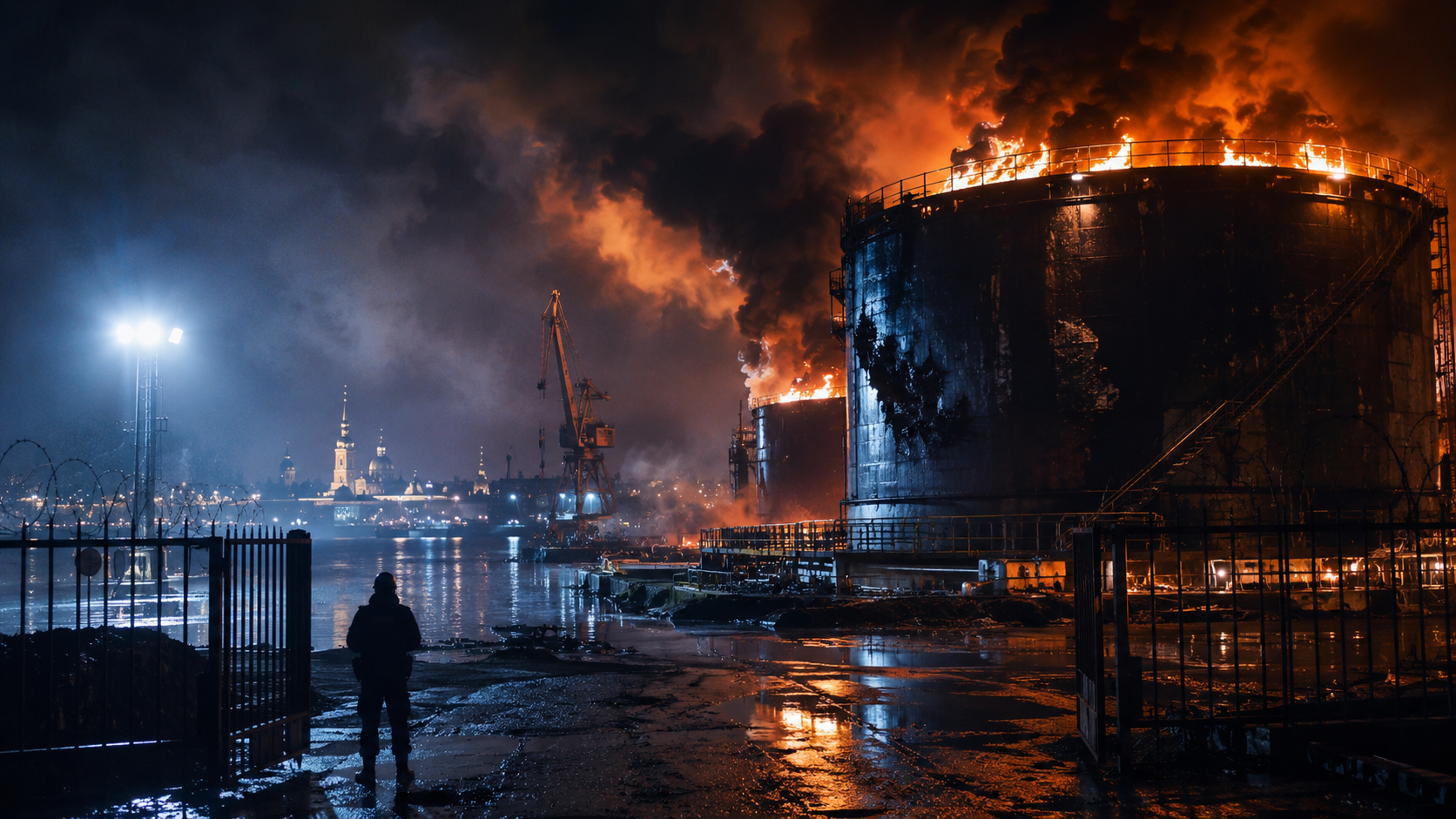
Russian and Ukrainian authorities both confirmed a large overnight attack on Saturday. St Petersburg Governor Alexander Beglov said the city had been hit by a large-scale drone assault and that the city’s oil terminal was struck. Leningrad region Governor Alexander Drozdenko said a drone also hit the area of Vysotsk port, a Baltic Sea port that handles oil, grain, coal and liquefied natural gas.
Kyiv Calls It Long-Range Sanctions
President Volodymyr Zelenskyy said Ukrainian forces struck port oil infrastructure that generates revenue for Russia’s war. He also said Ukraine hit Kronstadt, an important military target near St Petersburg and more than 850 kilometres from Ukraine’s state border.
That claim matters because Kronstadt is not just another Russian coastal name. It is a historic naval base near Russia’s second city, and Ukraine has already targeted the wider St Petersburg area before. Russia did not immediately provide information confirming a strike on Kronstadt.
The message from Kyiv was clear. Ukraine is not only trying to slow Russian attacks at the front. It is trying to reach the energy, logistics and military systems that help sustain them from deep inside Russia.
The Oil War Is Now Political
Russia said 72 drones were shot down over the Leningrad region. Officials also reported minor damage in several settlements, while Beglov said there were no casualties in St Petersburg and that the aftermath had been dealt with.
But the harder problem for Moscow is not only the physical damage from one night. Ukraine has intensified strikes on Russian energy infrastructure this year, and those attacks have already created fuel pressure across parts of Russia. Reuters reported queues at fuel stations in Gatchina, south of St Petersburg, with some stations out of fuel.
That turns the drone campaign into something more politically dangerous. Oil infrastructure is not symbolic for Russia. It is revenue, logistics, domestic stability and wartime credibility packed into one system.
St Petersburg Was Not Supposed To Feel Exposed
St Petersburg carries a different weight from many other Russian targets. It is Russia’s second city, a major Baltic gateway, and a place closely tied to Vladimir Putin’s political identity.
A strike there lands differently from a strike near the front. It tells Russians that the war is no longer contained by geography, distance or official reassurance. It also tells Moscow that Ukraine can keep forcing expensive air-defence decisions around ports, refineries, military sites and major cities.
The Vysotsk angle adds another layer. A port that handles oil and other strategic cargo does not need to be destroyed to become a problem. It only needs to become vulnerable, delayed, expensive to protect, or politically embarrassing.
What Remains Unclear
The confirmed facts are still limited. Russian officials acknowledged the oil terminal strike and the wider drone attack, while Ukraine said it hit both oil infrastructure and Kronstadt. The full damage to the oil system, the scale of disruption at Vysotsk, and the real impact on Russian fuel supply are not yet clear.
That uncertainty is part of the pressure. Drone warfare often works by making every facility behave as if it could be next. Even when the physical damage is contained, the defensive burden spreads.
For Russia, the question is not only whether it can repair what was hit. It is whether it can protect a vast energy network while continuing a war that Ukraine is increasingly dragging back onto Russian territory.
The War Just Moved Further North
The St Petersburg strike fits Ukraine’s broader campaign against Russian oil, fuel and military infrastructure. Kyiv calls this pressure “long-range sanctions” because it is designed to do what diplomacy and economic restrictions alone have not done: impose a direct cost on the systems that finance and supply the invasion.
That does not mean the strike changes the war overnight. It means the war’s map keeps widening. A conflict Russia launched into Ukraine is now reaching ports, fuel stations, naval bases and civilian routines inside Russia itself.
The deeper consequence is strategic and psychological. Ukraine is showing that distance is no longer a shield. St Petersburg’s oil system has now been pulled into the war, and Moscow has to defend not just the front line, but the machinery behind it.
