US “Locked and Loaded”: Pentagon Signals Imminent Strikes on Iran’s Energy Lifeline as Ceasefire Nears Collapse
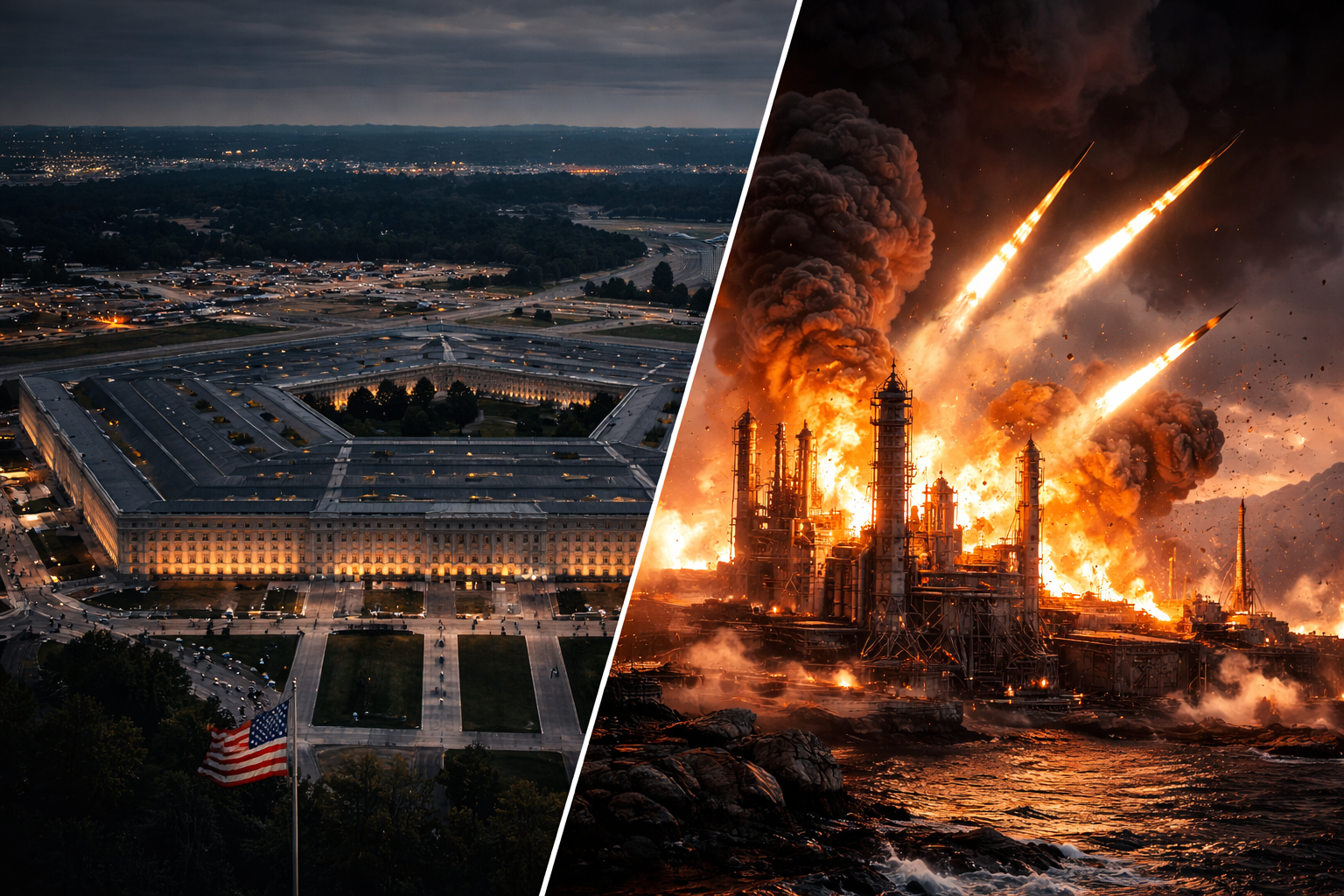
Pentagon briefing announcing readiness to strike Iran infrastructure
Pentagon briefing announcing readiness to strike Iran infrastructure
The United States is no longer just applying pressure — it is openly preparing to act, with Iran’s energy infrastructure now the clearest target if diplomacy fails.
The Moment Before Escalation
The language has shifted.
Not quietly. Not diplomatically. But decisively.
Senior US defense officials have now confirmed that American forces are prepared to strike Iran’s energy infrastructure, including power plants and the broader energy sector, if a fragile ceasefire collapses.
That phrase matters. It is not rhetoric. It is signalling.
It tells you two things at once:
The military planning is complete
The decision point is now political, not operational
At the same time, the Pentagon has made clear that forces can “resume full-scale combat operations at a momen”
”
This is not preparation. This is readiness.
From Pressure to Target Selection
Until now, the US strategy has relied on pressure.
Sanctions. Diplomacy. Military positioning.
But the current escalation reveals something more precise: a shift toward targeted economic paralysis.
The focus is Iran’s energy system — its power plants, export infrastructure, and industrial backbone.
Why?
Because in modern conflict, energy is not just infrastructure. It is leverage.
It powers military capability
It sustains domestic stability
It drives export revenue
It anchors geopolitical influence
Striking is not symbolic; it is systemic.
And it is being openly discussed as the next step.
The Blockade Is Already Changing the Game
The escalation is not theoretical. It is already underway — just in a different form.
The United States has imposed a naval blockade on Iranian ports, turning away ships and restricting trade flows.
At least a dozen vessels have already been forced to turn back.
The message is simple:
Economic isolation first
Military escalation if necessary
This blockade is doing more than restricting movement.
It is:
Testing enforcement boundaries
Mapping Iran’s response thresholds
Creating economic strain inside the country
Raising global energy anxiety
And crucially, it sets the conditions for escalation.
Because once you are enforcing a blockade, the step to striking infrastructure is no longer abstract—it is a continuation.
The Real Pressure Point: The Strait of Hormuz
Everything in this conflict flows through one narrow corridor.
The Strait of Hormuz.
It is one of the most strategically important energy chokepoints on Earth.
Currently, disruptions are effectively constraining it, pushing global oil prices higher and tightening supply expectations.
This significantly alters the stakes.
Any strike on Iran’s energy infrastructure would not remain local.
It would:
Shock global oil markets
Trigger price spikes
Ripple into inflation worldwide
Pressure governments already managing fragile economies
This is no longer just a regional conflict.
It is a system-level risk.
What Media Misses
The story is not simply that the US might strike Iran.
The story is why the energy sector is the chosen pressure point.
Most coverage treats the situation as escalation.
It is more calculated than that.
Targeting energy achieves three objectives simultaneously:
Maximum leverage with minimal troop deployment
Internal destabilisation without immediate regime collapse
Global signal of dominance over strategic resources
This behaviour is not emotional escalation.
It is strategic coercion.
And that distinction matters — because it means the threat is more likely to be used, not less.
A Ceasefire in Name, Not Reality
Technically, there is still a ceasefire window.
In reality, it is fragile, contested, and narrowing.
Diplomatic efforts are ongoing, with mediation attempts and signals of possible agreement.
However, the situation's structure reveals a different narrative:
Military forces are positioned
Economic pressure is intensifying
Public warnings are escalating
This is what pre-strike conditions look like.
A ceasefire in this context is not stability.
It is a countdown.
What Happens Next
Three paths now sit directly ahead.
Most Likely
A short-term extension or partial agreement delays strikes — but it does not remove the threat.
Most Dangerous
Ceasefire collapses → US executes targeted strikes on energy infrastructure → Iran retaliates → escalation spreads regionally.
Most Underestimated
No immediate strikes, but prolonged blockade and economic pressure slowly degrade Iran’s position without a decisive military moment.
Each path leads to the same underlying reality:
The conflict is no longer about whether pressure will be applied.
It is about how far it will go.
The Strategic Reality
This moment is not about a single strike.
It is about a shift in how power is being applied.
From:
Deterrence
To:Direct economic targeting backed by immediate military readiness
The phrase “locked and loaded” is not just a warning.
It is a signal that the threshold between pressure and action has effectively disappeared.
The Aftershock
If strikes happen, they will not just hit infrastructure.
They will hit the global system.
Energy markets will react first.
Then supply chains.
Then politics.
And then—inevitably—escalation.
Because once energy infrastructure becomes a battlefield, the conflict is no longer contained.
It becomes structural.
And at that point, the question is no longer whether the conflict expands.
It is how far.
