US Marine Arrested On Suspicion Of Killing Woman In Okinawa As Japan Lodges Strong Protest
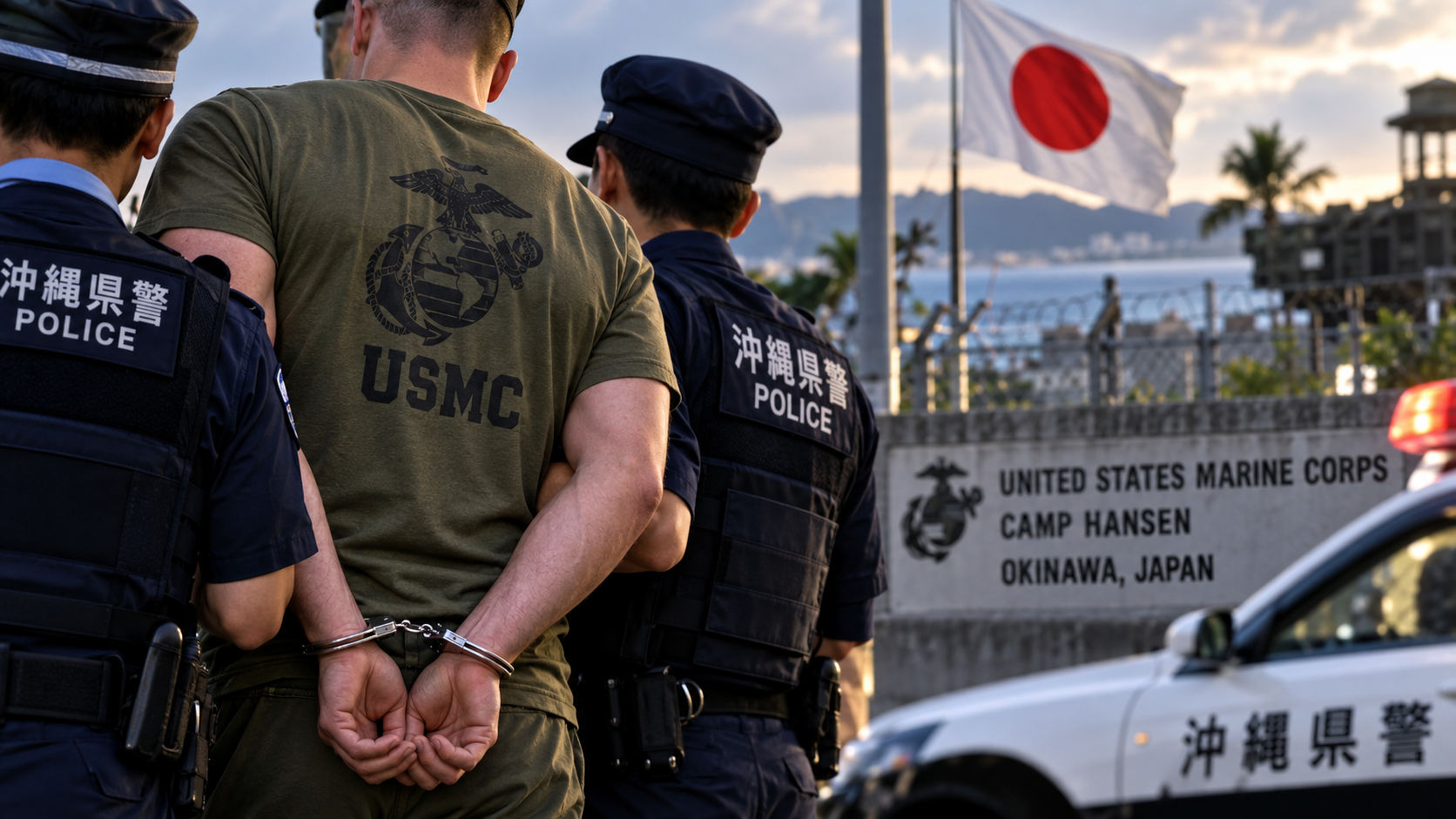
Japan Protests To US After Marine Arrested Over Woman’s Death In Okinawa
Okinawa Woman’s Death Sparks US-Japan Protest
The 20-year-old Marine denies the allegations as Japanese authorities investigate the death of Anna Yagi and political anger grows over the US military presence on the island.
A 20-year-old United States Marine has been arrested in Okinawa on suspicion of robbery and murder after a 39-year-old Japanese woman was found dead inside a hotel room in Naha.
Lance Corporal Devin Jacob Ballard, assigned to the III Marine Expeditionary Force and stationed at Marine Corps Air Station Futenma, was arrested on Sunday, 4 October. Okinawa Prefectural Police suspect him of killing Anna Yagi, a resident of Naha, during the early hours of Saturday and taking property belonging to her.
Ballard denies the allegations.
The case has already moved beyond a local criminal investigation. Japan has lodged a formal protest with the United States, senior American military officials have been confronted by Okinawan leaders, and the arrest has again exposed one of the most difficult fault lines inside the US-Japan alliance: the heavy concentration of American military facilities on Okinawa.
What Police Suspect Happened In Naha
Yagi was found inside a hotel in Naha's Wakasa district after she failed to leave by checkout time.
Police say the suspected killing occurred between approximately 2:10am and 4:17am on Saturday. Investigators allege that pressure was applied to Yagi's neck and that she died from asphyxiation.
Security-camera footage is part of the investigation. Police say footage showed Yagi entering the hotel with Ballard and the Marine later leaving without her.
Ballard was located the following night in an entertainment district in Okinawa City. Officers questioned him before arresting him.
Investigators are examining his movements and the circumstances surrounding his contact with Yagi. The investigation also concerns allegations that property belonging to her was taken.
Those allegations have not been proved in court. Ballard has denied involvement, and his arrest on suspicion of robbery and murder is not a conviction.
On Monday, 5 October, Okinawa Prefectural Police forwarded the case to the Naha Public Prosecutors Office.
Japan Has Formally Protested To The United States
The political reaction was immediate.
Japanese Foreign Minister Toshimitsu Motegi summoned US Ambassador George Glass on 4 October and lodged what the foreign ministry described as a strong protest. Motegi demanded full cooperation with the investigation, tighter discipline among US military personnel and measures intended to prevent another serious incident.
Glass expressed regret over the loss of life and said the United States would cooperate fully with Japanese authorities.
Japan's defence ministry separately summoned the commander of US Forces Japan. Defence Minister Shinjiro Koizumi said Japan regarded the case with extreme seriousness and demanded cooperation with investigators as well as measures to prevent a recurrence.
The response matters because this is not being treated in Tokyo as an isolated policing issue involving one suspect. The arrest has immediately become a question of military discipline, local trust and the political cost of hosting American forces.
The III Marine Expeditionary Force has said it is cooperating with Japanese authorities. It has not announced new restrictions on personnel in response to the arrest.
Okinawa’s Governor Pushes The Issue Further
Okinawa Governor Genta Koja met Lieutenant General Benjamin Watson, commander of the III Marine Expeditionary Force, and US Consul General Andrew Ou on Monday.
Koja and Naha Mayor Satoru Chinen presented a formal protest. Their demands included stricter discipline, measures to prevent similar incidents and revision of the US-Japan Status of Forces Agreement, the framework governing the legal position of American military personnel stationed in Japan.
That pushes the political argument beyond the conduct of one Marine.
For decades, Okinawa has carried an unusually large share of the American military footprint in Japan. The bases are strategically important to the alliance, particularly as security concerns around Taiwan, the East China Sea and the wider Indo-Pacific have intensified.
But the military presence has also produced deep local friction. Serious crimes involving US personnel have repeatedly triggered protests and renewed arguments about whether Okinawa bears an unfair share of the costs associated with the alliance.
That history gives the latest arrest a significance far beyond the hotel where Yagi was found.
Why Okinawa Is So Strategically Important
Okinawa sits close to some of East Asia's most sensitive military flashpoints.
Its position makes the island valuable to the United States and Japan for aircraft, Marines, logistics and rapid regional deployments. The alliance has become more important as Tokyo strengthens its defence posture and Washington concentrates on deterrence in the Indo-Pacific.
The strategic pressure around the island is visible in other ways. A previous confrontation near Okinawa involving Japanese and Chinese military aircraft showed how quickly the area can become central to wider regional tensions.
That creates a difficult political equation.
Tokyo regards the American military presence as an essential part of national and regional security. Many Okinawans, however, live much closer to the bases and experience the consequences of that presence more directly.
When a US service member is accused of a serious violent crime, those two realities collide.
The Case Could Become Another Test Of Local Trust
The immediate legal question is now for Japanese investigators and prosecutors.
The broader political consequences will depend partly on what the investigation establishes and how American authorities respond. Japanese officials have already made clear that cooperation alone will not end the argument. Their demands include discipline and prevention, while Okinawa's leadership is again raising the status-of-forces agreement itself.
Public demonstrations have also followed the arrest, showing how rapidly the case has moved into the wider debate about the bases.
None of that determines Ballard's guilt. The criminal allegations must be tested through Japan's legal process, and his denial remains an essential part of the case at this stage.
But the diplomatic damage does not have to wait for a verdict.
A Japanese woman is dead. A serving US Marine is in Japanese custody. Tokyo has formally protested to Washington, and Okinawa's governor has challenged senior American military officials over whether existing safeguards are working.
For the US-Japan alliance, the strategic case for maintaining forces on Okinawa remains powerful. The harder question is whether local confidence can survive another grave allegation involving a member of those forces.
The next decisive developments will come from the Japanese investigation and prosecutors, while political pressure on both Tokyo and Washington is likely to continue around the military arrangements that made this case an international issue almost as soon as the arrest was announced.
Sources
Ministry of Foreign Affairs of Japan — Protest by Foreign Minister MOTEGI to U.S. Ambassador George Glass — Confirms Japan's formal protest, demands for full investigative cooperation and the US ambassador's response, 4 October 2026.
Ministry of Defense of Japan — Defense Minister Extraordinary Press Conference — Confirms Japan's defence ministry protest to the commander of US Forces Japan and its demands for cooperation, discipline and prevention measures, 4 October 2026.
Stars and Stripes — Okinawa governor confronts US military over Marine suspected of weekend homicide — Supports the latest police, prosecutorial and Okinawan government developments, including the 5 October meeting with US military representatives.
Next Reads
Radar standoff near Okinawa: Japan accuses China of dangerous radar lock-ons — Explains the wider military tensions around Okinawa and why the island remains strategically important.
