

US Navy Destroys Iranian Mine-Laying Boats as Strait of Hormuz Oil Lifeline Becomes a War Zone
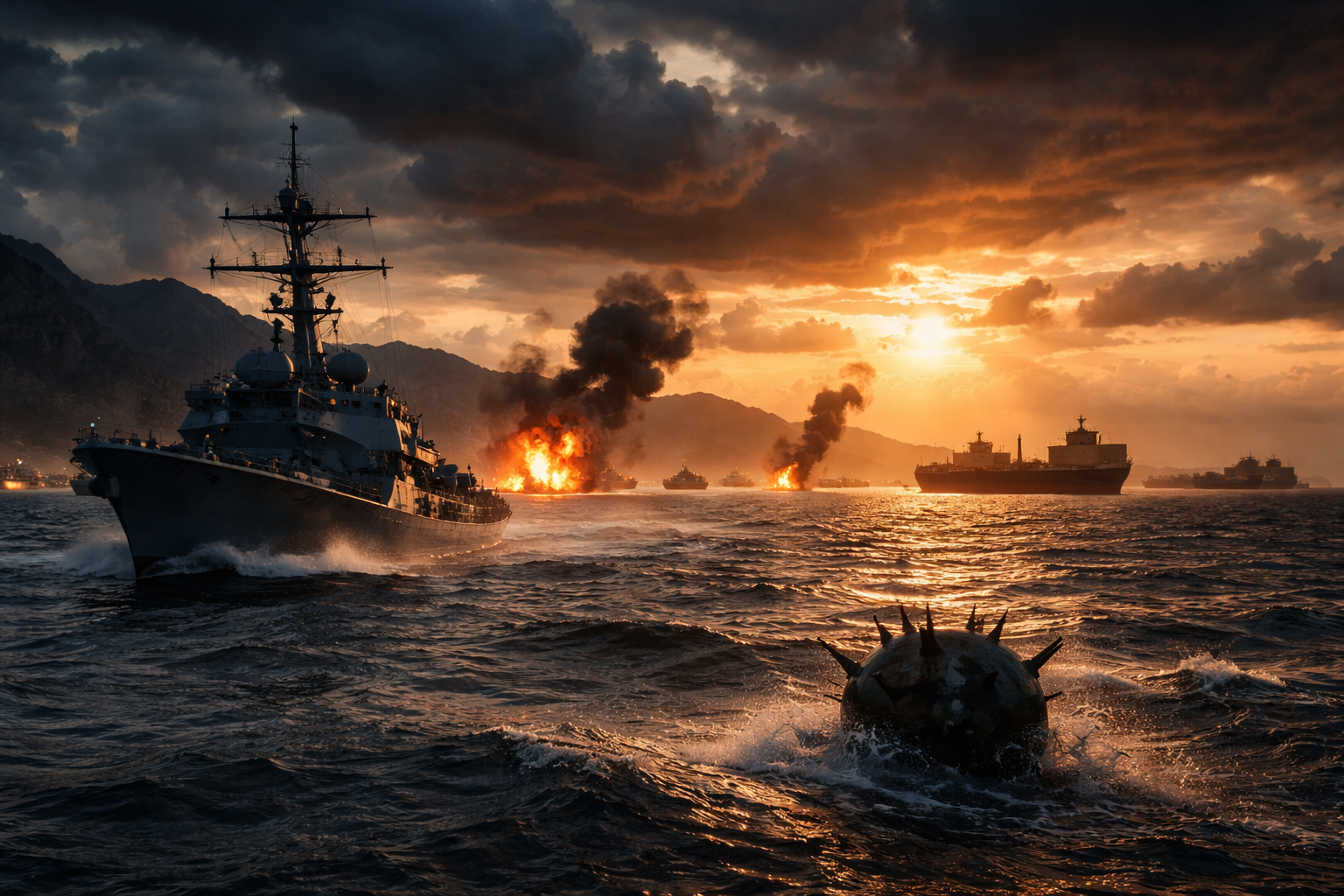
How Naval Mines Can Shut Down Global Oil Trade
What Happens if the Strait of Hormuz Stays Closed for a Month
The naval front of the Iran war has entered a dangerous new phase.
U.S. forces say they have destroyed 16 Iranian vessels accused of deploying naval mines near the Strait of Hormuz, the world’s most critical oil chokepoint.
Washington claims that the strikes aimed to prevent Iran from mining the narrow waterway and obstructing global oil shipments. Tehran has issued a warning that it may halt all oil exports if the conflict persists.
The escalation comes during a wider regional war involving Iran, Israel, and the United States, with missile strikes, drone attacks, and oil infrastructure threats spreading across the Gulf.
But the most important battlefield may now be the water.
The story turns on whether Iran can actually close the Strait of Hormuz faster than the U.S. Navy can reopen it.
Key Points
The U.S. military says it destroyed 16 Iranian mine-laying vessels near the Strait of Hormuz to prevent mining operations.
Iran has threatened to block oil exports through the strait, a route that normally carries roughly 20% of the world’s oil supply.
Tanker traffic through the waterway has already collapsed, with shipping companies suspending transit due to war risks.
Oil prices surged as markets fear prolonged disruption to Gulf energy flows.
U.S. officials are considering naval escorts for tankers, but none have yet been implemented, which raises concerns about the safety of maritime transport in the region and the potential for further escalation of the conflict.
The clash signals that the conflict has expanded from airstrikes on Iran into a direct naval confrontation over global energy routes.
The World’s Most Important Oil Chokepoint
The Strait of Hormuz is a narrow passage between Iran and Oman connecting the Persian Gulf to the open ocean.
On a normal day, around one-fifth of global oil and large volumes of liquefied natural gas pass through it.
That concentration of energy trade gives the strait enormous geopolitical power. If it closes:
Gulf oil exporters cannot easily ship crude to Asia or Europe.
Energy markets experience immediate supply shocks.
Insurance costs for shipping surge.
Since late February 2026, the conflict has already caused tanker traffic to collapse and ships to anchor outside the strait, waiting for safer conditions.
For Washington, preventing mines from being placed in the shipping lanes is therefore a strategic priority.
How the Naval Clash Unfolded
The current crisis began after U.S. and Israeli strikes inside Iran triggered retaliatory missile and drone attacks across the region.
Iran then warned that no ships would be allowed through the Strait of Hormuz, effectively threatening to shut down the waterway.
Soon after:
U.S. intelligence reported Iranian naval units preparing to deploy naval mines.
Iranian Revolutionary Guard vessels reportedly moved into the strait.
The U.S. military launched strikes on suspected mine-laying boats.
Central Command reported the elimination of 16 vessels, along with attacks on mine storage sites and related infrastructure.
Iran has vowed to resist Western naval operations with missiles and drones.
The Power Shift at Sea
Naval mines are one of the most asymmetric weapons in modern warfare.
They are:
Cheap to deploy
Difficult to detect
Capable of halting shipping even without sinking vessels
Even rumors of mines can close a waterway because insurers and shipping firms refuse to take the risk, leading to significant economic impacts on global trade and shipping routes.
That is why the U.S. military moved quickly to strike suspected mine-laying craft. The goal is to prevent the strait from becoming a minefield before the Navy can establish control.
If mines are laid in significant numbers, clearing them could take weeks.
What Most Coverage Misses
The central question is not whether the U.S. Navy can defeat Iran’s navy in open combat.
It almost certainly can.
The real strategic contest is speed.
Mining a waterway takes hours. Clearing mines can take days or weeks.
That imbalance means Iran does not need to win a naval battle. It only needs to create enough uncertainty that insurers and shipping companies refuse to send tankers through the strait.
History shows how powerful this tactic can be. During the late-1980s “Tanker War,” Iranian mines struck vessels despite heavy U.S. naval protection, triggering one of the largest American naval retaliations since World War II.
In other words, the real battle is not ships versus ships.
It is mines versus time.
Why the Global Economy Is Watching
The consequences of a prolonged Hormuz shutdown would extend far beyond the Middle East.
Immediate impacts include:
Oil price spikes
Energy shortages in import-dependent countries
Inflation pressure in global markets
Even partial disruption can send shockwaves through energy markets.
Oil prices have already surged during the crisis as traders price in supply risk.
Major energy companies and shipping firms are now rerouting or pausing cargoes.
The Escalation Ladder Ahead
Several possible scenarios now sit in front of policymakers.
1. Limited naval containment
The U.S. destroys Iranian mine-laying vessels and restores partial shipping flows.
2. Tanker escort operations
The U.S. Navy begins convoy operations for oil tankers, similar to those used in the 1980s Gulf tanker war.
3. Expanded naval war
Iran targets U.S. ships, Gulf oil terminals, or commercial vessels in retaliation.
4. Regional escalation
Strikes expand across the Gulf, including energy infrastructure in Saudi Arabia or the UAE.
The signals to watch in the coming days include
Whether U.S. tanker escorts begin
Evidence of mines detected in shipping lanes
Iranian missile or drone attacks on naval forces
Insurance and shipping decisions about transiting the strait
The Strait of Hormuz has always been a geopolitical pressure point.
But when mines appear in its waters, the risk is no longer theoretical—it becomes a global economic emergency.
